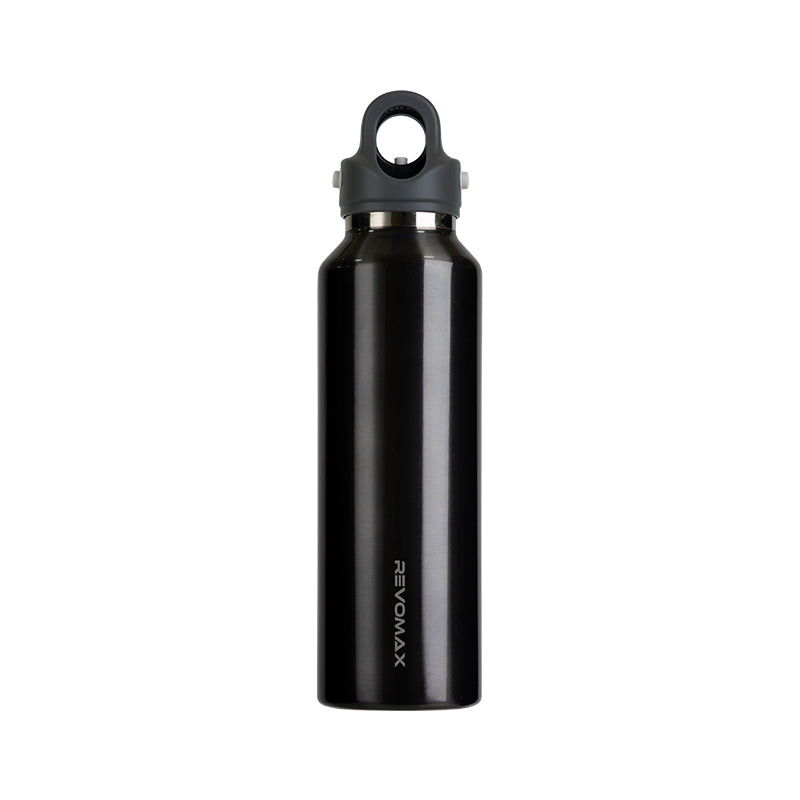
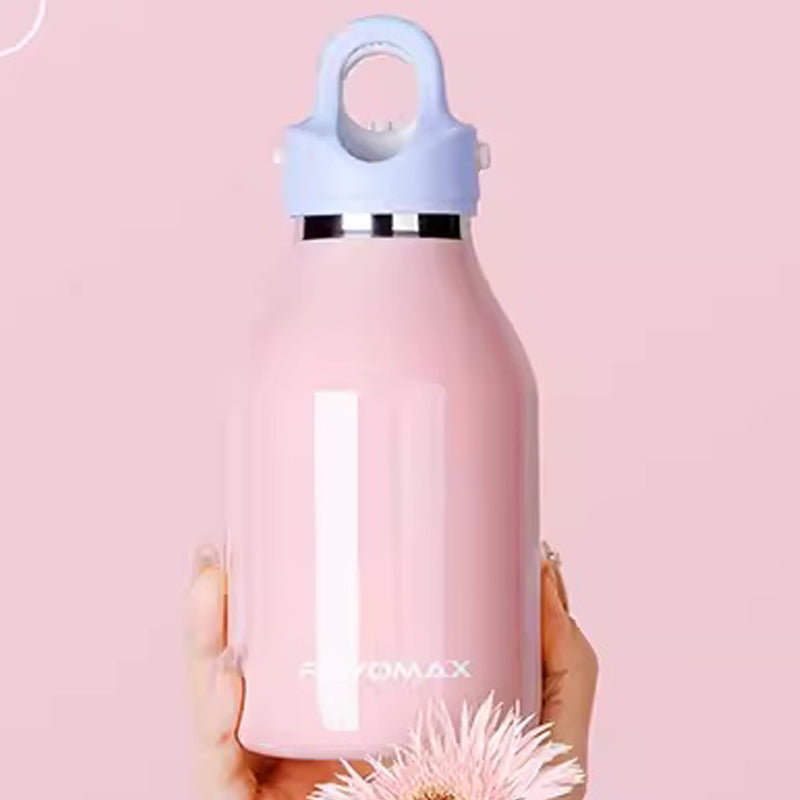
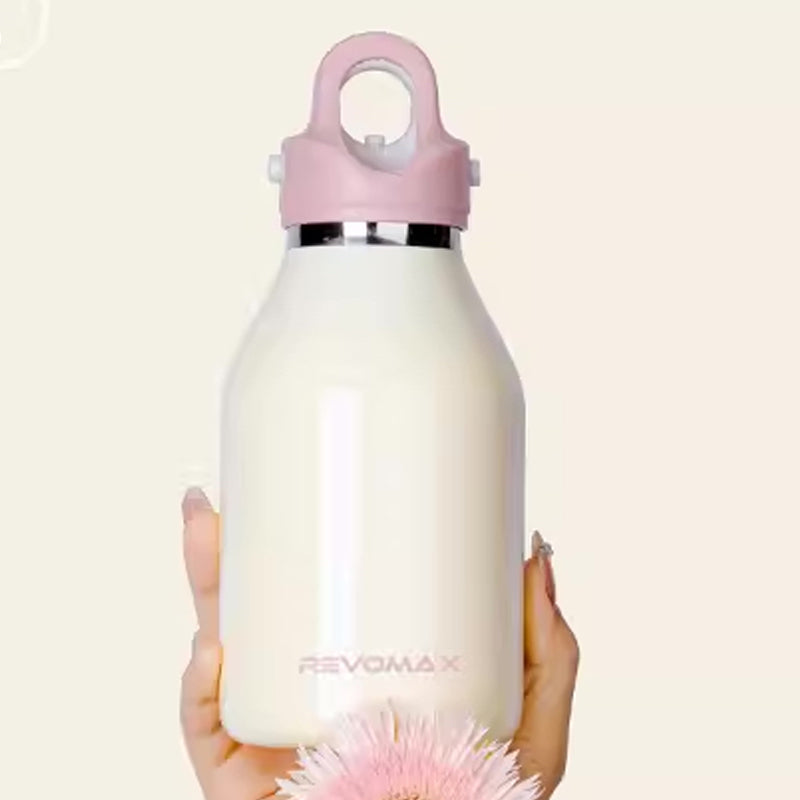
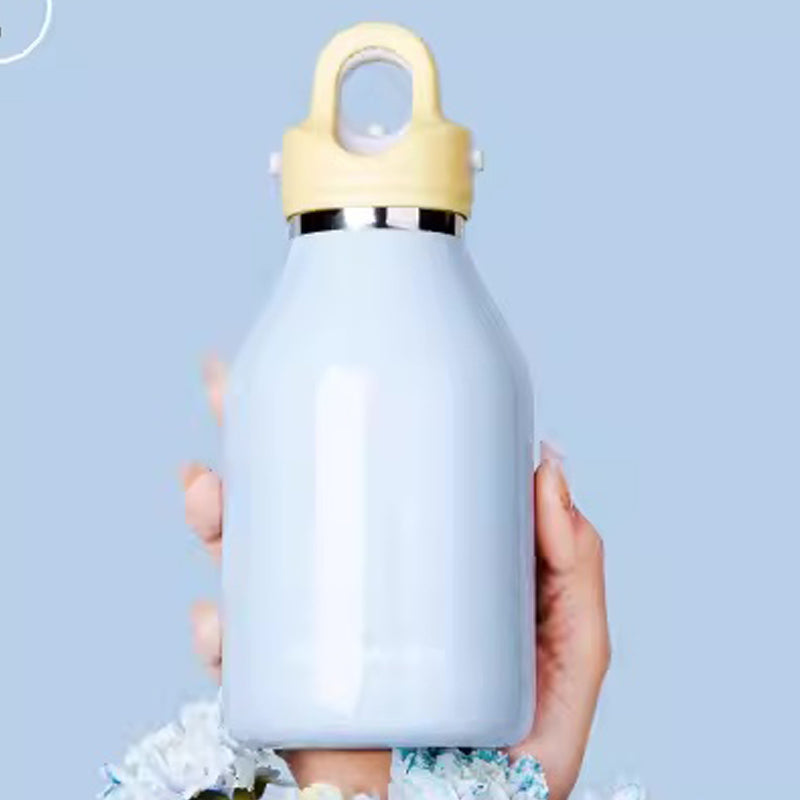
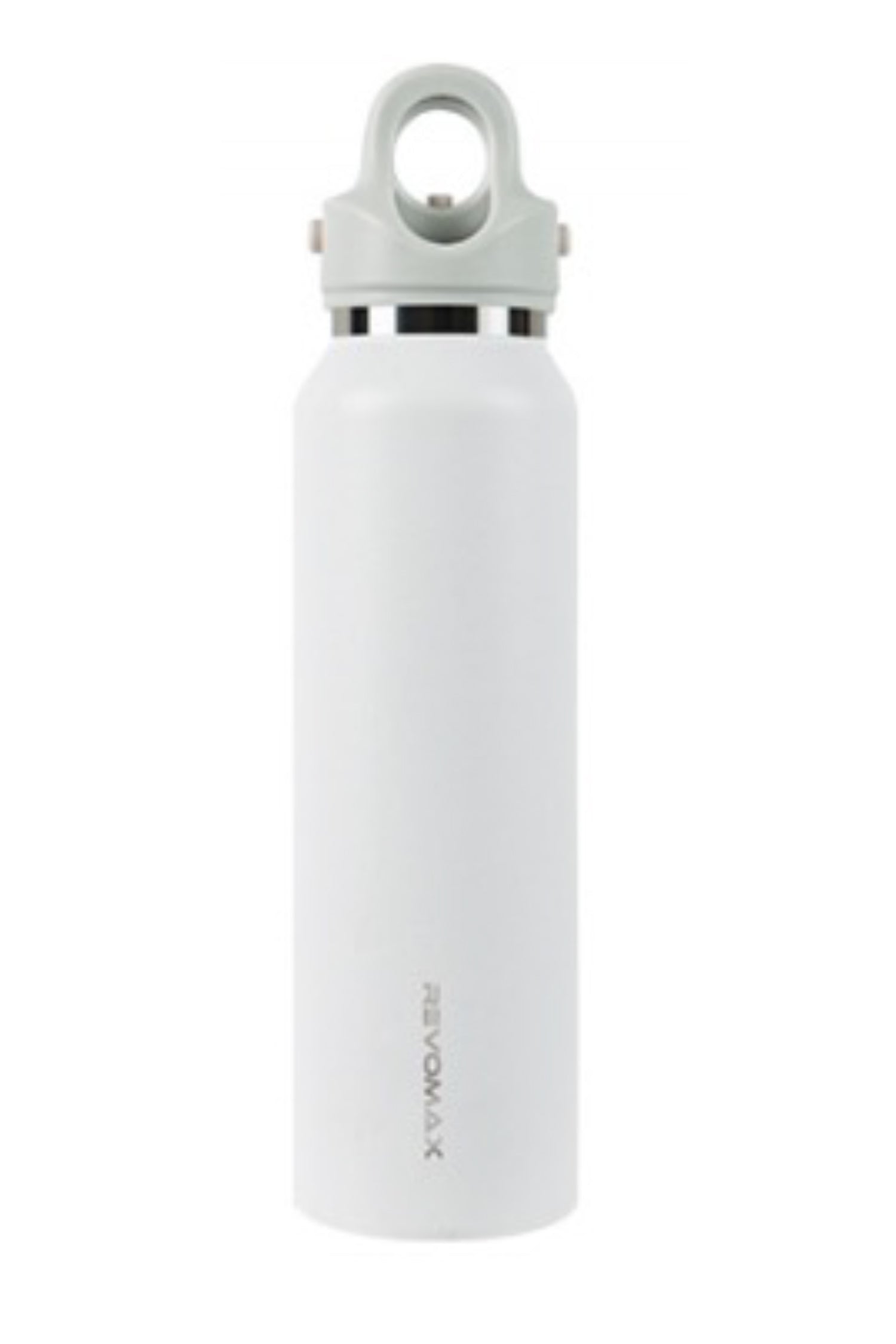
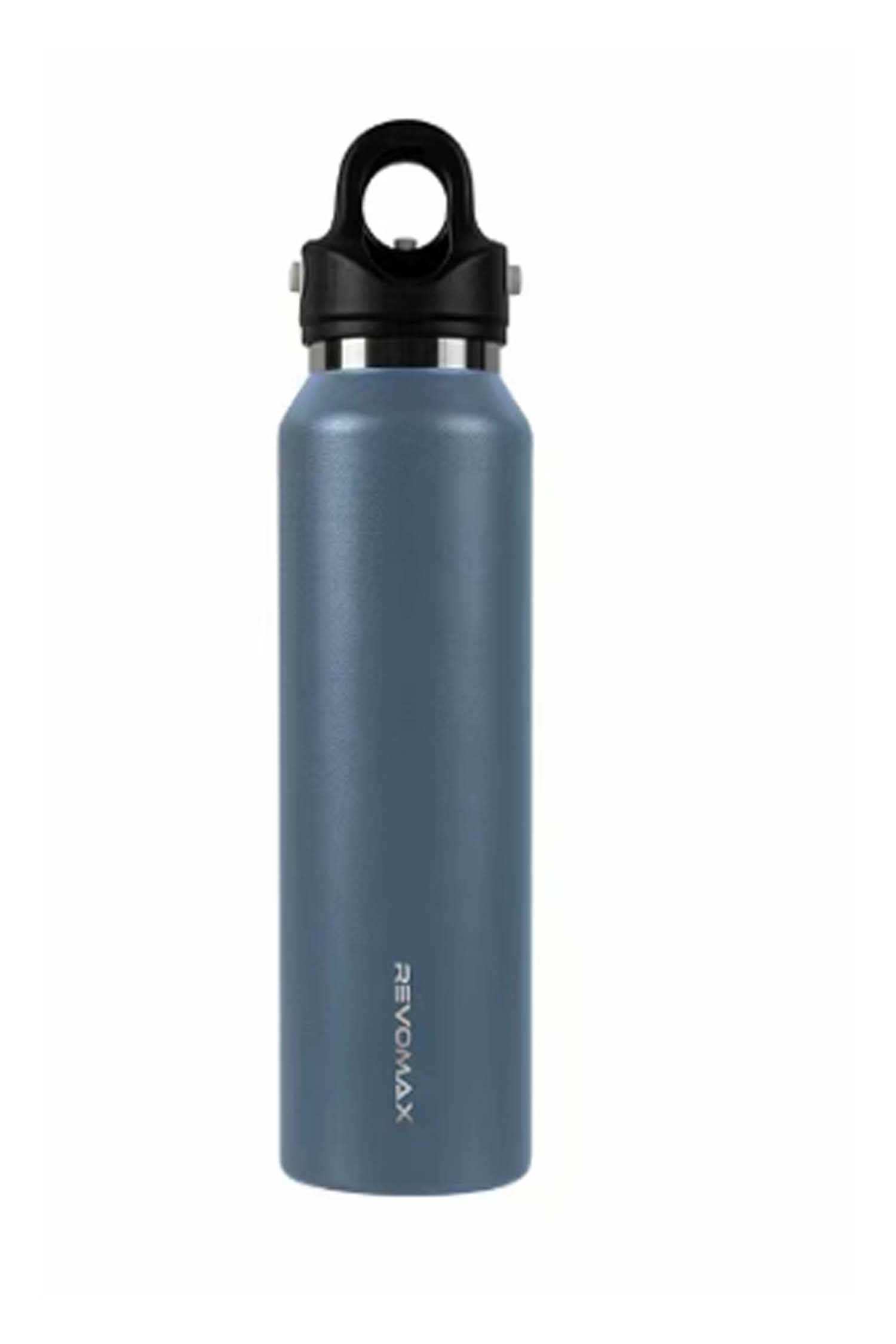
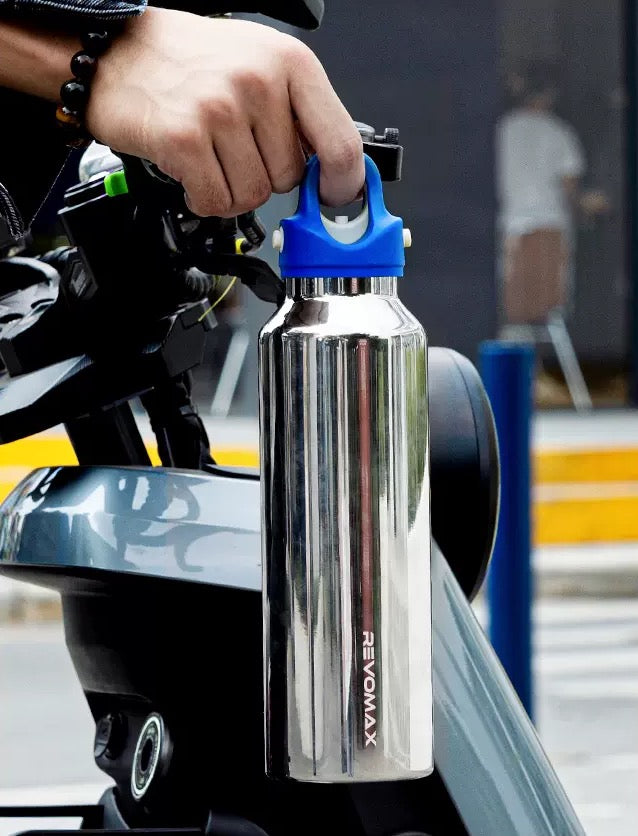
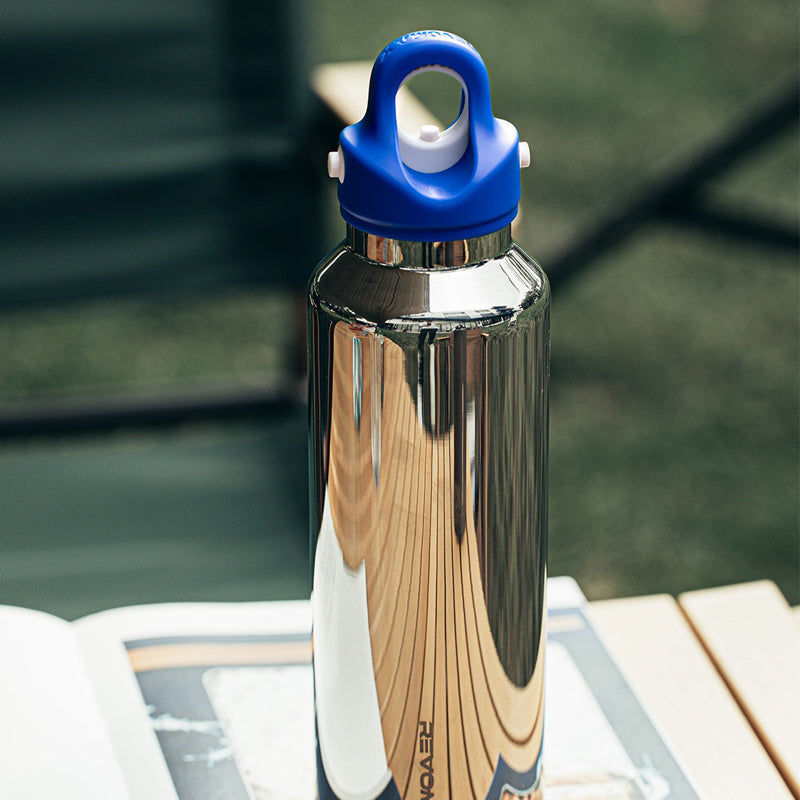
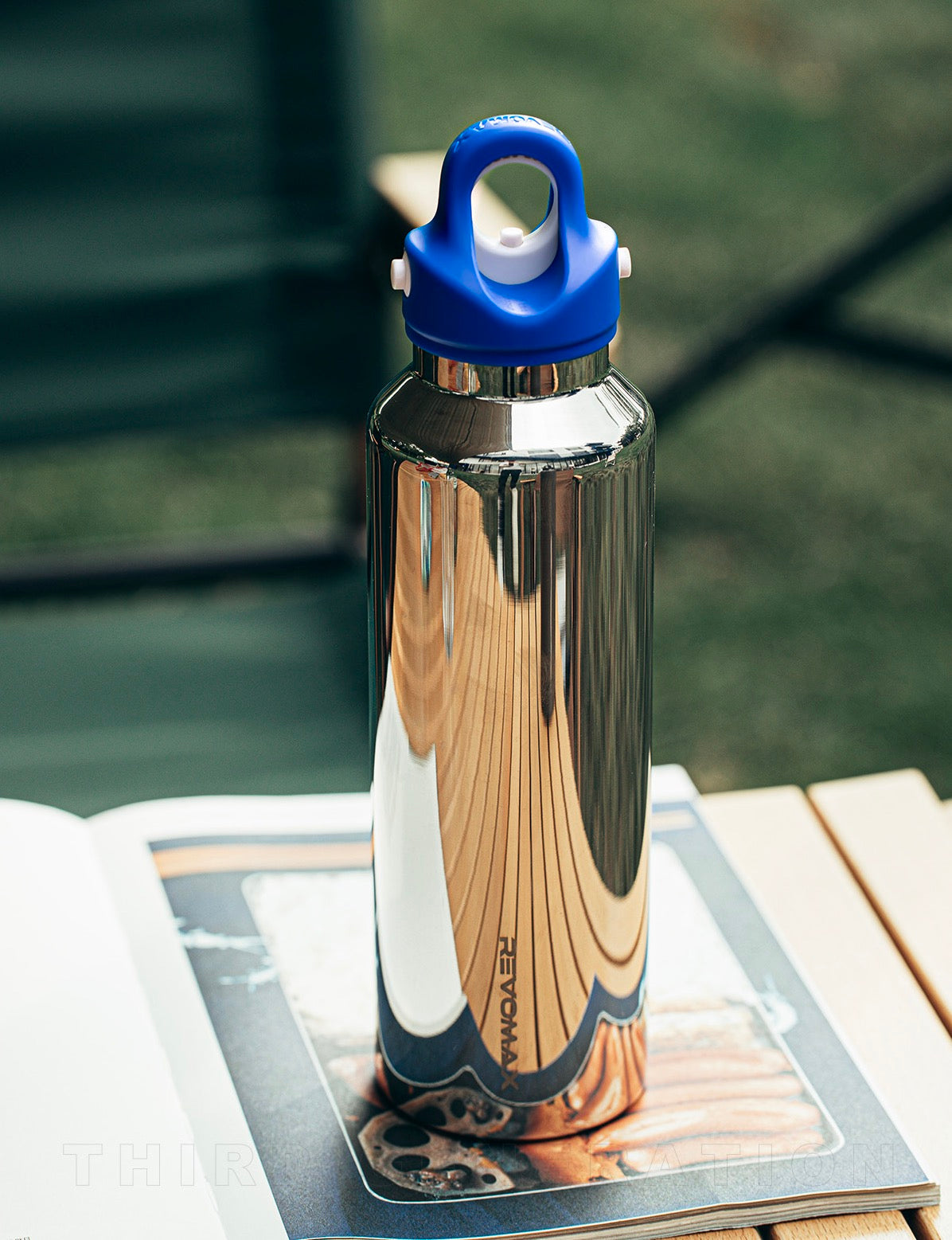
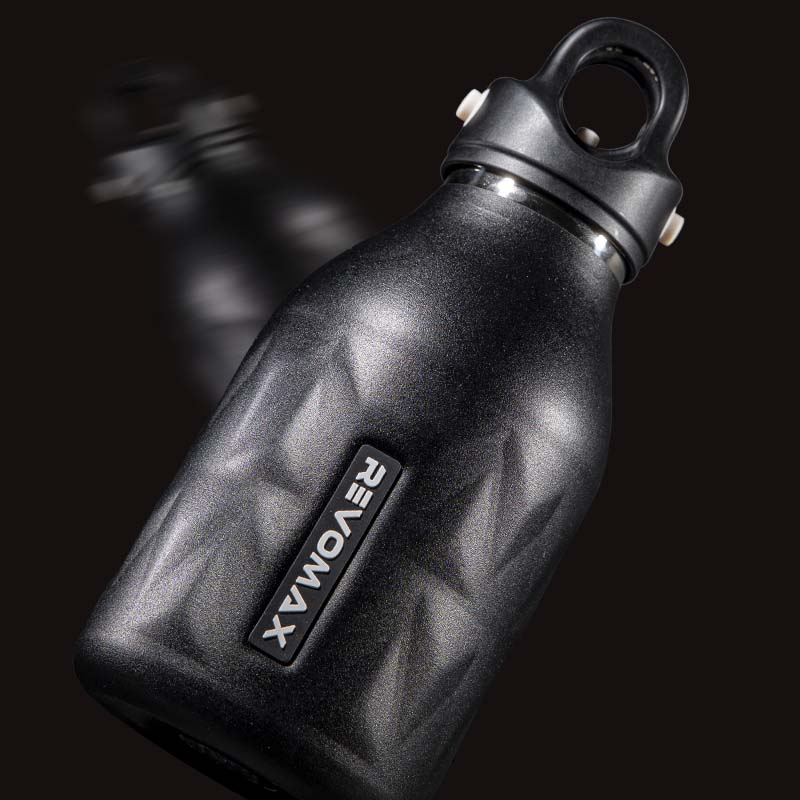
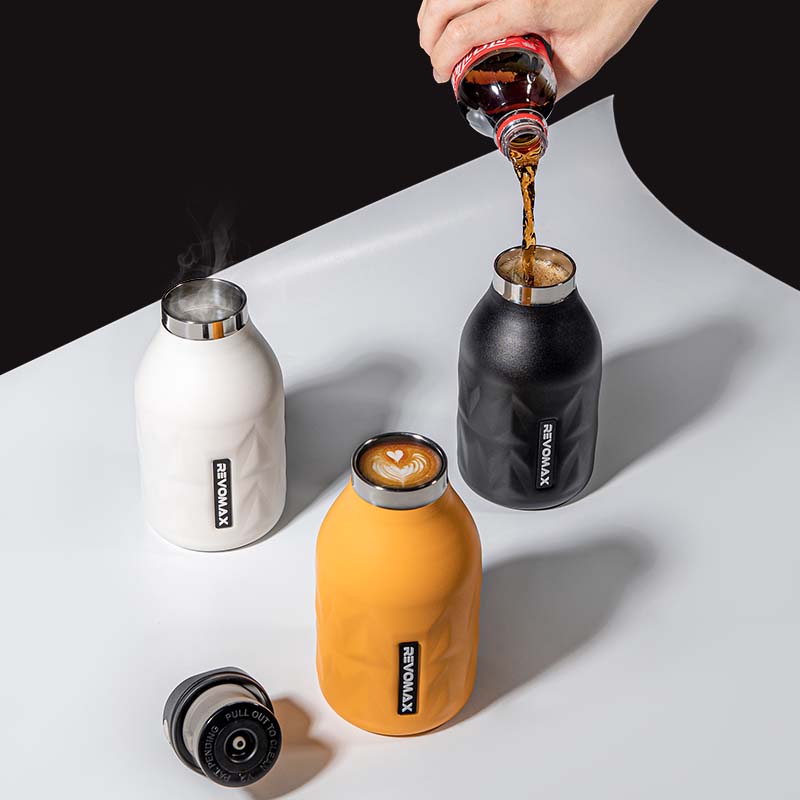
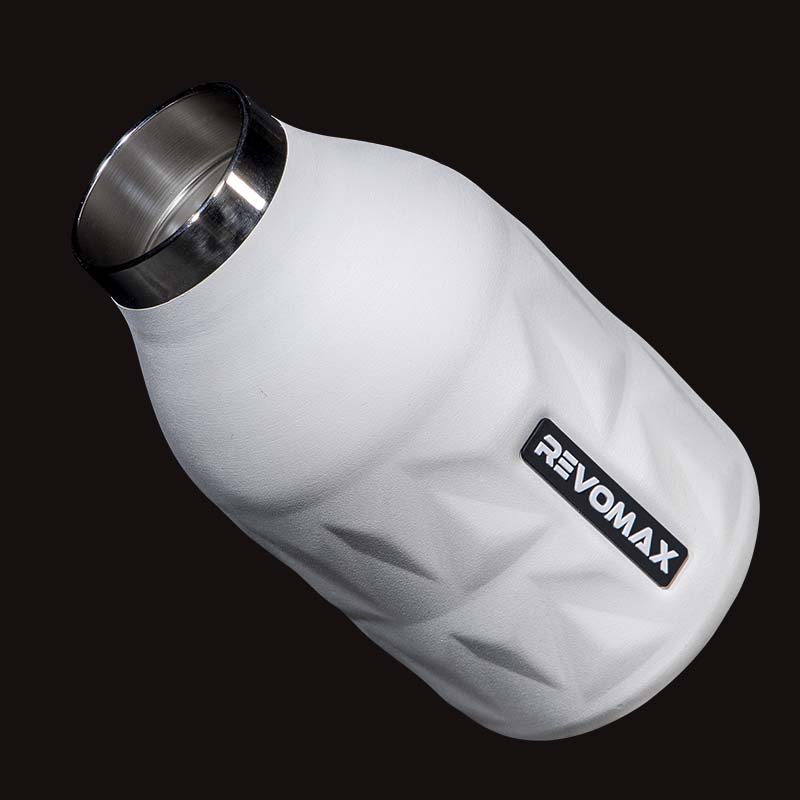
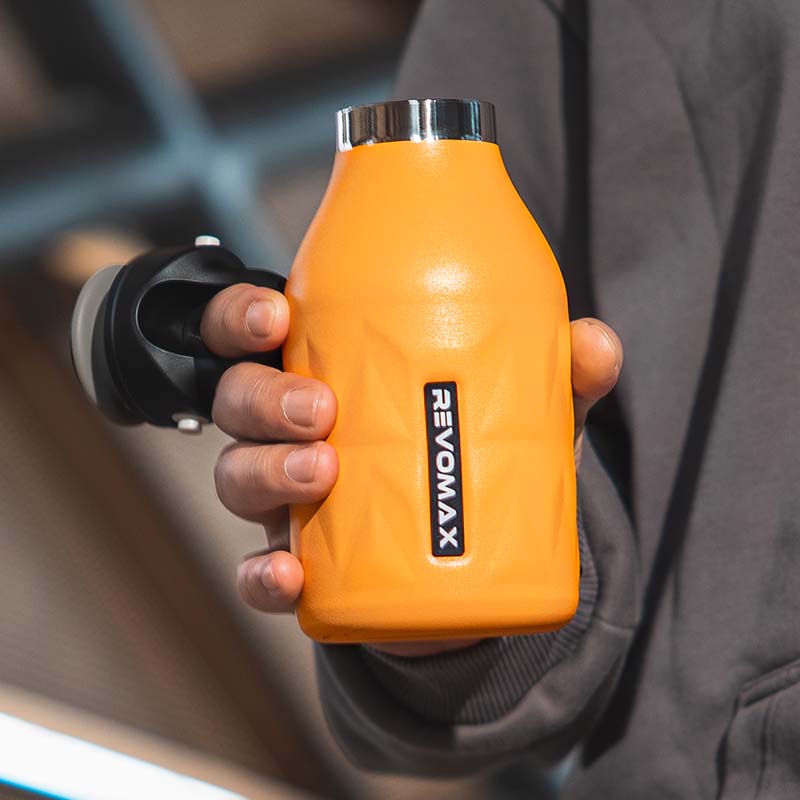
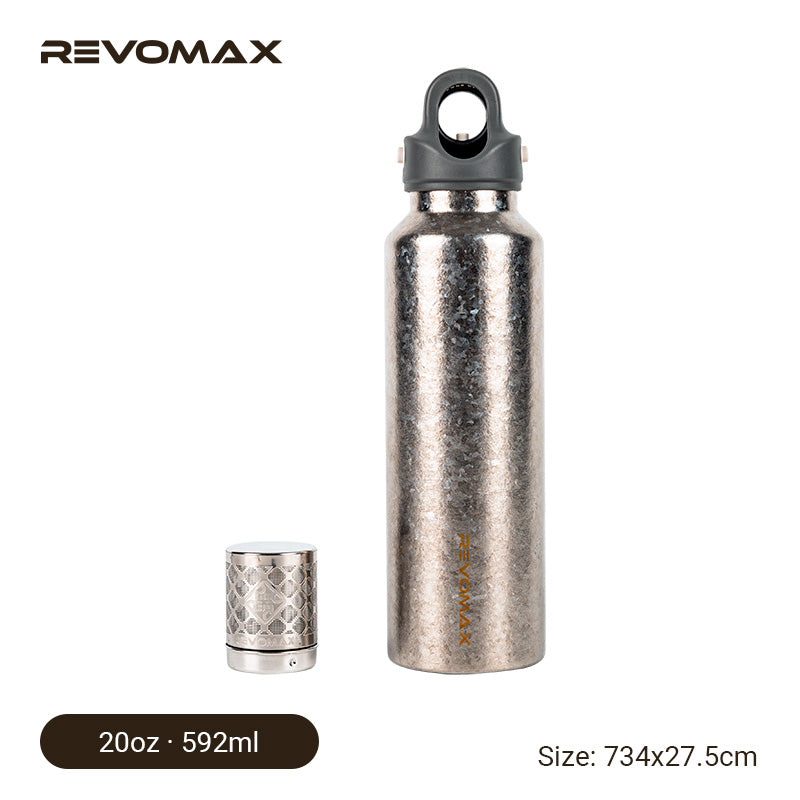
Two premium bottle materials, chosen for different routines—from desk-side drinks and daily commutes to lightweight weekend trails. Both use a no-screw lid with a built-in pressure-release valve, so carbonated drinks never spray.
Why 316L stainless steel & pure titanium
Pure TitaniumHow it works
The no-screw valve — why Hikesity 316L bottles hold soda and beer
Every Hikesity 316L No-Screw Bottle uses a threadless lid with a built-in pressure-release (evacuation) valve. It vents excess CO₂ continuously, so carbonated drinks — soda, sparkling water, kombucha, beer — stay fizzy and the lid always opens safely with one hand. Traditional screw-top bottles trap that pressure instead, which is why Yeti states its Rambler bottles are not intended for carbonated beverages.
The interior is 316L medical-grade stainless steel, which adds roughly 2–3% molybdenum that the 304 steel used by most brands lacks. That is what keeps acidic drinks — cola, sparkling water, coffee, juice — from picking up a metallic taste.
- Can you put soda or beer in an insulated bottle? The pressure-release valve, explained
- Why 316L beats 304 in your water bottle The engineering and health trade-offs
- Titanium vs stainless steel vs ceramic-lined A complete material comparison
- Best UPF 50+ sun hats for driving Lab-verified shade that will not block your view