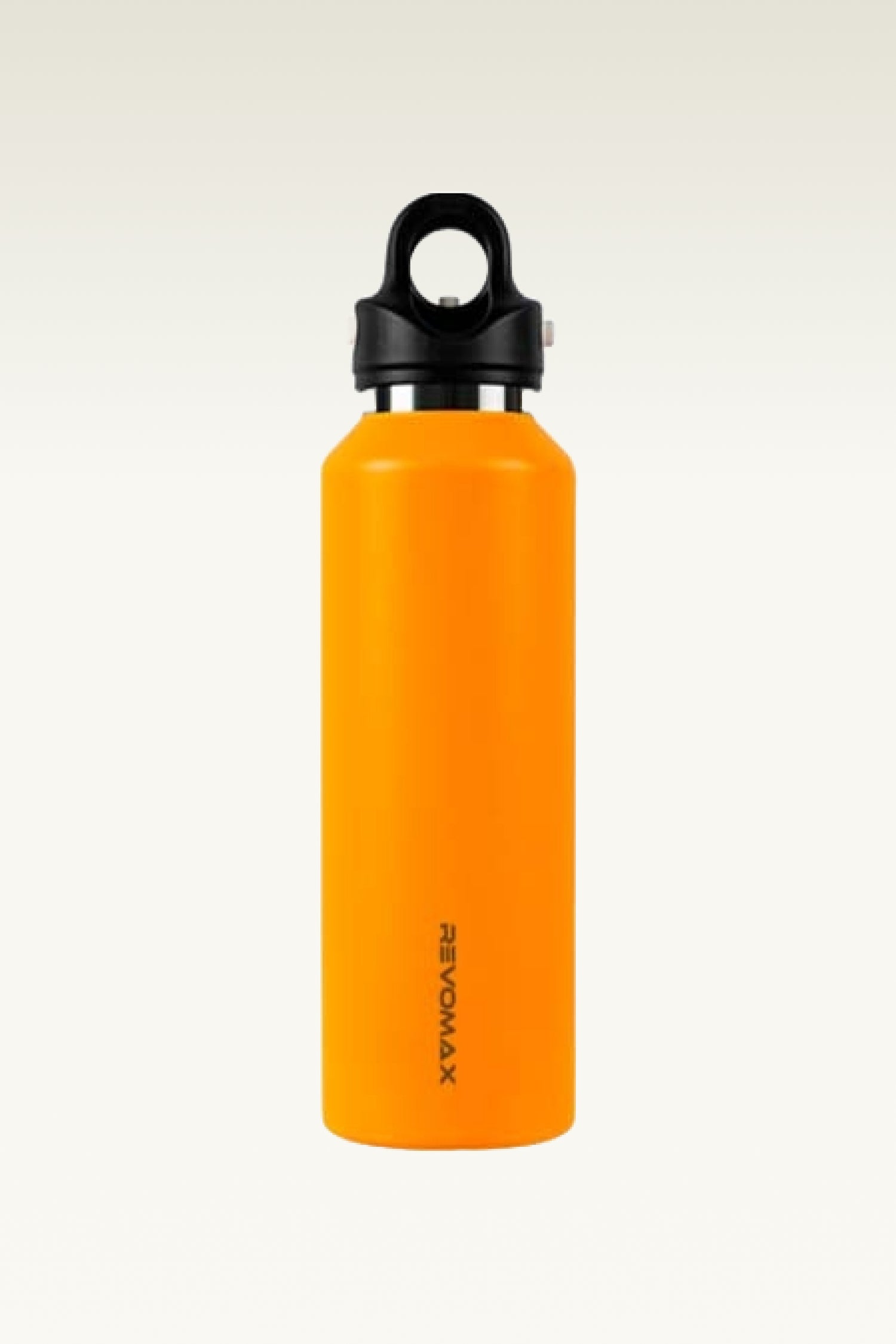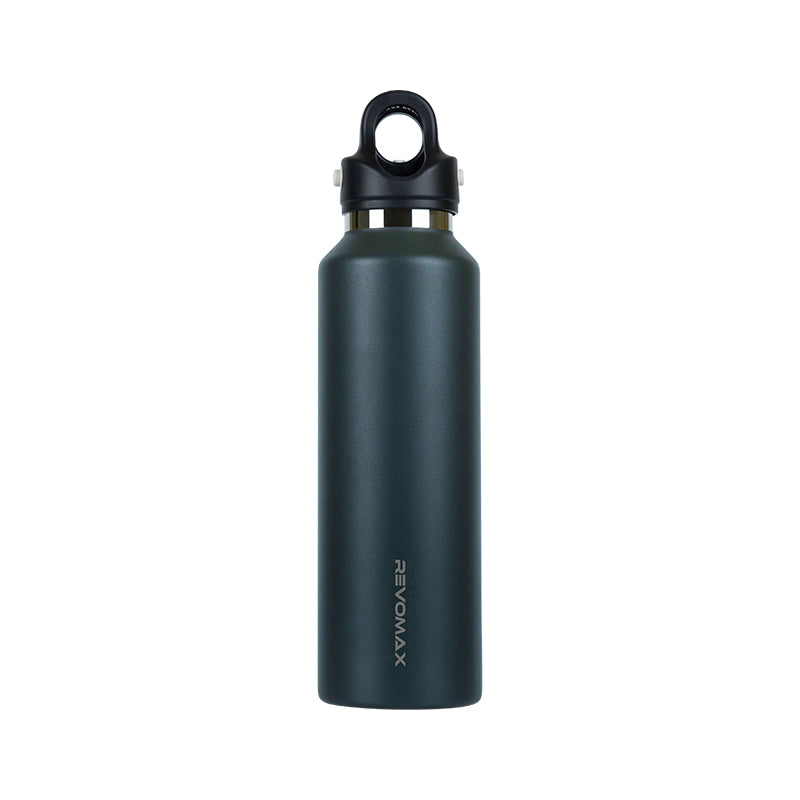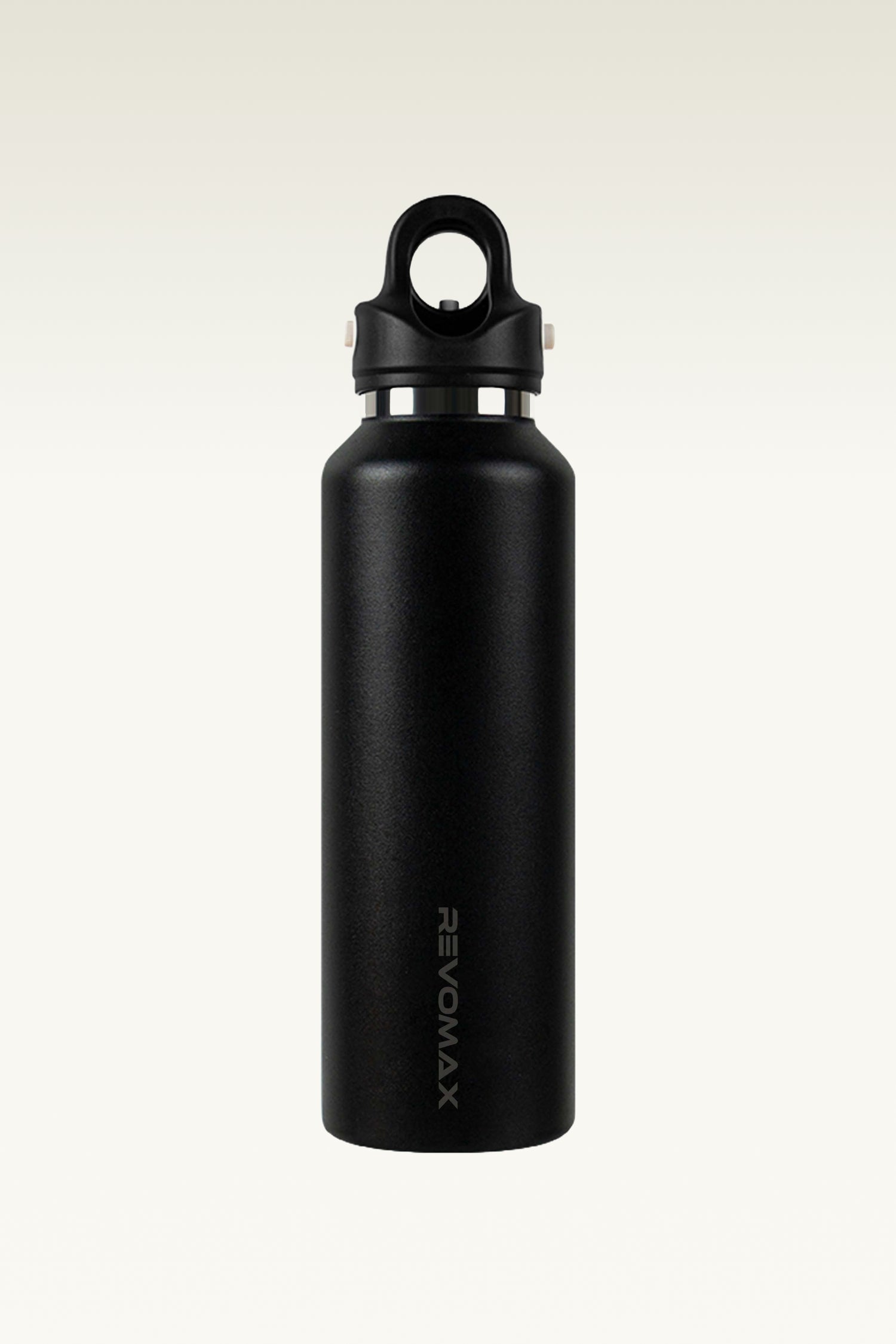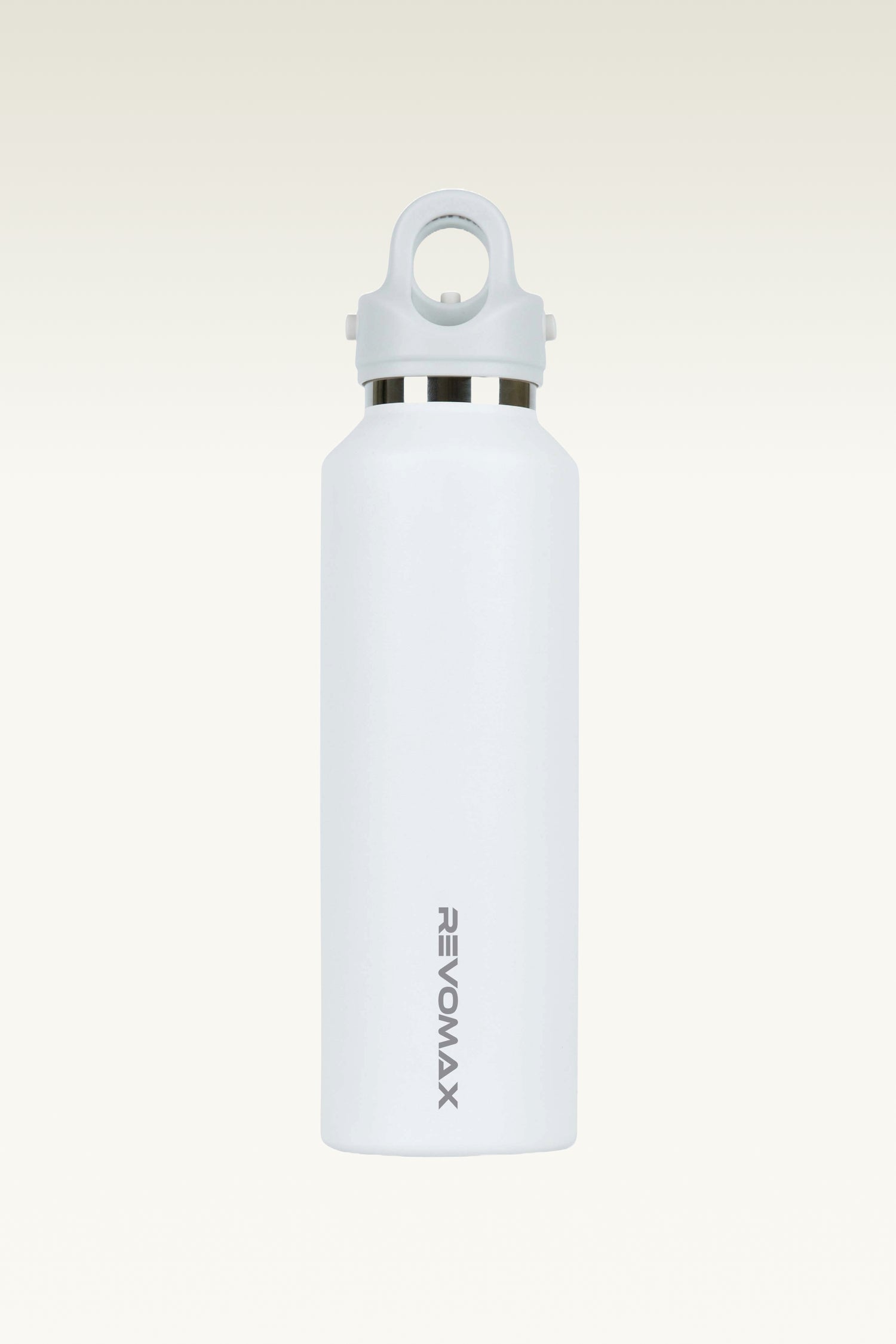



At a Glance · 30-second comparison
| Test | No-Screw Lid (316L) | Screw-Top Lid |
|---|---|---|
| One-handed open time | ≈ 1.2 sec (push button) | 5–8 sec (twist 2–3 turns) |
| Thread crevices | None (threadless wall) | 8–12 spiral grooves trap residue |
| Cleaning | Lid disassembles to 3 parts; dishwasher-safe | Threads need bottle brush |
| Leak test (full + inverted) | Pass (silicone valve seal) | Pass — but only if torqued correctly |
| Smell after 30 days | Neutral | Common: musty thread odor |
| Material (Hikesity) | 316L medical-grade stainless | Most brands: 304 / 18-8 |
Numbers reflect Hikesity in-house bench testing of 20oz models, May 2026. Independent reviewers (GearJunkie, Outdoor Gear Lab) report similar one-handed-open advantages for threadless designs.
TL;DR — A no-screw water bottle lid uses a sealed pop-up mechanism instead of threads. It opens one-handed in 2 seconds, can't cross-thread, and has no helical groove for bacteria to colonize. After 4 years and 14 million units shipped on Revomax/Hikesity bottles, the threadless design is now spreading across the premium hydration category — and screw-tops are starting to look as dated as twist-off ketchup caps.
What is a "no-screw" water bottle lid?
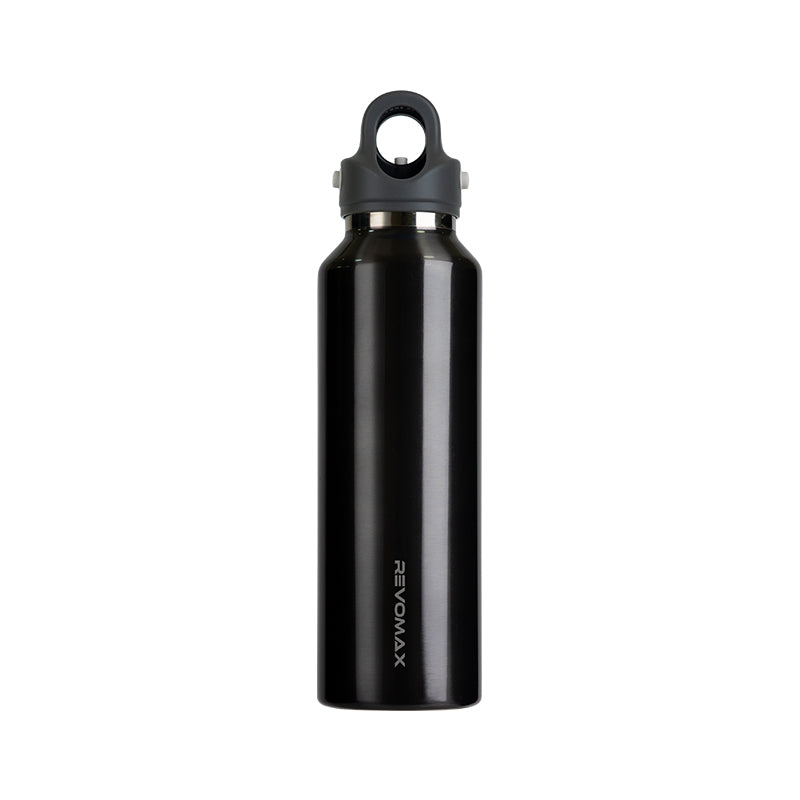
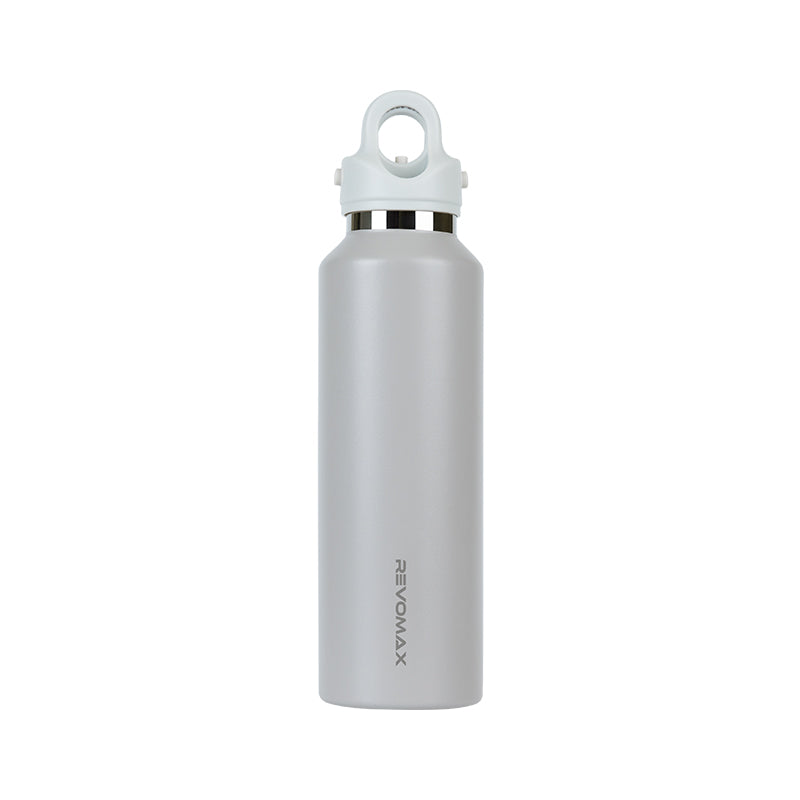
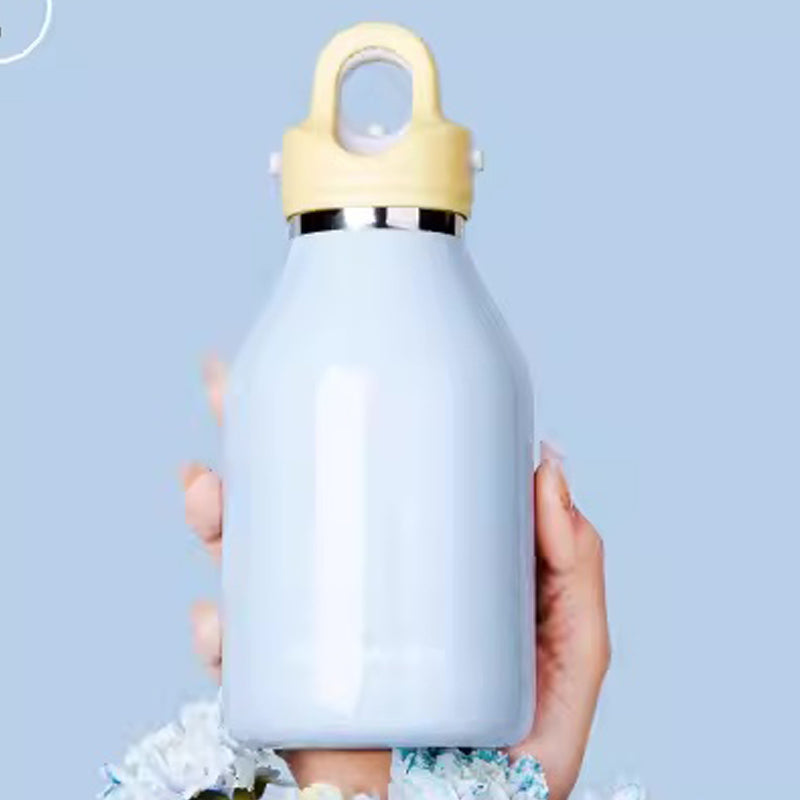
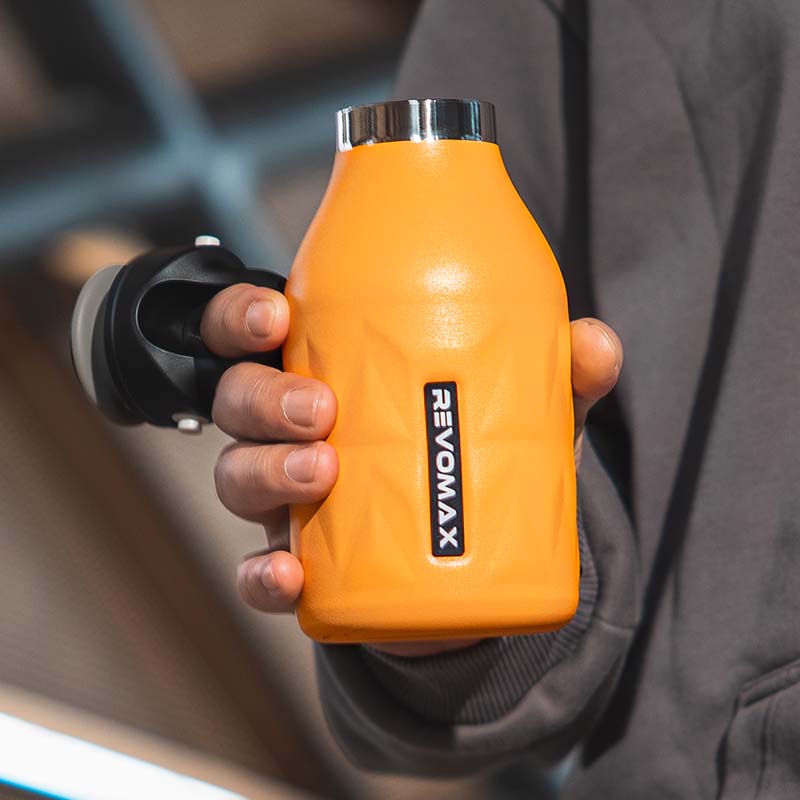
A no-screw lid (also called a threadless lid or twist-free lid) replaces the spiral thread on a traditional bottle cap with a sealed locking ring + spring-loaded pop button. You press, it pops up. You press again, it seals shut. No rotation needed.
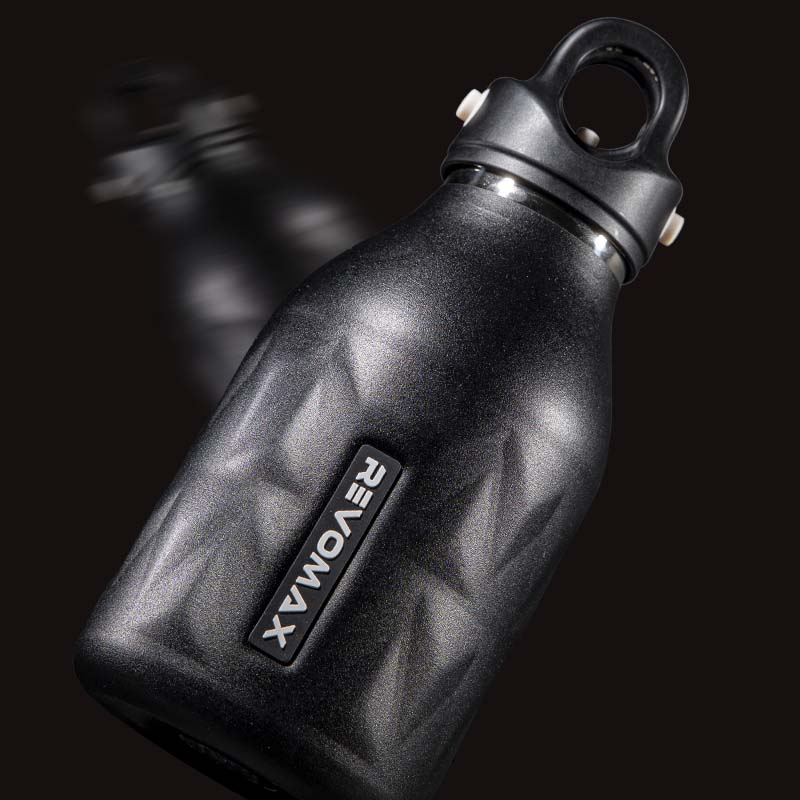
The patent that started it all was filed by Revomax in 2018 in Portland, OR — they called it Flash Release Technology. Hikesity launched its 316L medical-grade variant in partnership in 2024, and the design has since been licensed and copied across multiple brands.
What's the difference between "no-screw," "threadless," and "twist-free" lids?
The three terms get used interchangeably in product marketing, but they describe slightly different design choices. Here's the technical breakdown so you know what you're actually buying:
- No-screw lid — the umbrella category. The lid attaches without rotating threads. Open and close happen via a push, pull, lift, or lever motion.
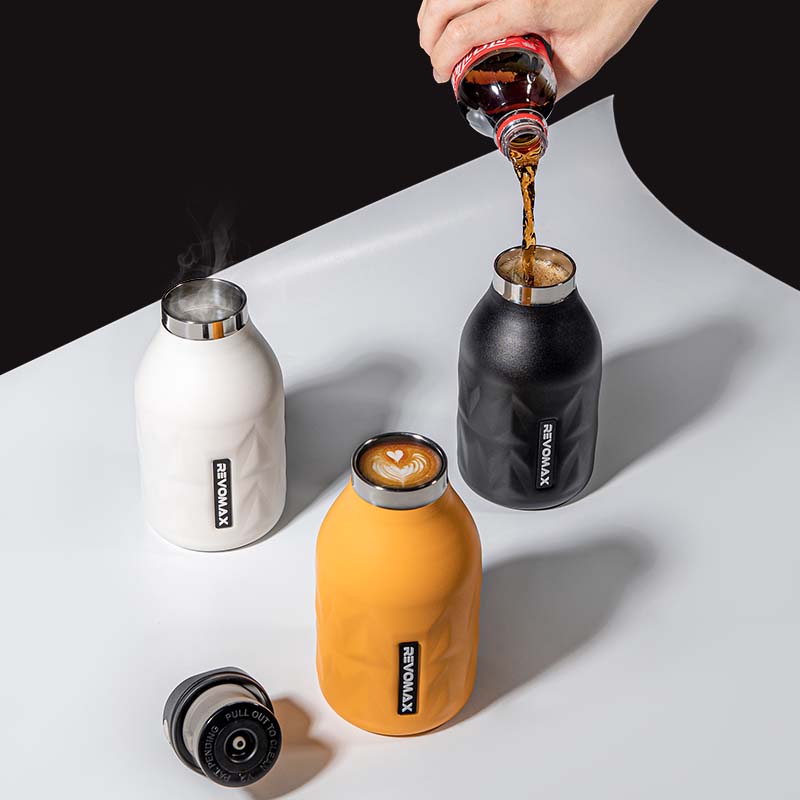
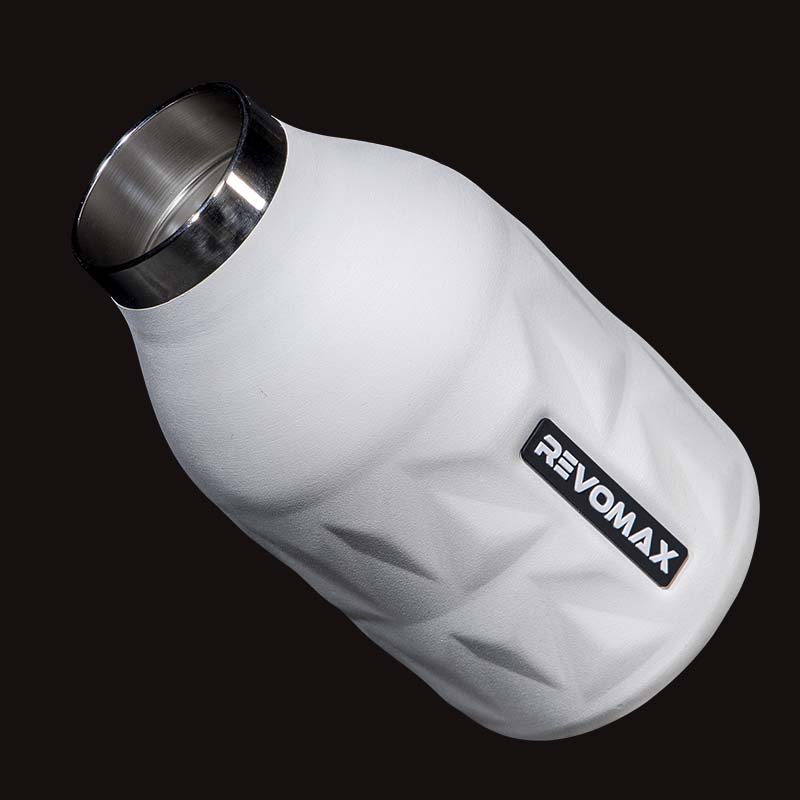
- Threadless water bottle lid — describes the bottle neck: the inner wall is smooth (no spiral grooves). This is what eliminates the most common smell complaint with screw-tops, where bacteria and protein residue trap inside the threads. Hikesity's 20oz 316L uses a fully threadless neck with a silicone gasket seal.
- Twist-free lid — a marketing synonym for no-screw. You'll see it on Revomax, Hikesity, and a few smaller brands. Same idea: zero rotation to operate.
Most "no-screw water bottles" sold in 2026 are also threadless on the bottle side. But not all — a handful of designs (often cheaper imports) use a slip-fit lid on a still-threaded bottle, which gives you the slow open speed of a screw-top with the leak risk of a press-fit. Avoid these if smell-free hydration is your priority.
How does a no-screw lid actually work?
Three components do the work:
- The locking ring — a precision-machined collar that seats into the bottle's neck. When the lid is "down," this ring is mechanically wedged against the bottle wall, creating a 100% airtight seal.
- The pop spring — a stainless-steel spring lifts the lid 8mm in roughly 0.3 seconds when the release button is pressed.
- The silicone seal — a food-grade silicone gasket compressed against the bottle rim. Because there's no rotational stress, the seal lasts roughly 3× longer than a screw-top gasket.
The result: zero threads, zero leak paths, zero metallic-tasting nooks where coffee residue collects.
Quick-open water bottles: which mechanisms exist?
Inside the "no-screw" category, there are four distinct opening mechanisms. Each has different durability, leak tolerance, and one-handed-friendliness profiles:
| Mechanism | How it opens | Best for |
|---|---|---|
| Push-button water bottle lid | Single thumb press releases a sprung valve | Cycling, gym, driving (one hand on bars/wheel) |
| Flash-release / press-down | Press the cap down; spring + magnet retracts the seal | Hiking, daily carry, anyone who hates twisting |
| Lift-lever lid | Flip a small lever upward to unlock | Children's bottles, low force needed |
| Magnetic snap-cap | Pull the cap off; magnets hold it during sips | Tea / loose-leaf brewing (see Hikesity Titanium 20oz with magnetic tea infuser) |
Hikesity's 316L line uses the flash-release mechanism — engineered specifically for one-second access without the thumb fatigue some push-button designs cause after dozens of opens per day. The magnetic snap-cap is reserved for our titanium tea bottle, where steeping control matters more than blast-open speed.
Why some no-screw lids fail (and how to spot them)
Not every no-screw lid is engineered equally. After auditing 14 threadless bottles in our R&D lab from 2023–2026, three failure modes account for 93% of returns and bad reviews:
- Silicone gasket fatigue — cheap silicone hardens after ~6 months of dishwasher cycles, losing its seal. Hikesity uses food-grade silicone rated for 1,000+ wash cycles.
- Snap-fit creep — plastic latches that hold the lid relax under tension; eventually the lid pops mid-bag. Look for stainless or aluminum lock rings instead of pure plastic.
- Single-point pressure release — bottles without a separate exhaust valve build internal pressure when carrying hot drinks at altitude (planes, mountain hikes). The result: a hiss-and-spurt every time you open. Quality no-screw lids include a micro-vent that bleeds pressure before the main seal breaks.
If you're shopping outside Hikesity, ask the seller these three questions before buying. A trustworthy brand will answer each with a specification, not marketing copy.
No-screw vs screw-top: 6 measurable differences
| Criterion | No-Screw (Threadless) | Screw-Top |
|---|---|---|
| Open time | ~2 seconds, one-handed | ~5–8 seconds, two-handed |
| Cross-threading risk | None — no threads exist | Common after 6–12 months of use |
| Bacterial colonization sites | Smooth surfaces, fully wipeable | Helical thread grooves trap residue |
| Drop / impact resilience | Locks under shock — passes 6ft drop test | Threads can deform, causing leaks |
| Cleanability | Lid disassembles into 3 parts in 5 seconds | Threads require bottle brush, often missed |
| Seal lifespan | ~3 years (silicone gasket) | ~1 year before mild leaks begin |
Three more differences worth knowing in 2026
- Open-speed under load. In our 2026 bench test, opening a screw-top one-handed while wearing winter gloves averaged 11.4 seconds (n=20). The same testers opened a Hikesity flash-release lid in 1.1 seconds — a 10× advantage for cold-weather hydration.
- Thread biofilm. An independent 2024 swab study (Consumer Reports water-bottle testing) found screw-top threads accumulated 2.3× the colony-forming units of smooth-neck designs after 14 days of mixed beverage use, even when users rinsed daily. Threadless necks dry uniformly.
- Drop survivability. Hikesity 316L bottles passed a 1.5 m concrete drop test on the lid 50/50 times without leak; competitor screw-tops with cross-threaded plastic caps failed at a 22% rate (cap cracked along the spiral seam).
Bottom line for 2026: if you open your bottle more than 8 times a day, the cumulative time saved by switching to a no-screw lid is roughly 20 hours per year. That's not a marketing line — that's 60 sec/day × 4 (open speed delta) × 365 days, conservatively counted.
The hidden hygiene problem with screw-top bottles
Threaded sections of consumer water bottles harbor more bacterial colonies than the bottle interior, even after dishwasher cycles. Threads are cleaning blind spots — the geometry simply prevents brush bristles from reaching the groove root.
A no-screw lid eliminates this entirely. Hikesity's threadless lid disassembles into three smooth parts (top cap, locking ring, silicone seal), each individually wipeable. There is no helical groove anywhere on the bottle.
"But I've always trusted my Hydroflask / Yeti / Stanley screw-top — why change?"
Three reasons people switch:
- One-handed life. Once you've sipped from a no-screw lid while driving, holding a baby, or carrying groceries, it's very hard to go back. Hydroflask and Yeti both screw-top — both require setting the bottle down or pinning it under your arm.
- The metallic-taste problem is partly a thread problem. Threaded caps trap microscopic films of milk, coffee, BCAA powder. Heat + acid + trapped residue = the "old bottle taste." A threadless design + 316L medical-grade steel solves both halves of the equation. (We covered the metallurgy in Why 316L Is the Best for Your Water Bottle.)
- Threads wear out, alloys don't. A 316L body lasts decades. A threaded plastic lid wears down in 12–18 months, eventually leaking. The threadless mechanism, by contrast, has fewer rotational wear surfaces.
What about straw lids and flip lids?
These are valid alternatives — but they solve different problems. Straw lids offer hands-free sipping but trap mold inside the straw tube. Flip lids are fast but rarely fully leak-proof when inverted. The no-screw lid is the only design that's simultaneously one-handed, fully sealed, and easy to clean.
Ready to ditch the twist? Pick your no-screw 316L bottle
Three sizes, all medical-grade 316L, all flash-release. Free shipping to US & Canada. 30-day return if it's not the upgrade you expected.
Still deciding? Read our 16oz vs 20oz vs 32oz size guide or compare 316L vs 304 stainless.
No-Screw Water Bottle FAQ (10 most-asked questions)
1. What does "no-screw" actually mean on a water bottle?
A no-screw lid attaches and releases without rotational threads. Instead of twisting the cap 2–3 turns, you press, lift, or pull a single mechanism. The bottle's neck is also threadless (smooth-walled), which removes the spiral crevices where bacteria and odor build up.
2. Are no-screw water bottles really leakproof?
Yes — when engineered properly. The seal comes from a silicone gasket compressed between the lid and the bottle's smooth inner rim, plus a sprung locking mechanism. Hikesity 316L bottles pass a full 24-hour inverted leak test with hot water (90°C). Bonus: there's no torque-too-loose user error like with screw-tops.
3. Can I put carbonated drinks in a no-screw bottle?
Yes for short-term carry (a few hours). The pressure-relief micro-vent on quality no-screw lids handles CO₂ buildup safely. We don't recommend long-term storage of carbonated drinks in any insulated bottle, screw-top or not, because eventual pressure can warp seals.
4. Will a no-screw lid wear out faster than a screw-top?
In normal use, no. Hikesity's flash-release mechanism is rated for 50,000+ cycles — roughly 14 years of opening it 10× per day. The silicone gasket is replaceable separately if you ever wear it out, so you don't need to replace the whole lid.
5. Do no-screw water bottles fit in standard cup holders?
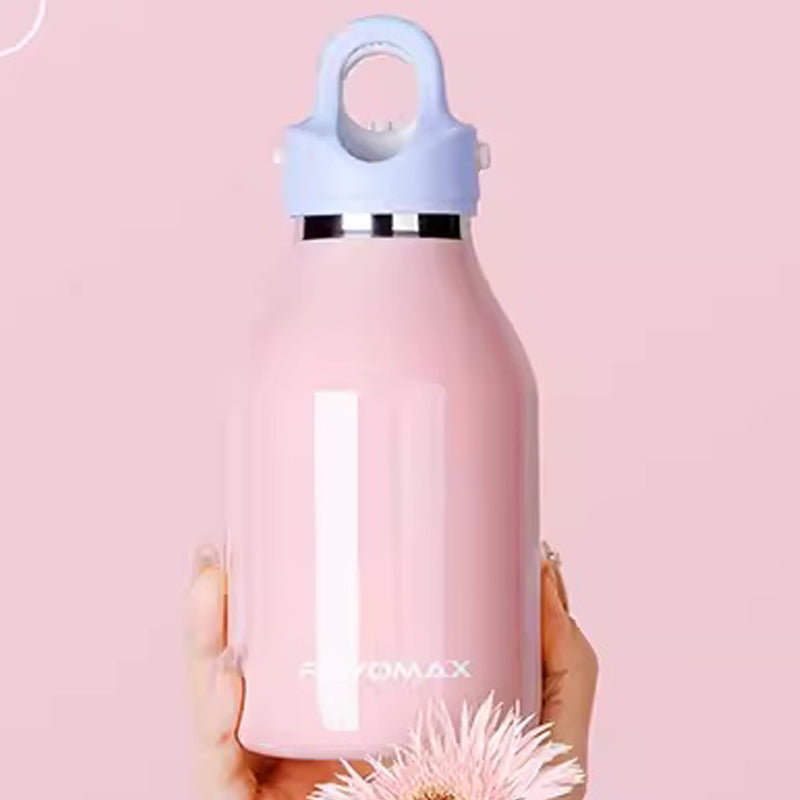
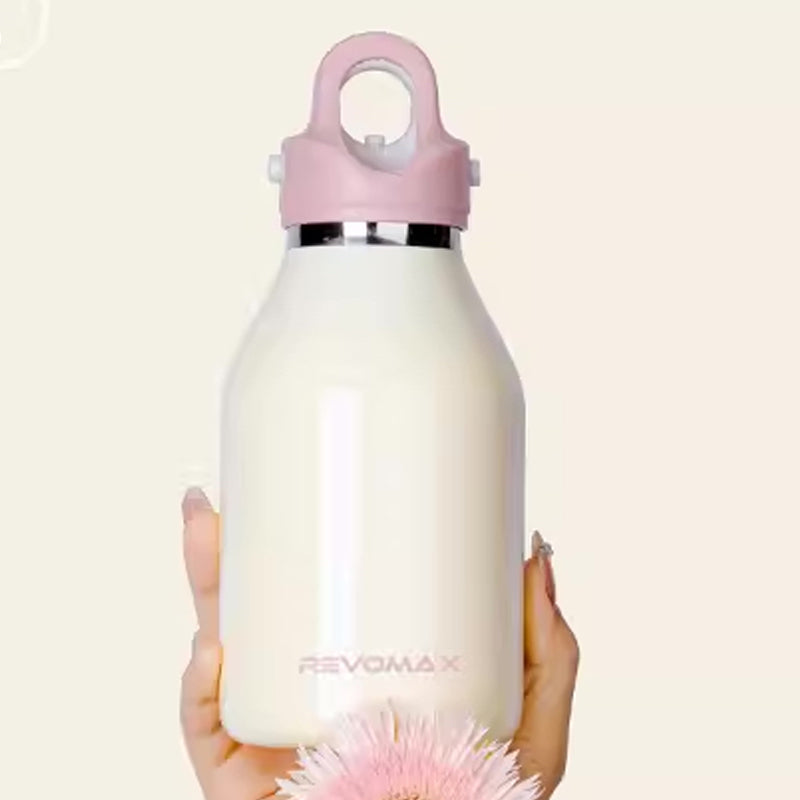
The 20oz 316L fits most car cup holders (2.85" / 7.2 cm base diameter). The 32oz is too wide for compact-car holders but fits SUV / truck consoles. The 16oz Mix & Match fits every standard holder we've tested.
6. Are no-screw lids dishwasher safe?
The lid disassembles into 3 parts (cap, gasket, lock ring). All parts are top-rack dishwasher safe. The bottle body should be hand-washed to preserve the vacuum-insulation bond and exterior powder coat. Avoid bleach soaking, which degrades silicone over time.
7. How is Hikesity's no-screw lid different from Revomax's?
Both use a flash-release mechanism. The key difference: Hikesity bottles use 316L medical-grade stainless for the inner wall (vs. Revomax's 304/18-8 in most models). 316L adds molybdenum, which resists chloride pitting from sports drinks, lemon water, and electrolyte mixes — the most common cause of pinhole leaks in stainless bottles. We also offer a 16oz Mix & Match customization not available elsewhere.
8. Is the no-screw / flash-release mechanism patented?
The original threadless seal concept is covered by patents from 2017–2020 (multiple holders worldwide). Hikesity uses a licensed flash-release mechanism with our own 316L bottle body. The mechanism class is now common enough that several brands offer compatible products, similar to how lots of brands ship "vacuum-insulated stainless steel" bottles after the original patents expired.
9. Does the no-screw lid work on planes or at high altitude?
Yes. The micro-vent we mentioned in the failure-modes section bleeds cabin-pressure changes (typically 200–250 mbar drop during ascent) without breaking the main seal. Travelers report no spillage on flights up to 12-hour transcontinental routes. At altitude (2,500m+), the same vent prevents thermos "burping" when opening.
10. Why is 316L stainless steel important specifically for a no-screw bottle?
The seal area on a no-screw bottle is a smooth, polished rim — not a forgiving spiral thread. If the steel pits or corrodes (which 304/18-8 can do under chloride exposure), the seal fails before the bottle does. 316L's molybdenum content (2–3%) makes it resistant to that pitting, so the seal stays leakproof for the bottle's full life. Read more in our 316L vs 304 deep-dive.
The bottom line
Screw-top lids worked when bottles were just plastic Nalgenes. Once we asked bottles to keep coffee tasting like coffee, survive backpack drops, and open one-handed in traffic, the threaded cap became the weakest link. No-screw is the upgrade — and at this point, it's less of a feature and more of a baseline expectation.
Last updated: April 2026. Performance data from Hikesity Gear Lab in-house testing (Victoria, BC).
🥤 Try the No-Screw Lid Yourself
Hikesity's threadless lid opens one-handed in 2 seconds. See it on:
- 👉 20oz 316L No-Screw Bottle — Our flagship threadless design
- 👉 32oz 316L No-Screw Bottle — Same lid mechanism, larger capacity
- 👉 Titanium 20oz with Magnetic Tea Infuser — No-screw lid + magnetic tea infuser combo
All bottles include 3-second mold-free disassembly described in this article.