




Three hats dominate every winter accessory rack, and most guides rank them by what's trending. That's the wrong question. A beret, a cloche and a beanie aren't competing versions of the same object — they're three different shapes that do three different things to your head, your hair and your outfit. Once you understand the shapes, the choice makes itself.
Here's what actually separates them, with real measurements rather than adjectives.
The Three Shapes
The Beret

A beret is a flat-ish disc gathered into a band, worn on top of the head. The crown sits above your hairline rather than enclosing it, and the ears stay uncovered. It originates in the Basque Country and Béarn in southwest France, where the little stem at the crown — called a cabillou — began as the knot left over from hand-knitting. It's still functional: you pinch it to set the hat's angle rather than tugging at the edge, which is what stretches a beret out of shape over time.
The critical variable is diameter. A traditional wide Basque beret measures roughly 28–30 cm laid flat and drapes over one ear. A neater beret — our Luster Velvet Sculptural Beret is 25 cm — sits closer to the head. Same category, very different look. Check the flat diameter before you buy; most listings don't publish it, which tells you something.
The second variable is whether it holds a shape at all. A single-piece felted wool beret collapses flat on the head — the pancake problem. A panelled construction builds an actual dome. Ours is six panels, 10 cm tall.
The Cloche

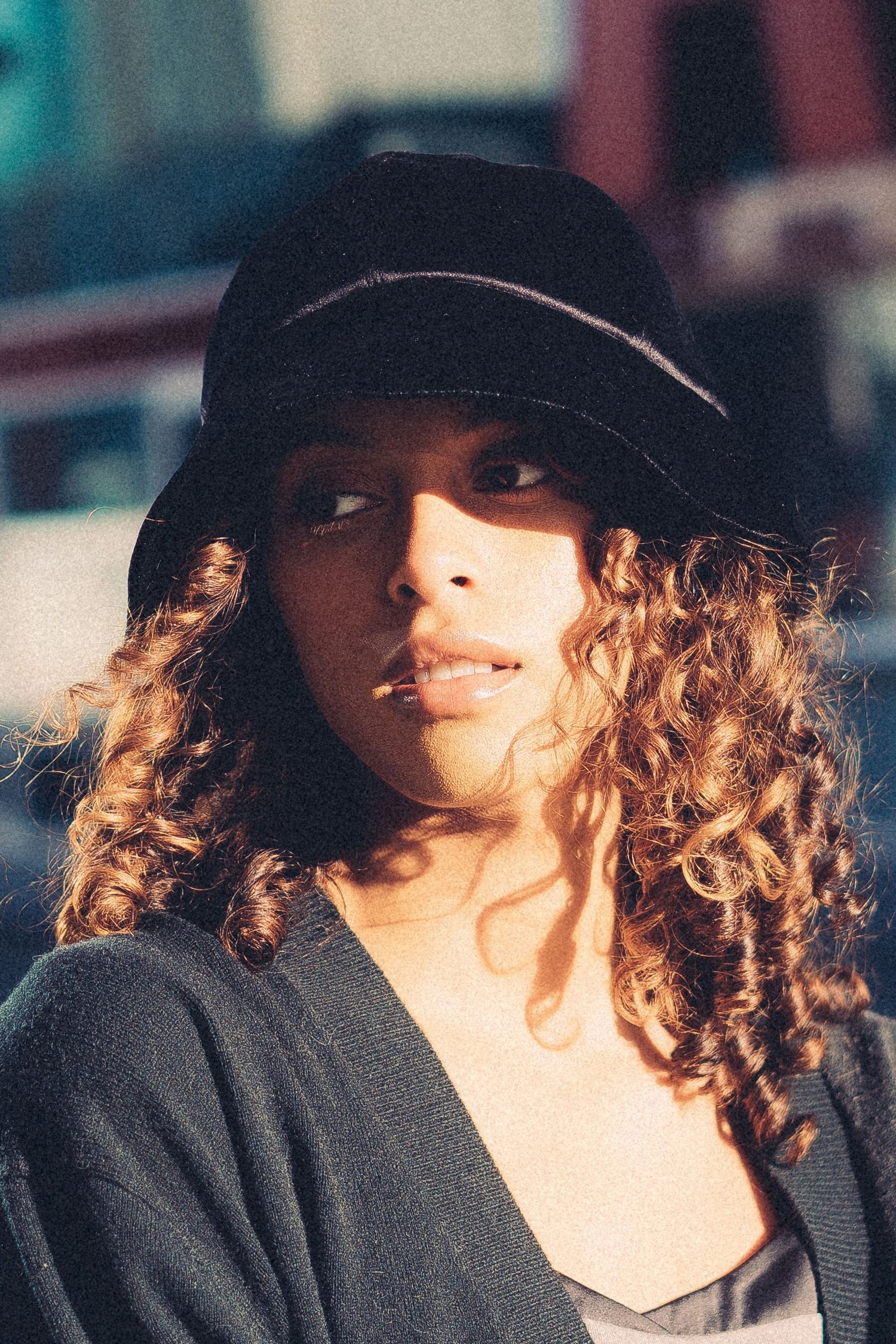
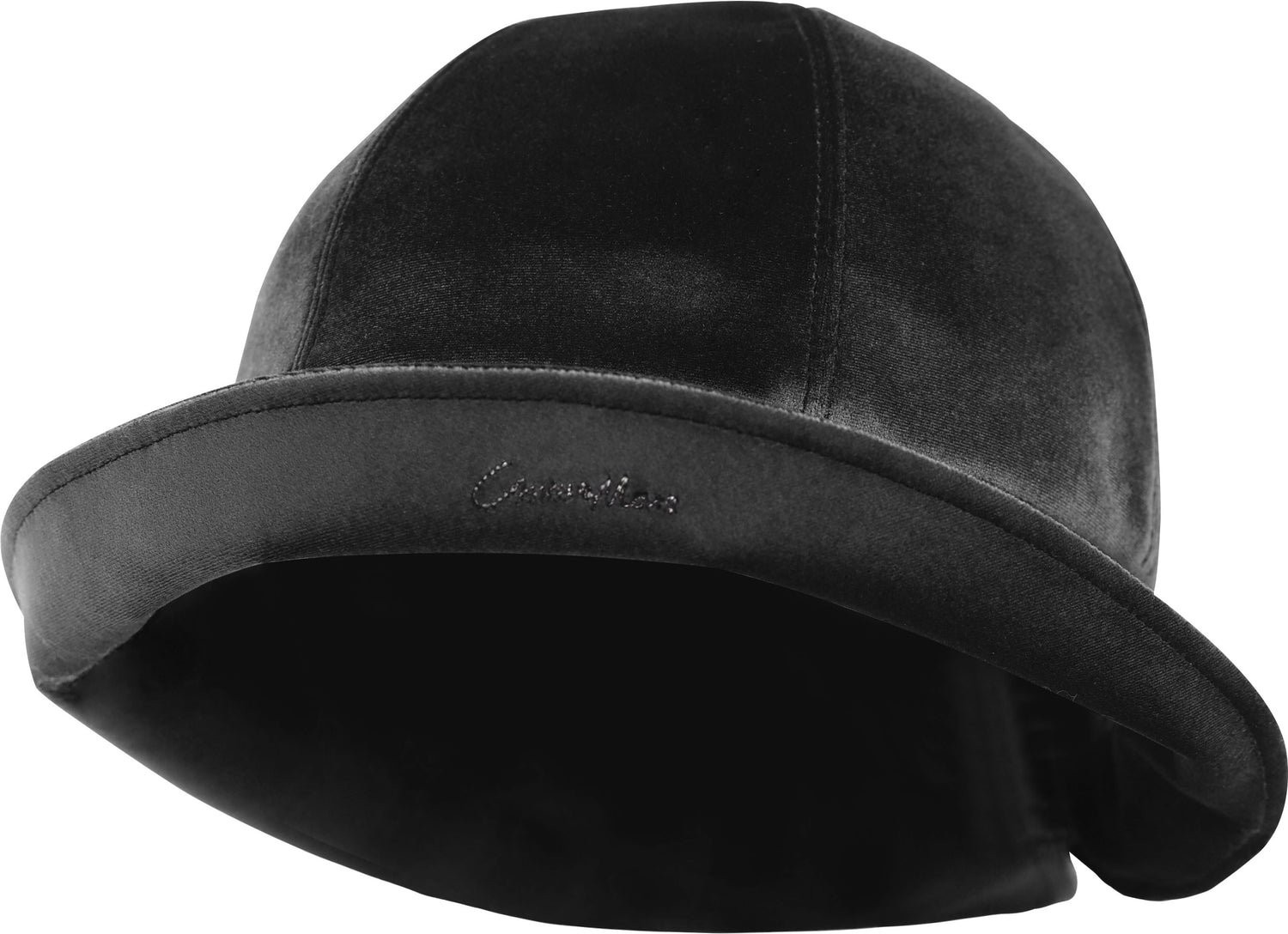
A cloche is a bell. That's literally the name — cloche is French for bell — and the shape is a crown that narrows toward the top, hugging the skull, usually finished with a short brim. It was invented in Paris in 1908 by the milliner Caroline Reboux, and it defined women's fashion from about 1922 to 1933. If you picture the 1920s, you're picturing a cloche.
The defining detail isn't the shape, though — it's the height it's worn at. A cloche is pulled down, to the brow, near enough to graze the eyebrows. Worn level, at beanie height, the whole silhouette collapses and it just looks like a hat that doesn't fit. This is the single most common mistake people make with the shape, and it's why some people conclude a cloche "doesn't suit them" when the fit is the problem.
Brims run short — ours is about 5.5 cm of visible brim, rolled upward from 7 cm of fabric. A cloche is not a sun hat. If the brim is wide and flat, it isn't a cloche.
The Beanie

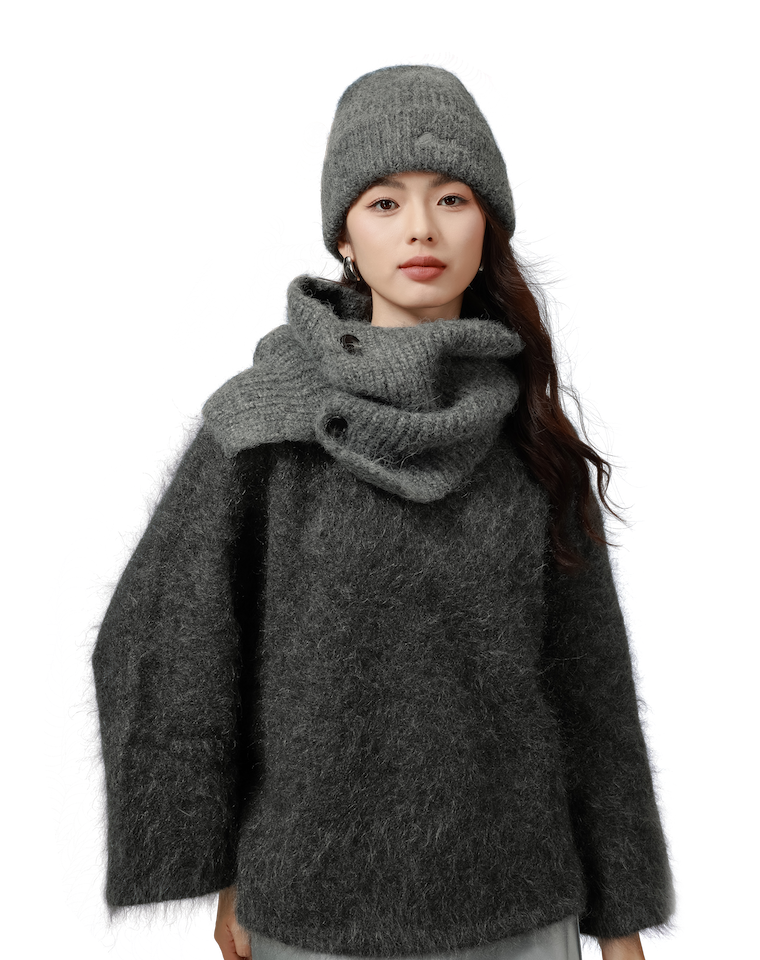
A beanie has no structure at all. It's a stretch tube that takes the shape of whatever's underneath it — which is both its strength and its limitation. It fits everyone, it costs the least, and it's warmer than either of the others because knit traps air. It also flattens your hair, sits at one tension whether that suits your head or not, and reads as casual in every context.
Side by Side
| Feature | Beret | Cloche | Beanie |
|---|---|---|---|
| Structure | Disc gathered to a band | Bell crown, narrows upward | None — follows the head |
| Where it sits | On top, above the hairline | Low, down to the brow | Anywhere from crown to eyebrow |
| Ears | Uncovered | Covered to the tops | Fully covered |
| Brim | None | Short, often rolled or turned | None |
| Effect on hair | Leaves most of it visible | Encloses it; suits it tucked or short | Compresses and flattens |
| Warmth | Least — ears exposed | Moderate — more coverage | Most |
| Dress code | Casual to smart | Smart-casual to dressy | Casual only |
| Reference point | Basque France, Parisian art scene | 1920s Art Deco | Workwear |
Which Suits Your Face?
A caveat first, because most articles skip it: there's no research behind face-shape styling rules. They're millinery convention — what fitters learned from watching thousands of people try hats on. That makes them a useful starting point, not a law. If something in the mirror contradicts what follows, the mirror is right.
With that said, the conventional guidance runs like this:
- Round face: height and asymmetry help more than a close, round shape. A beret worn tilted to one side works well; a beret with a tall dome more so. A cloche worn straight and level can echo the roundness, so tilt it slightly and keep the crown visible.
- Long or oblong face: the opposite. You want to shorten the vertical, so a hat worn low is your friend — which is precisely what a cloche does. Tall crowns worn high add length.
- Square or strong jaw: curves soften angles. A cloche's bell shape and rolled brim are about as curved as headwear gets. A rounded beret works too.
- Heart-shaped: wider at the forehead, narrower at the chin. A brim that cuts across the forehead balances that, so a cloche tends to sit well. A beret pushed back can emphasise the width up top.
- Oval: most shapes work. Choose on wardrobe rather than face.
Which Suits Your Hair?
This matters more than face shape and gets discussed less.
If you want your hair visible, a beret is the only one of the three that leaves most of it out. It sits above the hairline, so length, layers and colour all still read.
If your hair is short, or you wear it tucked or up, a cloche is the shape it was designed around. The cloche and the 1920s bob rose together for exactly this reason: the hat requires the hair to be out of the way, and the haircut made that possible.
If you have a lot of hair, check the fit range rather than assuming "one size" means yours. Adjustable bands vary — ours run 55–58 cm on the beret and 54–57 cm on the cloche. Measure your head with a soft tape just above the eyebrows and ears before you order anything.
If hat hair is the problem, the variable is friction and compression. Structured hats rest around your hair rather than pressing on it, and a smooth interior — velvet pile, a satin-finish lining — slides over hair instead of gripping it. A knit beanie does the opposite on both counts: it compresses, and the yarn catches.
When You Should Just Buy a Beanie
If it's genuinely cold — below freezing, windy, walking any distance — buy the beanie. A velvet hat is a style object. It blocks wind and covers your head, but it has no insulation, and neither a beret nor a cloche will do what a thick knit does at −10°C.
The honest framing is that these aren't substitutes. Plenty of people own a beanie for the commute and a cloche for dinner. If you're choosing one hat for one purpose and that purpose is warmth, the answer is easy and it isn't us.
A Quick Way to Decide
- You want to show your hair, and you like a Parisian reference → beret. Check the flat diameter: 25 cm for something neat, 28–30 cm for something slouchy.
- You want the hat to be the outfit, and you're going somewhere → cloche. Wear it low.
- You want warmth and you're walking to the station → beanie.
- Your face reads long → cloche, worn low.
- Your face reads round → beret, worn tilted.
- You measure over 58 cm → check the fit range on anything before you order; most adjustable hats top out around there.
Frequently Asked Questions
Is a cloche the same as a bucket hat?
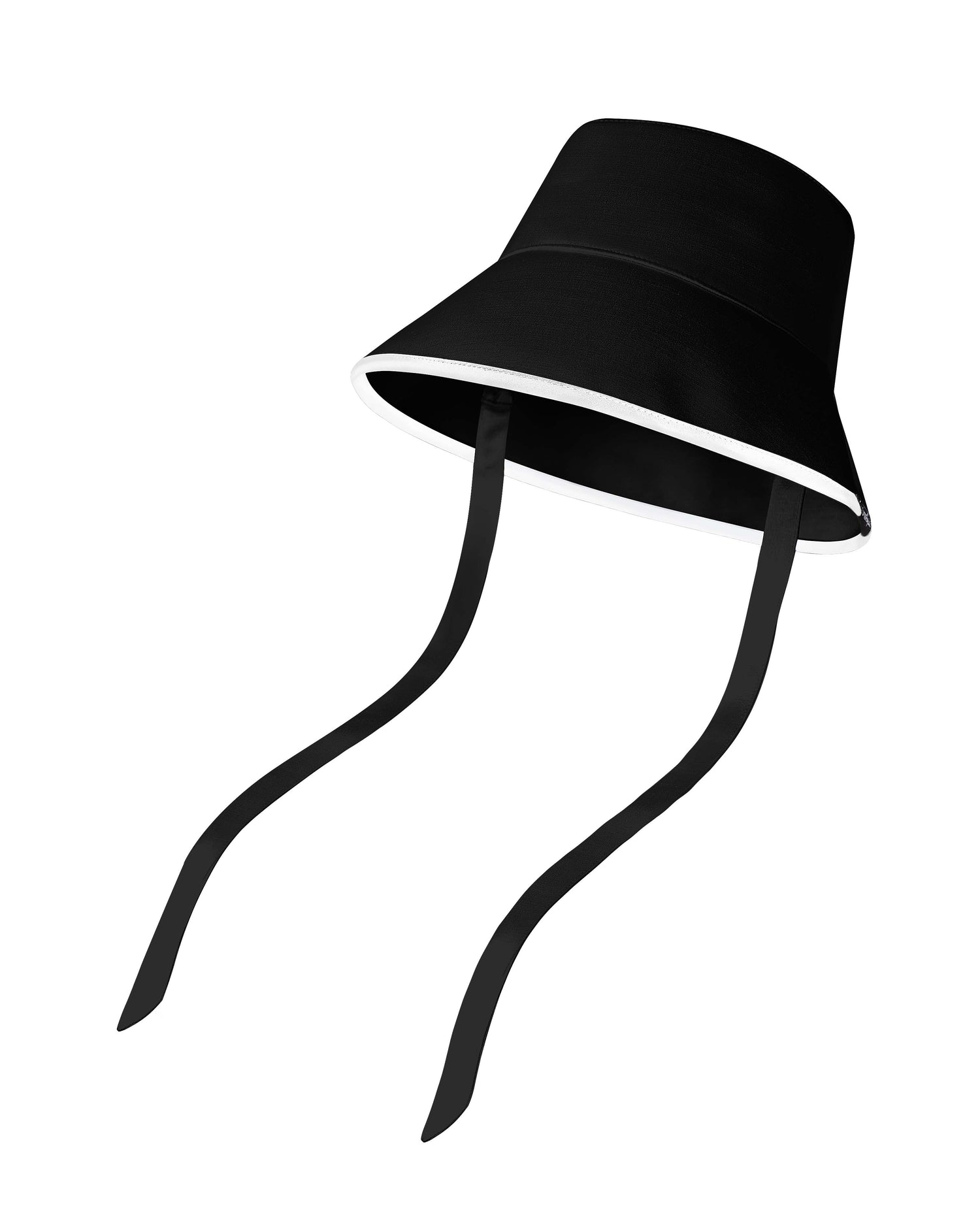
No. A bucket hat has straight sides and a flat brim of even width all the way round; a cloche has a bell crown that narrows upward and a short brim, often rolled. They get confused because both enclose the head and turn down at the edge. The reference points are different too — the cloche is 1920s Paris, the bucket hat is 1960s fishing gear by way of 1990s streetwear.
Are berets still in style?
The beret has outlasted the idea of being in or out of style — it's been in continuous use since the 19th century and reappears in collections every few years. The more useful question is which version: wide and slouchy reads differently from neat and structured, and those two cycle independently.
How do I stop a beret sliding around?
Fit, mostly. A beret that's too loose slides because there's nothing holding it; the traditional fix was bobby pins. An adjustable inner band solves it at the source — set it snug to your actual head size rather than relying on a fixed circumference or a stretch band.
What's the stem on top of a beret for?
It's called a cabillou. It started as the knot left over from hand-knitting the crown and became the signature of the form. Practically, it's a handle: pinch it to adjust the angle rather than pulling at the edge.
Which of the three is warmest?
A knit beanie, by a clear margin — knit traps air and covers the ears fully. A cloche comes second, since the crown encloses more of the head. A beret is the least warm because the ears stay exposed.
Can you wear a cloche with long hair?
Yes, though the shape was built around short hair. Long hair works if it's tucked behind the shoulders or pinned up at the nape; loose volume at the sides fights the close silhouette.
The Hats in This Article
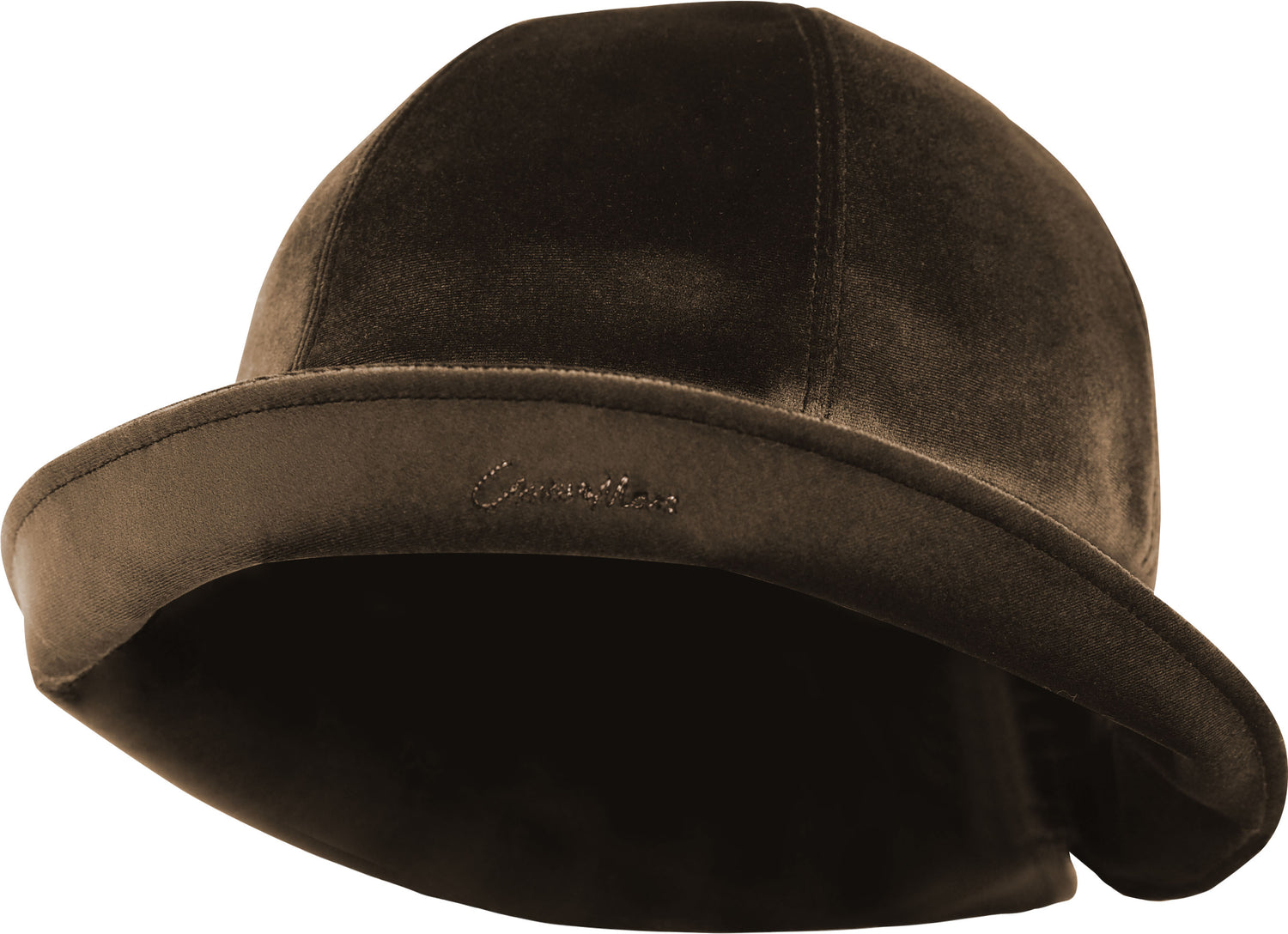
The measurements quoted above come from two of our own: the Luster Velvet Sculptural Beret (25 cm flat, 10 cm dome, six panels, adjustable 55–58 cm) and the Luster Velvet Cloche Hat (10 cm crown, 5.5 cm rolled brim, adjustable 54–57 cm). Both are cut from the same velvet in the same three colours. For the wool-versus-velvet question specifically, we went into more detail in Velvet Beret vs. Wool Beret.