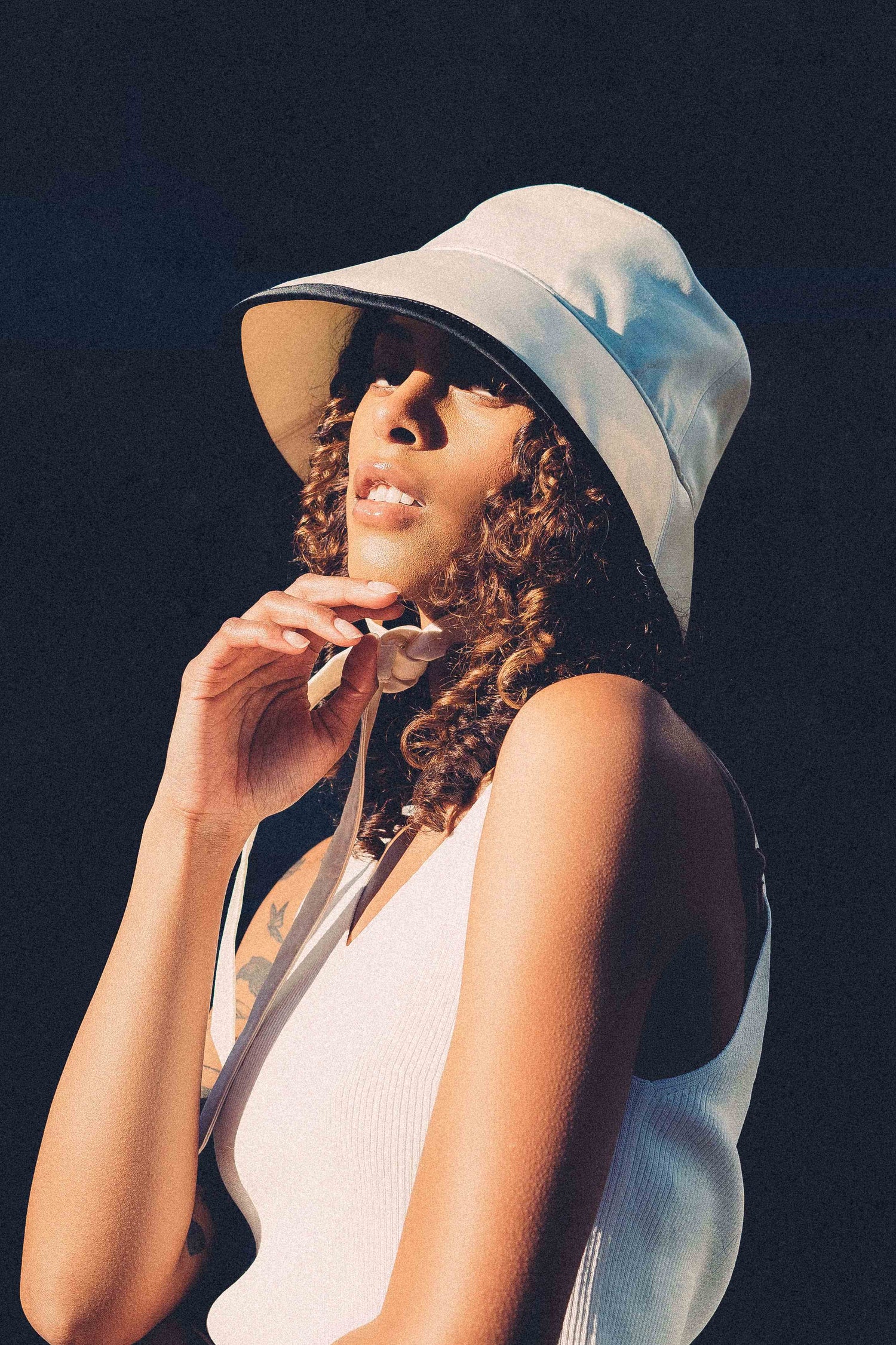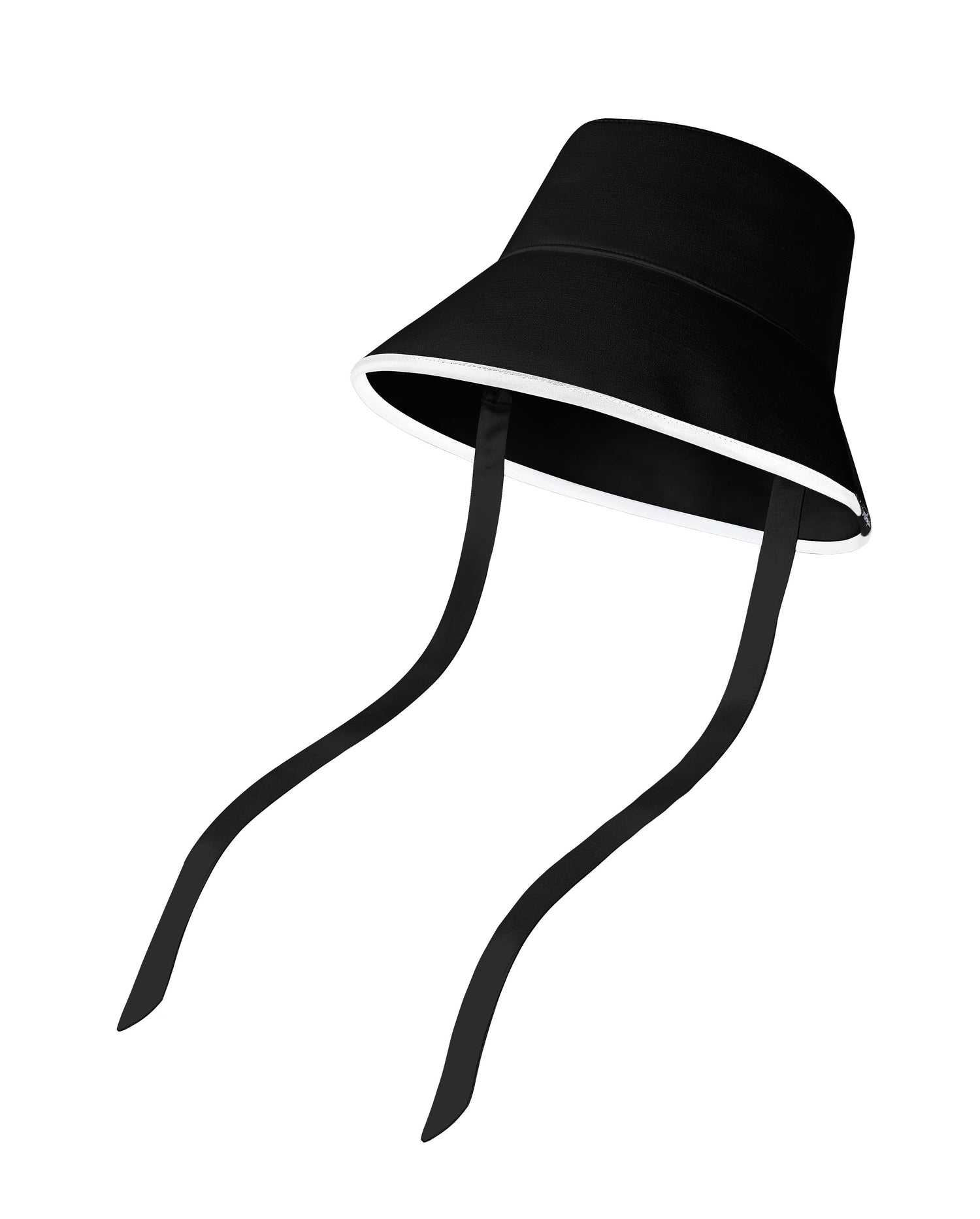





A cloche fits low and close with a bell-shaped crown and face-framing brim; a bucket hat usually has straighter sides, a flatter all-around brim and a more casual fit. Here is how to recognize the difference online and choose the right silhouette.
Cloche vs bucket hat: the short answer (crown shape, brim, how it's worn)
The simplest answer to cloche hat vs bucket hat is shape and placement. A cloche has a bell-like crown that narrows toward the top and is worn low, close to the brow. Its brim frames the face and may curve or roll upward. A classic bucket hat has straighter sides, an even brim that projects or hangs downward, and a more relaxed position on the head.
Both styles have a full crown and a brim without a front peak, so they can overlap in product listings. Look beyond the category name: the crown profile, brim construction and intended wearing position are more useful identifiers.

Where each came from: Caroline Reboux's 1908 cloche vs the fishing hat that became 1990s streetwear
Aberdeen Archives, Gallery & Museums credits Parisian milliner Caroline Reboux with inventing the cloche in 1908 and describes its popularity in the 1920s and early 1930s. Its name comes from the French word for “bell,” describing the crown rather than a fabric or decoration. Hikesity's guide to how to wear a cloche hat discusses this history and cites the museum record.
The classic bucket hat followed a different route: it began as practical fishing headwear, entered wider fashion in the 1960s and became a recognizable part of 1990s streetwear. Its practical, casual lineage explains the straightforward crown and all-around brim found on many modern versions.
History does not make every contemporary hat fit neatly into one box. A designer can combine a bucket hat's complete crown-and-brim construction with a cloche's bell profile, close fit and dressier finish.
Side-by-side comparison: crown, brim angle and width, fit, dress code, warmth
| Feature | Cloche hat | Classic bucket hat |
|---|---|---|
| Crown | Bell-shaped and usually narrower toward the top | Typically straight-sided or flared toward the brim |
| Brim angle | Curved, face-framing or rolled upward | Usually flat or angled downward |
| Brim width | May vary around the hat or appear narrower after rolling | Usually an even width all around |
| How it is worn | Low and close to the brow | Level on the head with a relaxed fit |
| Dress code | Smart-casual to dressy | Casual and streetwear-oriented |
| Warmth | Depends on fabric and lining; a close crown reduces open space around the head | Depends on fabric and lining; the style name alone does not establish warmth |
Fabric is not a reliable category test. Velvet, cotton and other textiles can be used for either silhouette. Warmth also cannot be inferred from the word “cloche” or “bucket”; check the material, lining and coverage listed for the individual hat.
How to tell which one you're looking at when shopping online
Start with the side-view photograph. A crown that curves inward or narrows as it rises points toward a cloche. A crown with relatively straight sides and a sharp transition to the brim points toward a classic bucket hat.
- Trace the crown: look for a continuous bell curve rather than a cylindrical bucket.
- Inspect the brim edge: a rolled or sculpted edge suggests a cloche; a flat, evenly cut ring suggests a bucket hat.
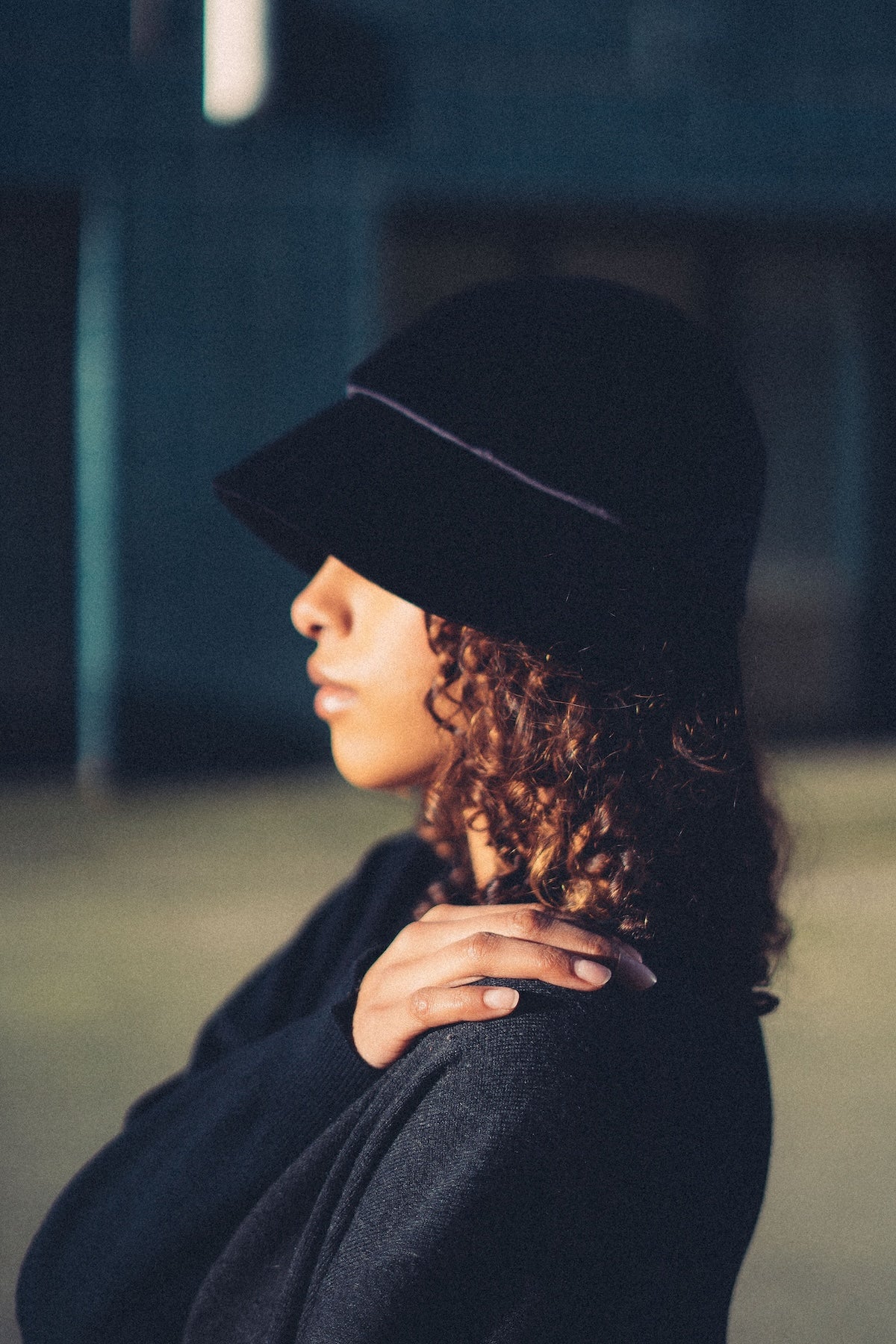
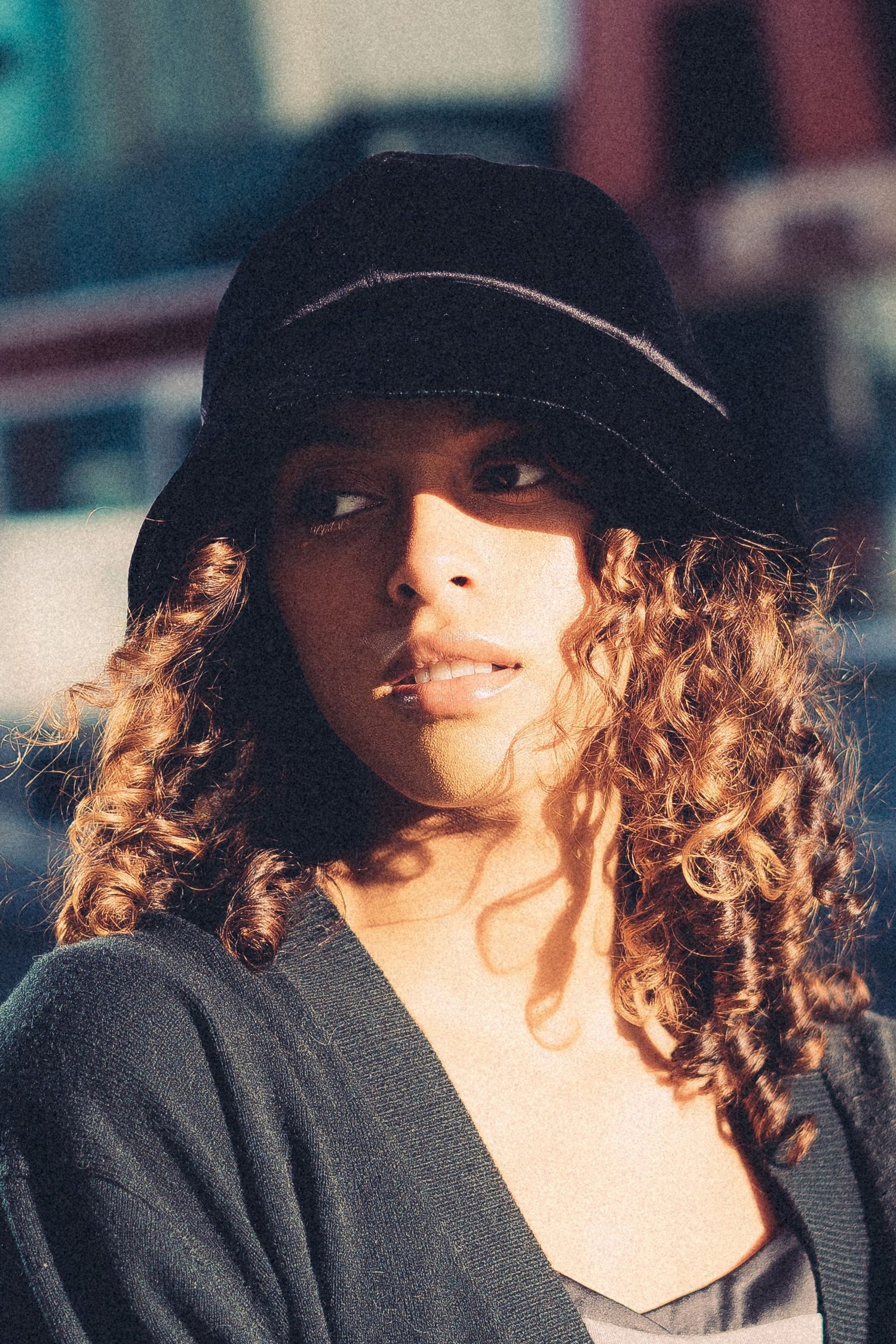
- Check the model's brow: a cloche is normally shown low and close, while a bucket hat often sits more casually and may cast shade over the face.
- Read the construction: terms such as “bell crown,” “narrows upward” and “rolled brim” describe a cloche line more precisely than the product title does.
- Check measurements: crown height, effective brim width and adjustable head circumference reveal more than styling labels.

Why some cloches get listed as bucket hats (and what to check on the spec sheet)
Retail categories are broad, and the two hats share an obvious structure: both surround the head with a full crown and have a brim without a baseball-style peak. A modern hybrid may therefore be called a “cloche bucket hat” so shoppers using either term can find it.
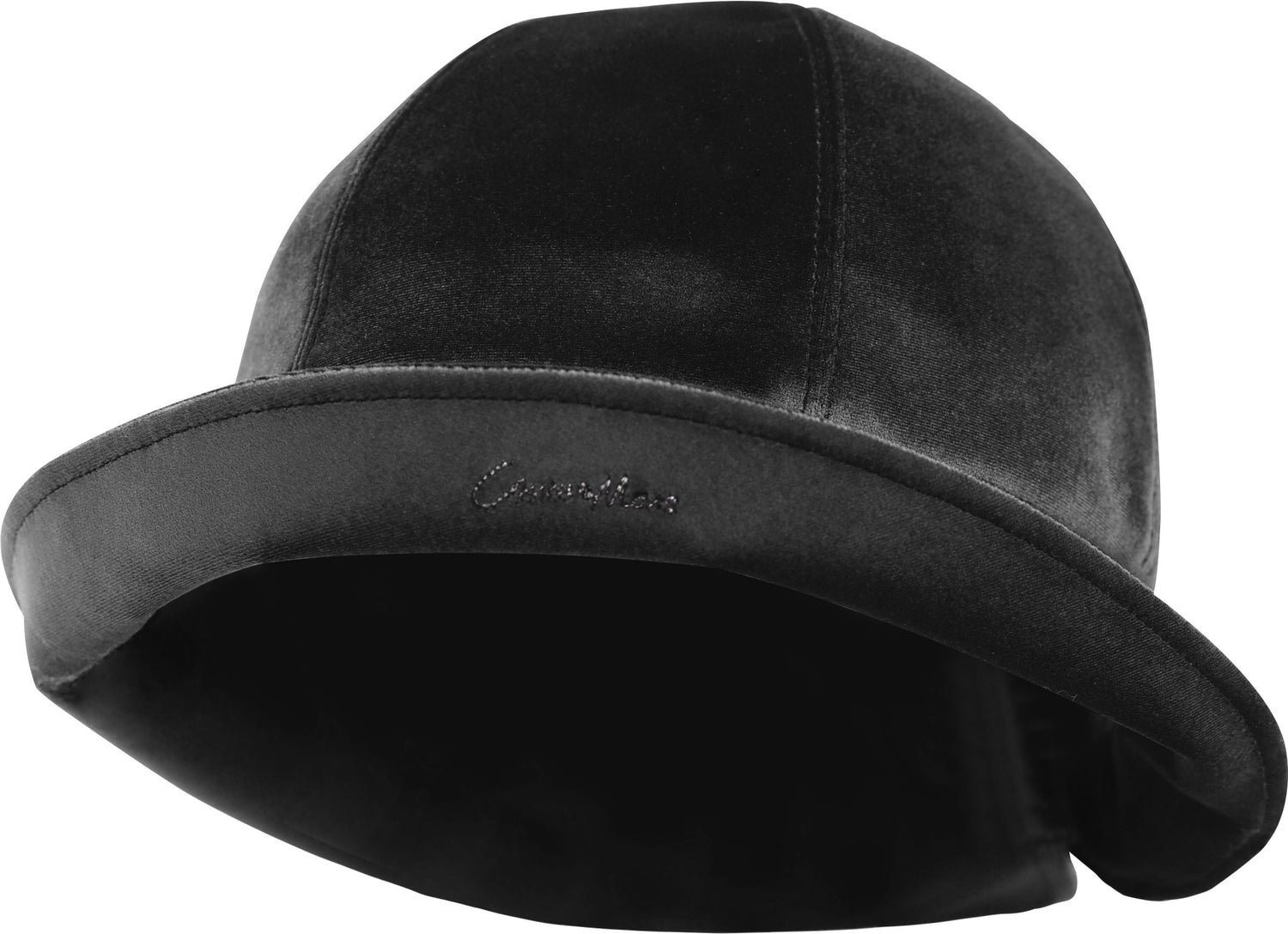
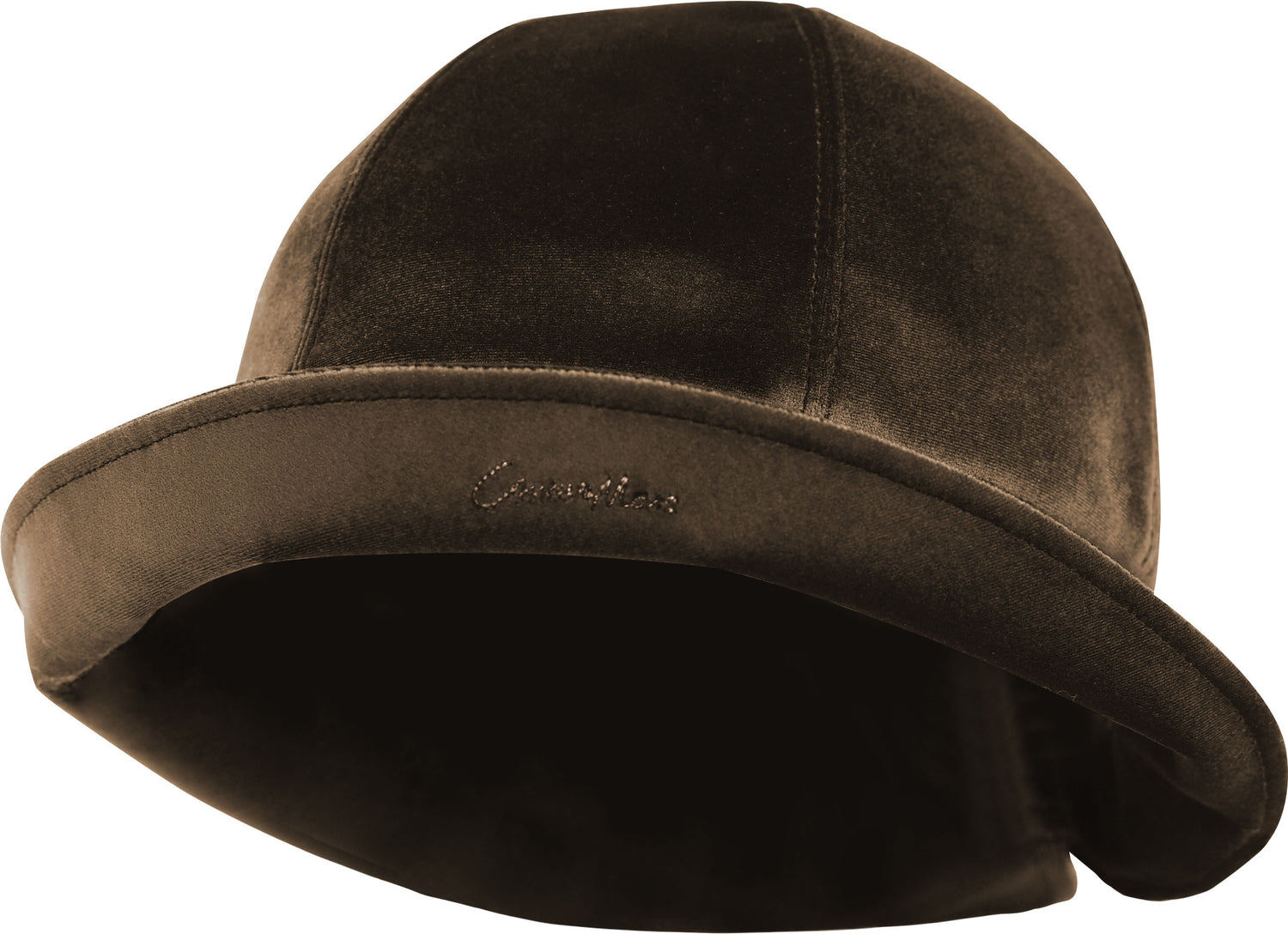
The Hikesity Luster Velvet Cloche is a useful example. It has six panels forming a bell crown, a 10 cm crown height and 7 cm of brim fabric rolled upward to an effective width of about 5.5 cm. Those details place its silhouette on the cloche side even though it may also appear under velvet bucket-hat language.
The $55 USD Hikesity Luster Velvet Cloche Hat uses a six-panel bell crown, an upward-rolled brim and an internal hook-and-loop strap adjustable from 54 to 57 cm.
When checking another listing, look for these fields:
- Crown profile and construction
- Crown height
- Brim angle, total fabric width and effective width
- Intended wearing position
- Head-circumference range and adjustment method
- Main fabric, lining and care instructions
A title that says only “bucket hat” is not enough to rule out a cloche silhouette. Conversely, decorative velvet does not automatically turn a straight-sided bucket shape into a cloche.
Which suits your face, hair and coat: a quick decision guide
Choose by the effect you want rather than by a rigid face-shape rule. A low cloche creates a close frame around the brow and cheeks, while a bucket brim introduces a stronger horizontal or downward line around the face.
- Choose a cloche if you want a polished silhouette with tailored wool coats, trench coats or dressier outerwear.
- Choose a bucket hat if you prefer relaxed proportions with puffers, denim, rainwear or streetwear.
- For bangs: check that the circumference can be loosened enough to sit without pressing the fringe flat.
- For crown volume: a structured, lined cloche can rest around the hair, but its low wearing position may not suit a tall updo.
- For long or full hair: the satin-finish polyester lining glides over hair rather than gripping it, while the structured bell crown rests around the hair instead of compressing it like a beanie.
If you are deciding among several winter silhouettes, the beret vs cloche vs beanie comparison explains how structure and hair contact change across the three styles.

Fit and sizing: measuring for a close-fitting cloche (54–57 cm range)
Use a soft measuring tape around the part of your head where the sweatband will sit. Pass it across the forehead, above the ears and around the widest part at the back. Keep the tape level and comfortably snug rather than pulling it tight.
- Measure twice in centimetres with your hair arranged as you expect to wear it.
- Compare the larger reading with the product's adjustable range.
- If you measure from 54 cm to under 57 cm, set the Luster Velvet Cloche's internal hook-and-loop strap so the hat feels secure without pressure. At 57 cm or above, the beret is the safer choice; it adjusts from 55 to 58 cm.
- Wear the cloche low toward the brow, then confirm that it does not slide over your eyes or leave a tight mark.
The Hikesity cloche weighs 103 g and uses 86% polyester with 14% spandex in the main fabric. Its smooth, satin-finish polyester lining is intended to glide over hair rather than grip it. For comparison across Hikesity styles, the sculptural velvet beret adjusts from 55 to 58 cm, so at 57 cm or above, the beret is the safer choice.
After wear, follow the instructions for cleaning and storing a velvet hat; the listed care method for both velvet styles is spot cleaning only.
FAQ
Is a cloche hat the same as a bucket hat?
No, although modern listings sometimes overlap. A cloche has a bell-shaped crown, sits low and close, and uses a curved or rolled face-framing brim. A classic bucket hat generally has straighter sides, an even brim and a casual fit.
Can a hat be described as both a cloche and a bucket hat?
Yes. A hat can share the bucket category's full crown and all-around brim while using the cloche's bell crown, low fit and rolled brim. Check the construction and measurements instead of relying on one word in the title.
Does a cloche hat have to be made of felt?
No. “Cloche” describes the bell-like silhouette. Contemporary cloches can use other fabrics, including the high-density luster velvet used for the Hikesity model.
How low should a cloche sit?
A traditional cloche is worn close to the head and low toward the brow, almost at eyebrow level. Adjust it so it frames the face without obstructing your vision.
What if my head measures 57 cm or more?
At 57 cm or more, the Hikesity Luster Velvet Sculptural Beret is the safer choice. It adjusts from 55 to 58 cm and may provide the extra room you need, though it creates a different silhouette.
Recommended Products
Hikesity Luster Velvet Cloche Hat
The Luster Velvet Cloche Hat is the direct choice for a low, face-framing cloche silhouette. Its six-panel crown is 10 cm high, its rolled brim has an effective width of about 5.5 cm, and its hidden strap adjusts from 54 to 57 cm. It is available in Black, Gray and Brown for $55 USD.
Hikesity Luster Velvet Sculptural Beret
The Luster Velvet Sculptural Beret is an alternative for shoppers who want height rather than a face-framing brim. Its six-panel dome measures 10 cm high, adjusts from 55 to 58 cm and is available in Black, Gray and Brown for $55 USD.
Compare to alternatives
Choose a classic bucket hat when you want a casual, straight-sided crown and an even all-around brim. Choose the Hikesity velvet cloche when you want a closer 1920s-inspired bell profile, rolled brim and smart-casual-to-dressy finish. Choose the sculptural beret when you want a brimless shape with volume above the head and a slightly larger 55–58 cm adjustment range.
| Best for | Recommended silhouette | Main reason |
|---|---|---|
| Low, polished face framing | Hikesity velvet cloche | Bell crown and rolled brim |
| Relaxed casual or streetwear styling | Classic bucket hat | Straighter crown and even brim |
| Brimless sculptural volume | Hikesity velvet beret | Three-dimensional dome with 55–58 cm adjustment |