


Is seamless underwear breathable? It can be comfortable all day in mild conditions, but “seamless” describes construction—not airflow. The gusset material, sweat level, fit and time worn matter more than the absence of stitched edges.

Short answer: breathability depends on the gusset, not the 'seamless' label
Seamless underwear is not automatically breathable or unbreathable. The label usually tells you that the garment is designed to reduce seams, bulk or visible panty lines. It does not establish how much air passes through the fabric, how quickly sweat moves away from the skin or how much moisture the fibres can hold.
For all-day comfort, look at three separate properties:
- Air permeability: how readily air can move through the fabric and any bonded areas.
- Moisture absorption: how much water vapour a fibre can take up under controlled conditions.
- Moisture transport and drying: how liquid sweat spreads through the fabric and how quickly it evaporates.
A fibre’s moisture-regain value helps explain absorption, but it does not measure a finished pair’s airflow or drying speed. Knit density, fabric thickness, finishes, fit and construction can change the result.
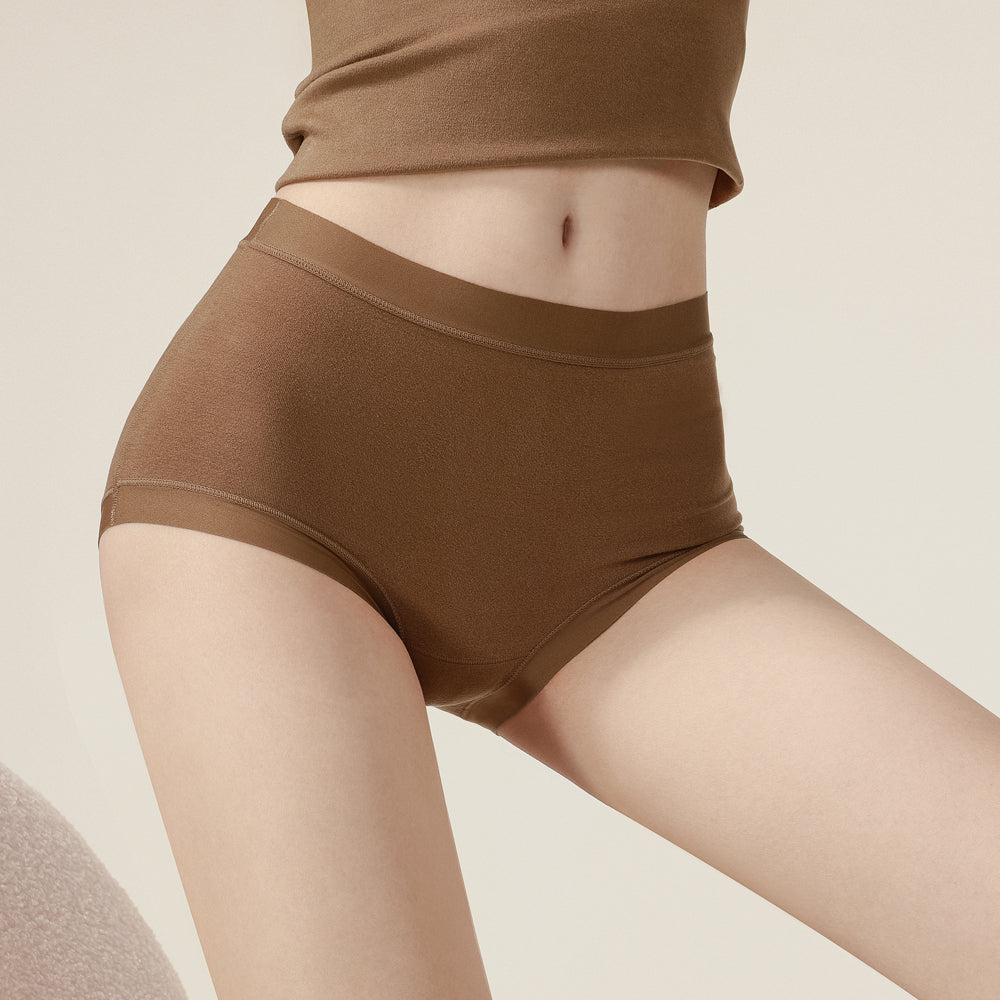
Hikesity’s Souffle Seamless Underwear for Leggings 3-Pack, listed at $39 USD, combines a 67% nylon/33% spandex body with bonded laser-cut edges and a modal-mulberry-silk gusset; the gusset supplies the more moisture-absorbent next-to-skin zone, while the stretch body prioritizes a smooth fit.
What seamless underwear is actually made of (67% nylon / 33% spandex main fabric, bonded laser-cut edges)
The Hikesity Souffle Seamless Underwear for Leggings — 3-Pack, Mix Your Colors uses 67% nylon and 33% spandex in its main fabric. Nylon contributes a smooth surface and lower moisture absorption than cellulosic fibres such as cotton or modal. Spandex supplies substantial stretch and recovery but has still lower moisture regain.
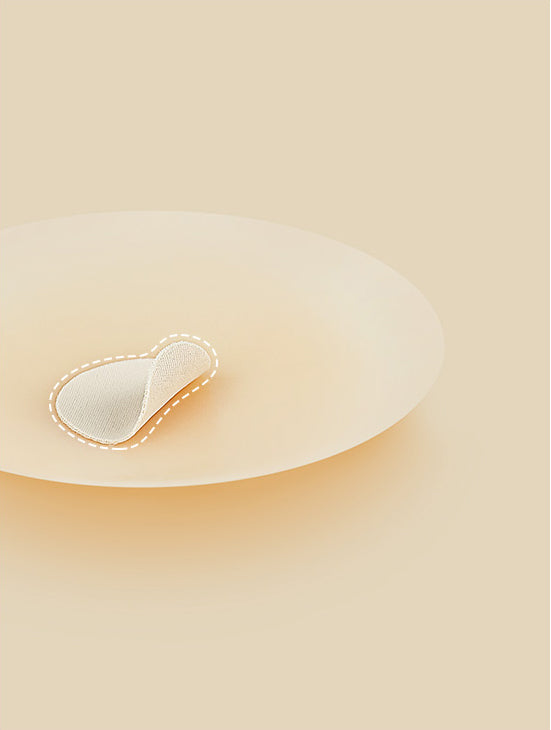
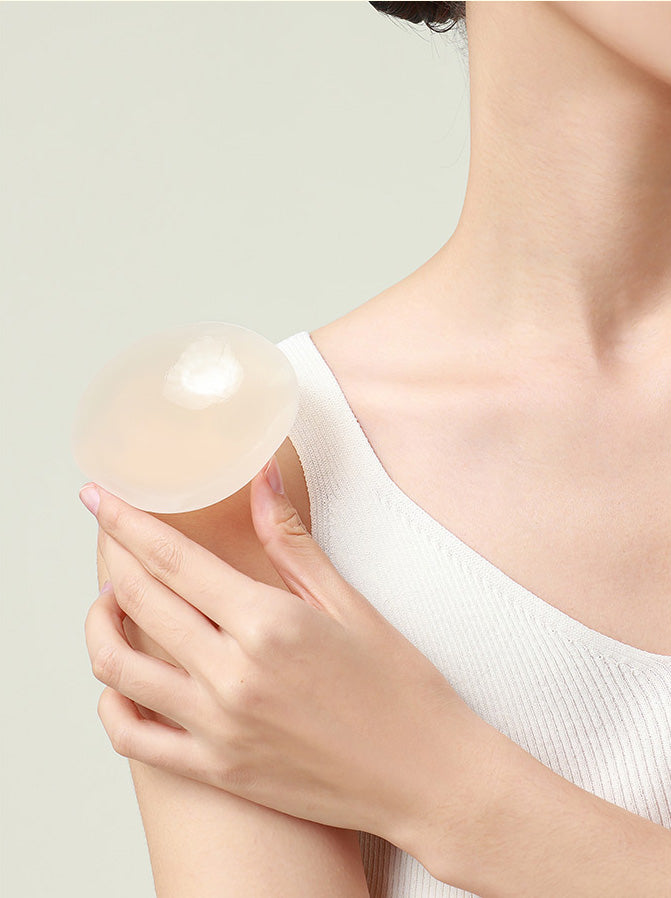
That blend is paired with bonded laser-cut edges and a one-piece back panel. These details are intended to create a flat outline under leggings and yoga pants. They are construction features, not proof of breathability: bonding reduces bulky stitching, but a bonded perimeter is less open than an unbonded knit area.
The practical trade-off is straightforward. The high-stretch body can remain close to the skin and move with the wearer, while the smooth edges help limit visible lines. In cool or climate-controlled settings, that may feel comfortable for a normal day. During sustained sweating, however, a close nylon-spandex layer may feel warmer or damper than a looser, more open fabric.
If invisibility under fitted clothing is the main goal, use the simple movement and lighting checks in Hikesity’s 3-minute visible panty line test. That test answers a different question from breathability, so a pair should pass both a visibility check and a comfort check for the intended activity.
Nylon-spandex vs cotton vs modal: moisture, stretch and drying compared in one table
Published fibre tables give useful reference points. The Coats “Know About Textile Fibres” comparison reports moisture regain of 4.0–4.5% for nylon, 0.75–1.3% for spandex and 7–11% for cotton at 70°F and 65% relative humidity. ASTM D1909 lists commercial values of 4.5% for nylon and 1.3% for spandex. These are fibre reference values, not breathability tests of the finished underwear.
| Material or blend | Published fibre moisture-regain reference | Moisture feel | Stretch | Drying tendency | Best use |
|---|---|---|---|---|---|
| Nylon-spandex | Nylon 4.0–4.5%; spandex 0.75–1.3% | Absorbs less atmospheric moisture than cotton or modal; liquid-sweat performance depends on knit and finish | High when the blend contains substantial spandex | Generally releases absorbed moisture more readily than highly absorbent cellulosic fabric, but a dense close fit can still feel damp | Smoothness, recovery and low-profile wear under fitted clothing |
| Cotton | 7–11% | Absorbs more moisture than nylon, which can feel comfortable at low sweat levels but heavy when wet | Limited without elastane or a stretch knit | Usually slower once it has absorbed substantial liquid | Everyday wear when softness and absorbency matter more than rapid drying |
| Modal | Higher moisture regain than nylon in standard fibre references; the exact value varies with the reference conditions | More moisture-absorbent than nylon and commonly soft against the skin | Depends on knit and added elastane | Can retain more moisture than nylon; finished-fabric construction determines actual drying time | Soft next-to-skin linings and everyday underwear |
Source note: the numerical reference ranges above are from the Coats “Know About Textile Fibres” comparison and ASTM D1909. Moisture regain is the water held relative to dry fibre mass under specified conditions. It should not be read as an air-permeability, sweat-wicking or finished-garment drying score.
A higher number is not automatically better. Cotton or modal can buffer more moisture before feeling saturated, while nylon absorbs less into the fibre itself. A well-engineered synthetic fabric may move liquid across its surface and dry quickly, but fibre content alone cannot confirm that performance.

Why the gusset lining matters most: modal plus mulberry silk
The gusset is the panel in the highest-moisture, highest-friction area of the garment, so its composition often matters more to day-long comfort than the marketing term “seamless.” It is the first place to inspect when comparing two visually similar pairs.
Hikesity lists the crotch lining as 53% modal, 24% spandex, 18% nylon and 5% mulberry silk. Production batches may vary slightly: modal can range from 48–53%, and mulberry silk from 4–5%. The complete tag matters because this is a blend, not an all-modal or all-silk gusset.
The product page describes the gusset lining as “softer and more breathable” than the main fabric. Its modal component is more moisture-absorbent than the nylon-spandex body, while the spandex and nylon portions support stretch and structure. However, that product-page comparison and the fibre reference data are not finished-garment air-permeability tests, so they do not quantify airflow or drying speed.
Mulberry silk accounts for only 4–5% of the lining, depending on the production batch. It would therefore be misleading to describe the whole gusset as behaving like pure silk. The modal-rich composition is the more significant moisture-related feature.
No fibre blend eliminates the need to change out of wet underwear. If the gusset remains damp after exercise, travel or a hot day, a fresh dry pair is the more reliable comfort choice.

Does an antibacterial finish survive washing? What the 150-wash test measured, and what it doesn't claim
The product’s published test information reports that the antibacterial finish retained an inhibition rate above 99% after a washing treatment equivalent to 150 home washes. This supports a narrow conclusion: under the reported test conditions, the measured antibacterial effect remained above that threshold after the specified laundering simulation.
It does not establish that a worn pair stays fresh indefinitely, prevents every type of odour, kills every microorganism or provides medical protection. It also does not replace ordinary laundering, thorough drying or changing after heavy sweating. An inhibition result is a laboratory measurement, not permission to extend wear.
The product materials also refer to three colourfastness tests. Because the supplied information does not include the individual methods, grades or measured results, no numerical colourfastness claim is made here.
Care practices still influence the garment’s useful life. Follow the care label, avoid treating stretch fabric roughly and allow the pair to dry fully before wearing it again. Hikesity also uses a wash-responsive logo as a replacement reminder. Treat that signal as a product-specific cue alongside visible wear, weakened recovery and changes in fit.
Who should skip seamless nylon underwear (heavy sweat, long hot days) and what to wear instead
A nylon-spandex seamless pair may not be the best first choice for people who sweat heavily, work outdoors through long hot days or remain in damp clothing for extended periods. The close fit and high stretch that make the garment discreet under leggings can become less comfortable when heat and liquid sweat accumulate.
Consider a different construction when:
- your underwear is routinely soaked rather than slightly damp;
- you need many continuous hours of wear in hot, humid conditions;
- you prefer a loose fit and noticeable airflow;
- you cannot change promptly after a workout;
- bonded edges or close synthetic fabrics irritate your skin.
For low-to-moderate everyday perspiration, a cotton or modal-rich brief with an adequately wide gusset may feel more absorbent. Cotton can hold moisture and may dry slowly, so it is not automatically the best choice for prolonged exercise. For workouts or heavy sweating, look for underwear specifically designed with open mesh, documented moisture-management construction and enough changes to put on a dry pair afterward.
Cold-weather needs are different. If the goal is warmth rather than invisibility, read Hikesity’s guide to the best materials for women’s thermal underwear. A thermal base layer is designed for insulation and should not be treated as a direct substitute for breathable everyday briefs.
How to check a seamless pair before you buy: fabric tag, gusset width, edge construction
- Read both fabric listings. Check the main body and crotch lining separately. “Modal gusset” is incomplete information if the lining is actually a multi-fibre blend.
- Check the percentages. A small amount of a featured fibre does not make it the dominant material. On the Hikesity pair, modal is the largest gusset component; mulberry silk is 4–5% depending on the batch.
- Inspect gusset coverage. The lining should cover the area where you need it without bunching, pulling forward or ending too narrowly for your body.
- Look at the edges. Bonded laser-cut edges should lie flat without stiff ridges, loose adhesive or sharp corners.
- Stretch, then release. The fabric should recover without remaining rippled or distorted. High stretch does not help if the size creates persistent pressure.
- Check opacity in motion. Bend, squat and sit in the lighting and clothing you expect to use. The Hikesity leggings test provides a repeatable way to check visibility.
- Separate comfort claims from test claims. An antibacterial result does not prove airflow, and a moisture-regain value does not prove workout performance.
If buying online, save the fibre information and compare it with the label when the product arrives. Slight batch variation is disclosed for the Hikesity gusset, but the received composition should remain within the stated modal and mulberry-silk ranges.
FAQ: all-day wear, workouts, sleeping, and how often to replace a pair
Can I wear seamless underwear all day?
Yes, if the pair fits without pressure or chafing and stays reasonably dry during your normal routine. For Hikesity’s Souffle design, the modal-rich gusset is more moisture-absorbent than the nylon-spandex body. Change sooner if the lining becomes wet or uncomfortable.
Is seamless underwear good for workouts?
It can work for a short or low-sweat session, especially when avoiding visible lines under leggings is important. For sustained heavy sweating, choose purpose-built moisture-management or mesh underwear and change into a dry pair after training. “Seamless” alone is not a workout-performance rating.
Can I sleep in nylon-spandex seamless underwear?
You can if it feels dry, clean, non-restrictive and comfortable. People who sleep warm or dislike close synthetic fabric may prefer a looser cotton- or modal-rich option. Fit and personal comfort matter more than the seamless label.
How often should seamless underwear be replaced?
There is no universal calendar interval supported by the supplied product information. Replace a pair when the elastic no longer recovers, bonded edges lift, the gusset remains misshapen, the fit changes or the fabric is damaged. Hikesity’s wash-responsive logo provides an additional product-specific replacement reminder.
Does antibacterial underwear need to be washed after every wear?
Yes. The reported wash-durability result concerns the antibacterial finish under test conditions; it does not make the underwear self-cleaning or remove sweat, body oils and other soil.
Is modal always more breathable than nylon?
Modal has a higher published moisture-regain reference, but that does not automatically mean every modal fabric passes more air or dries faster than every nylon fabric. Knit openness, thickness, finishes, stretch and fit must also be considered.
Recommended Products
Souffle Seamless Underwear for Leggings — 3-Pack, Mix Your Colors
Best for shoppers who prioritize a smooth outline under leggings while still wanting a modal-rich gusset. The main fabric is 67% nylon and 33% spandex; the lining is listed as 53% modal, 24% spandex, 18% nylon and 5% mulberry silk, with disclosed batch variation. The three-pack is listed at $39 USD, with Beige, Brown, Grey and White available across the three pair selections.
One-Size CatWarm High-Waisted Thermal Underwear — 3-Pack, Mix Your Colors
Consider this separate category when warmth and torso coverage—not an invisible edge under leggings—are the primary goals. Review its product information and Hikesity’s thermal-underwear material guide rather than assuming a thermal layer offers the same moisture behaviour as a lightweight seamless brief.
Compare to alternatives
| Option | Main advantage | Main trade-off | Choose it when |
|---|---|---|---|
| Hikesity Souffle nylon-spandex seamless brief with modal-silk gusset | Flat bonded edges, strong stretch and a more absorbent gusset than the body fabric | Close synthetic body may be less comfortable during prolonged heavy sweating | You want low visibility under fitted clothing for everyday or moderate-activity wear |
| Cotton-rich brief | Higher fibre moisture regain than nylon and familiar next-to-skin feel | Can hold liquid and dry slowly; stitched edges may show under thin leggings | You value everyday absorbency and do not need the flattest edge |
| Modal-rich brief | Higher fibre moisture regain than nylon and a soft feel | Actual drying time and recovery depend on the blend and knit | You prioritize softness and moisture buffering over rapid drying |
| Performance mesh underwear | Open construction may improve airflow and liquid-sweat transport | Seams or texture may be visible, and performance cannot be inferred from fibre name alone | You expect workouts, heavy sweat or a long hot day |
Written by the Hikesity Editorial Team.