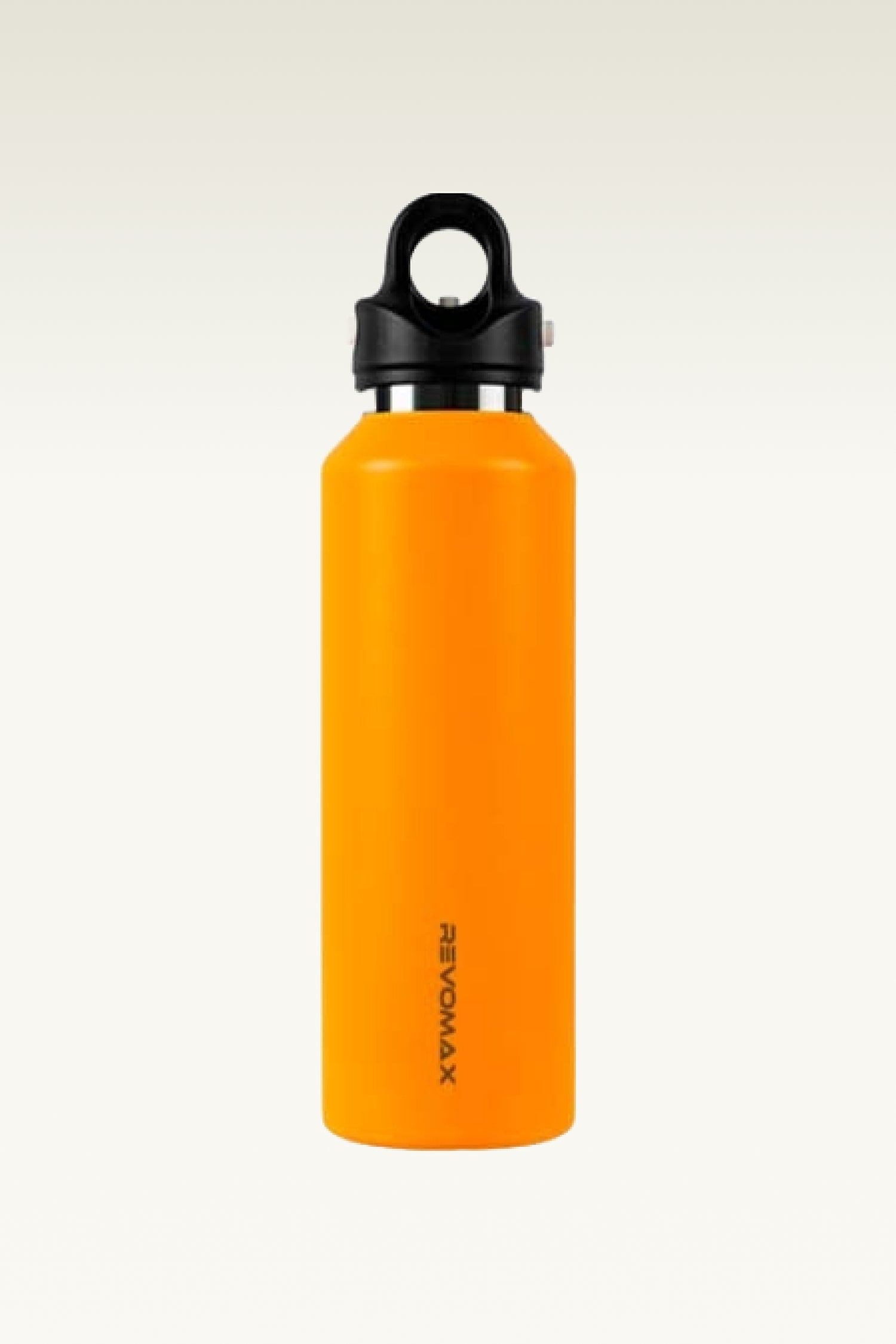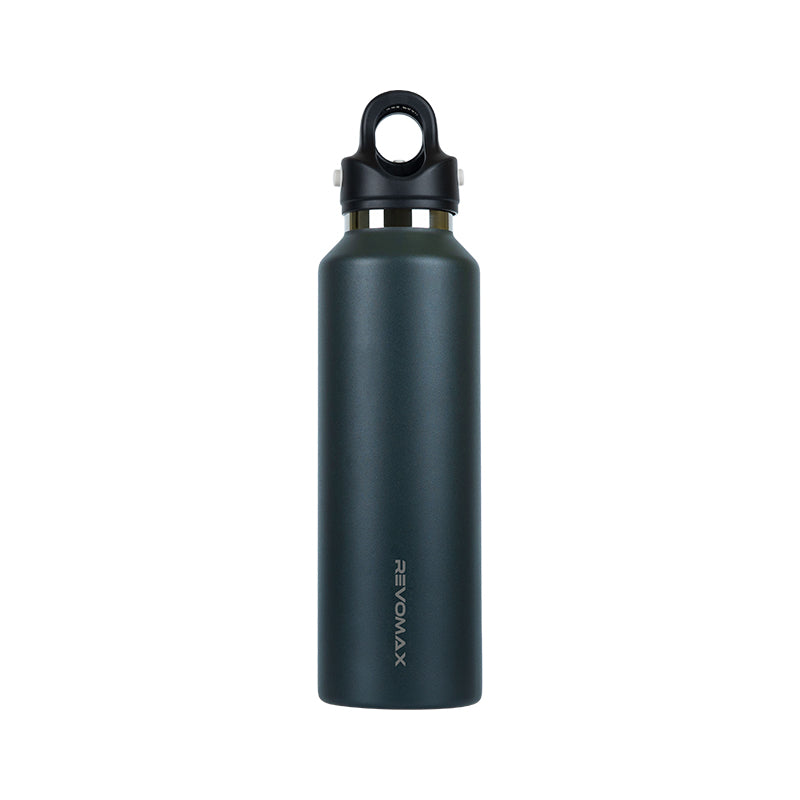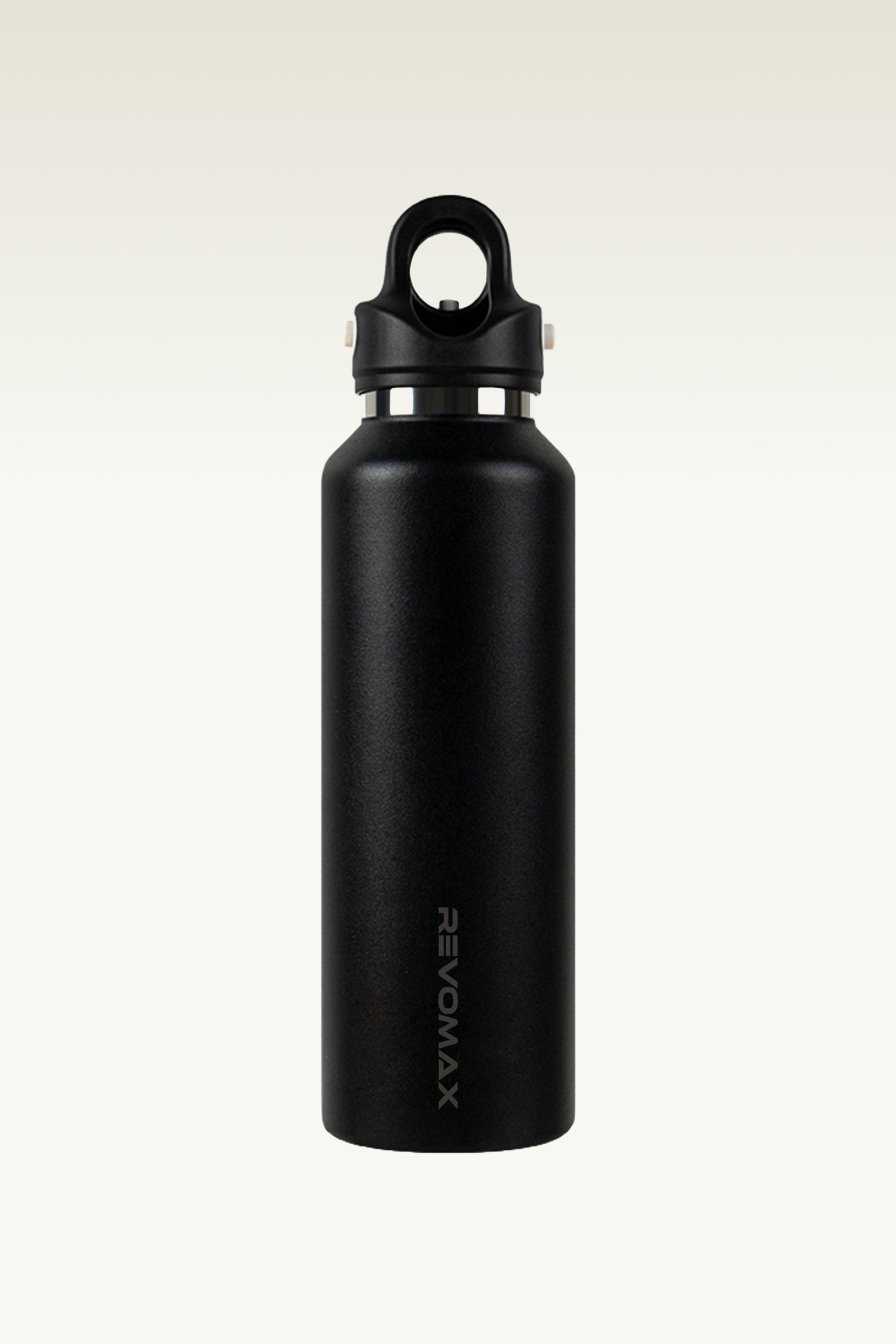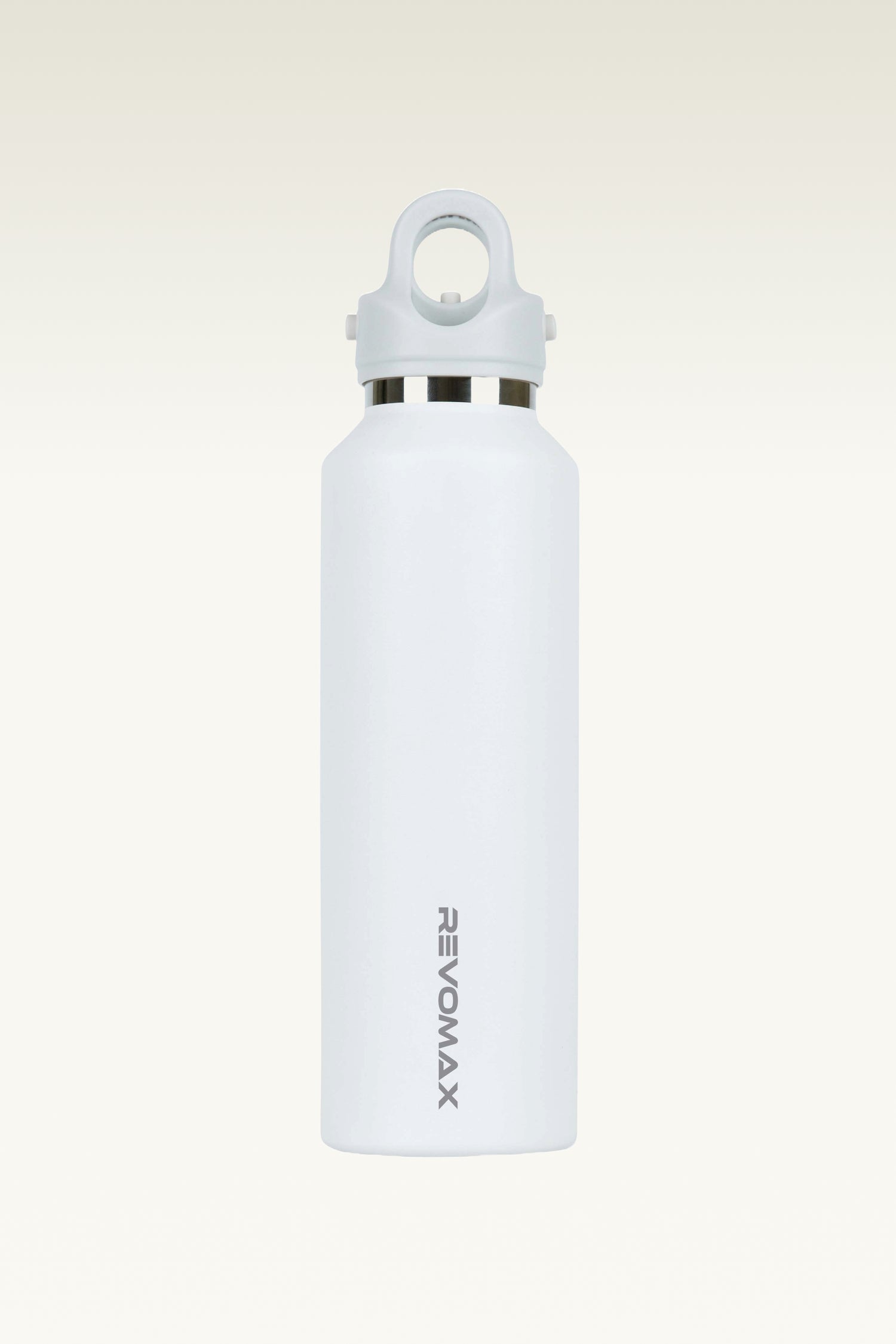

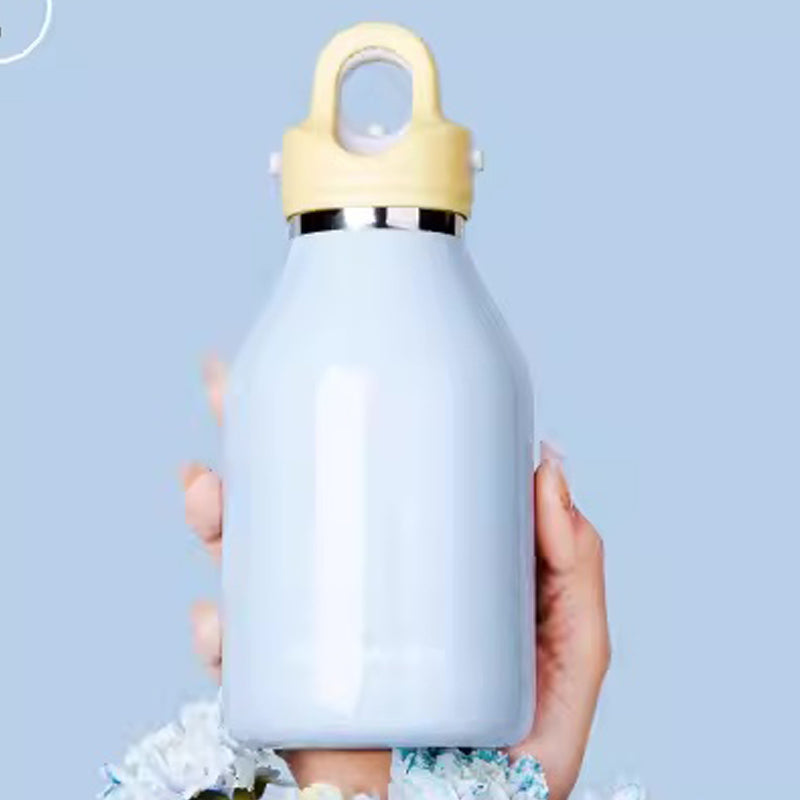
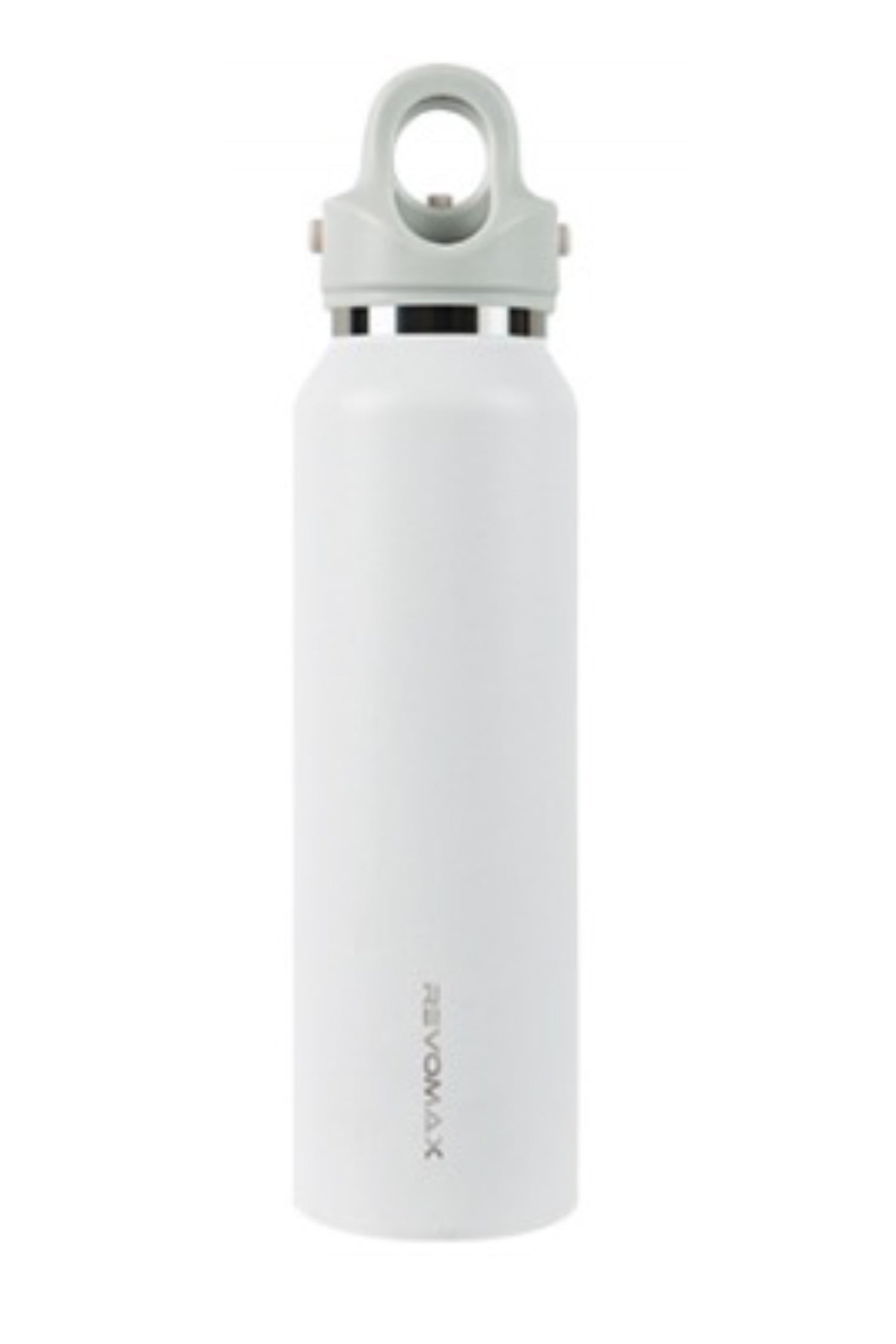
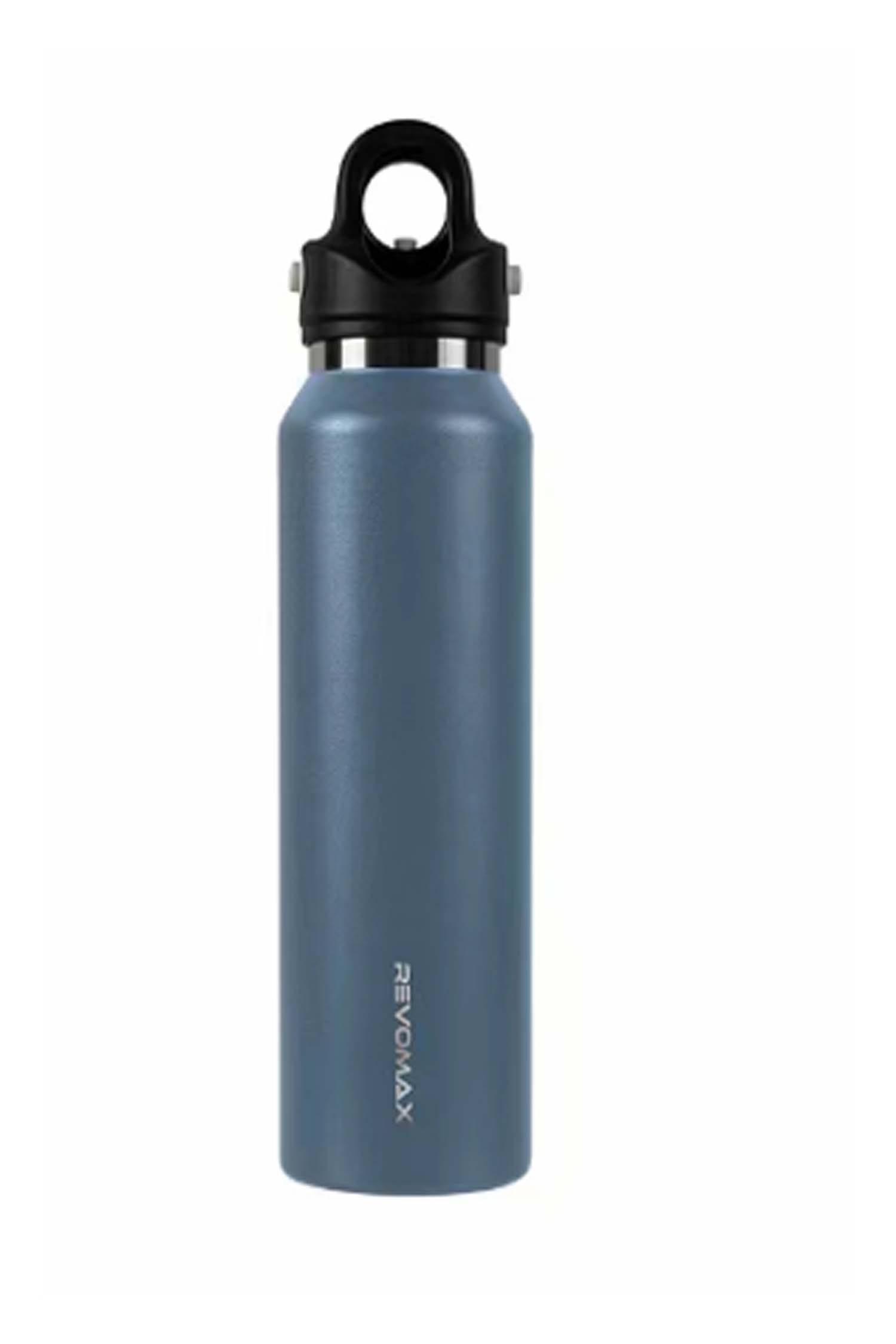
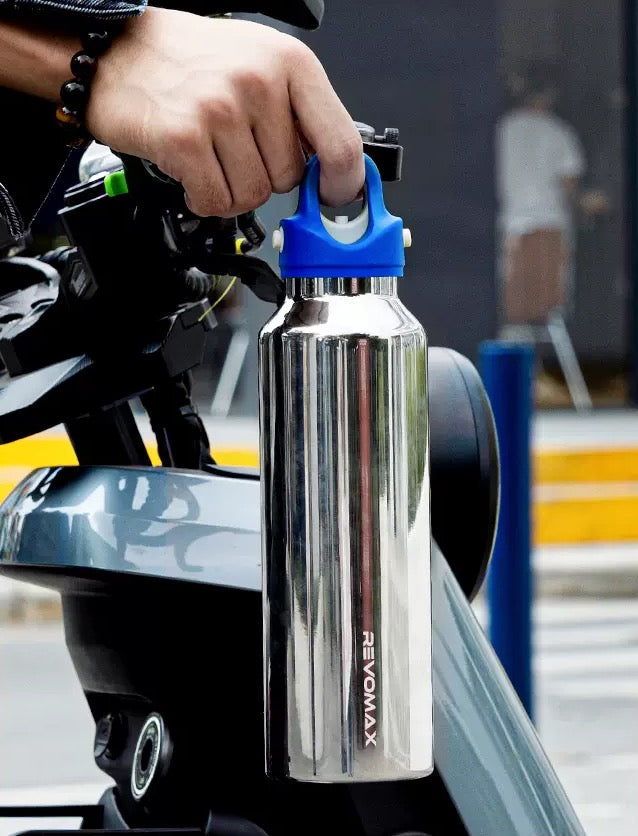

Yes—based on their published specifications, Hikesity’s 20oz TA1 titanium and 316L stainless steel vacuum bottles are both listed for up to 18 hours hot and 36 hours cold. The vacuum, lid and opening habits matter more than the small difference between their metal walls.
By Hikesity Editorial Team

Short answer: the vacuum does the insulating, not the metal
For titanium vs stainless steel insulated bottle heat retention, the most important fact is that neither metal is the primary insulator. A double-wall bottle places a low-pressure vacuum gap between its inner and outer shells. Because that gap contains very little matter, it sharply reduces heat transfer by conduction and convection through the sides of the bottle.
The metal still matters at solid connections such as the neck, but choosing titanium instead of 316L does not remove the vacuum or create a fundamentally different insulation system. Bottle geometry, vacuum quality, reflective surfaces, lid construction, seal condition and use pattern can outweigh the conductivity difference between the metals.
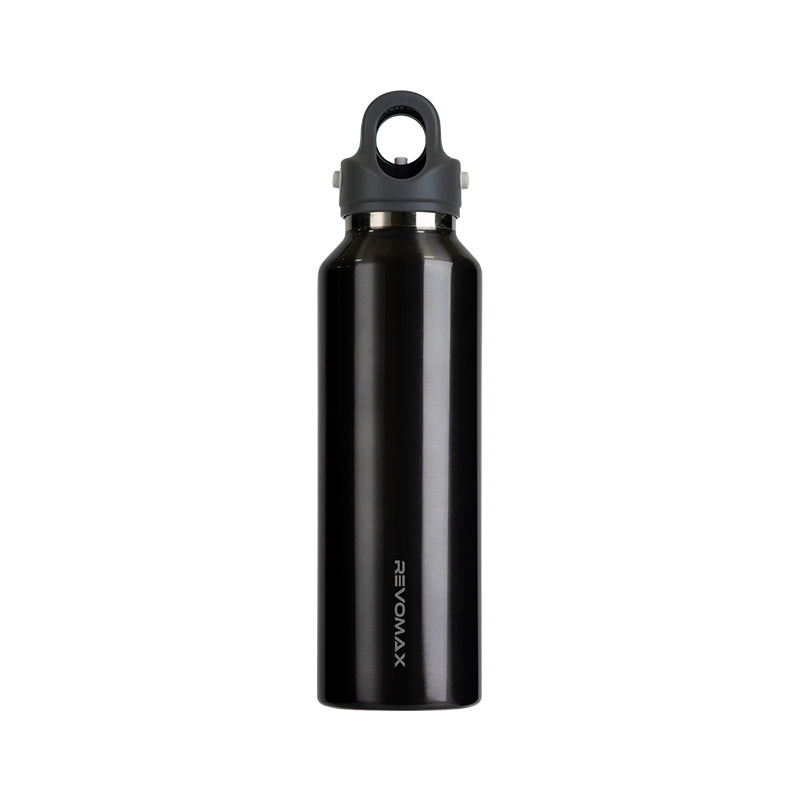
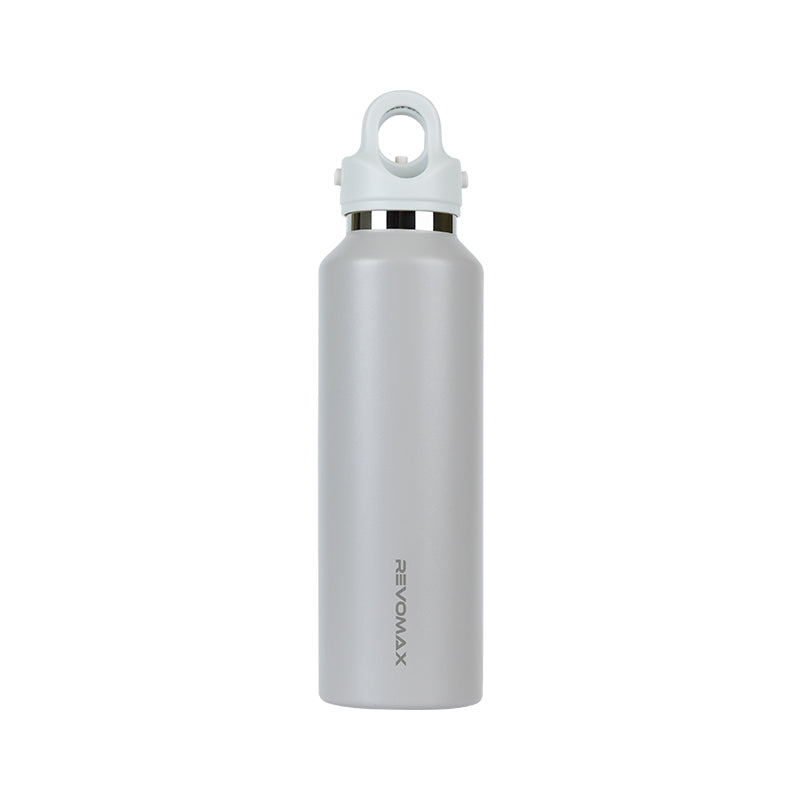
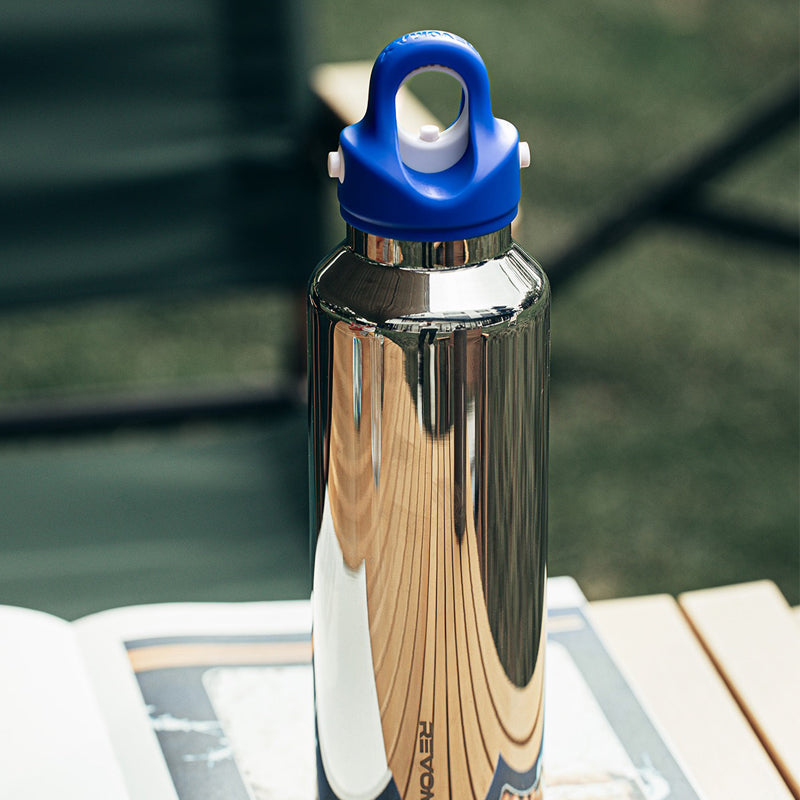
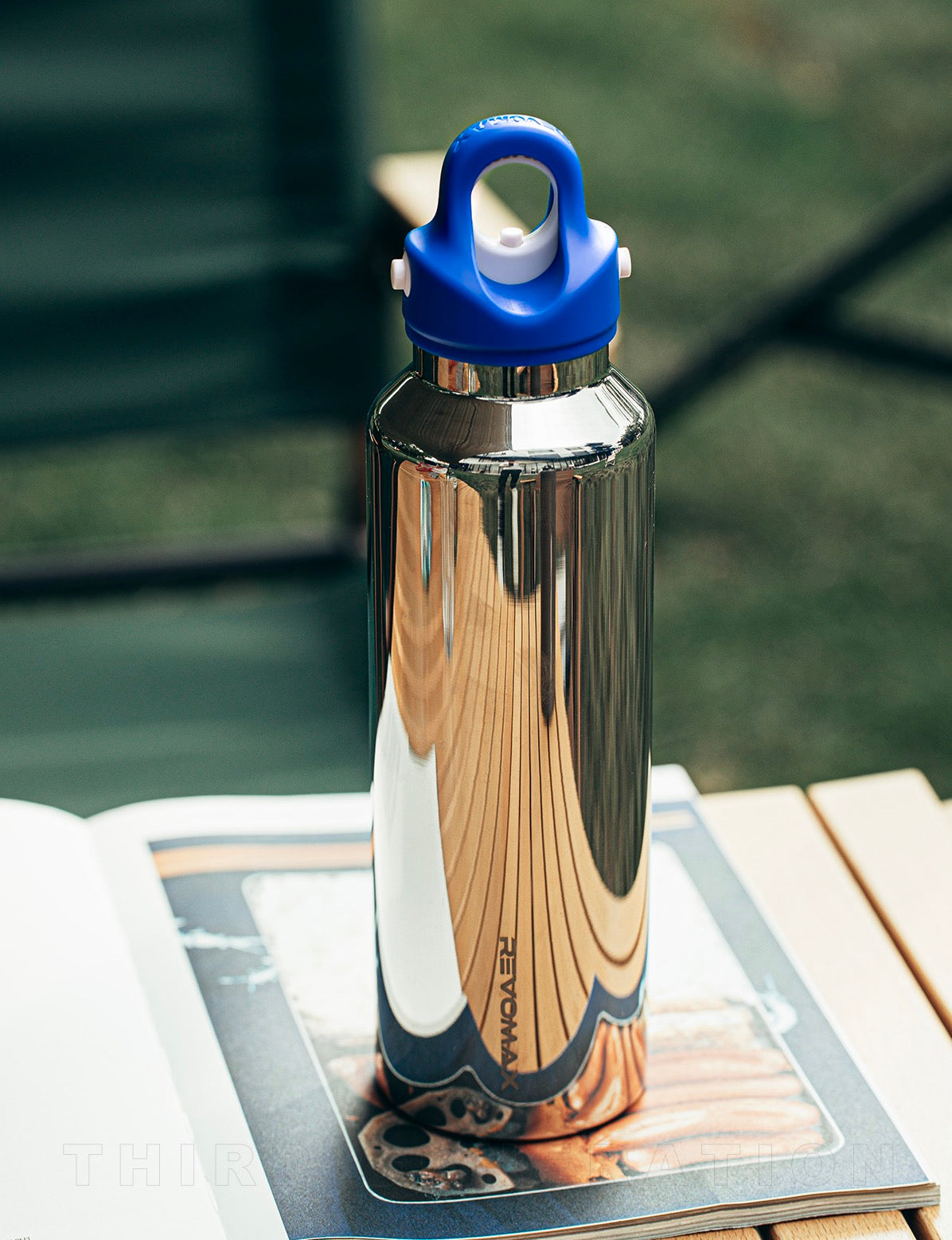
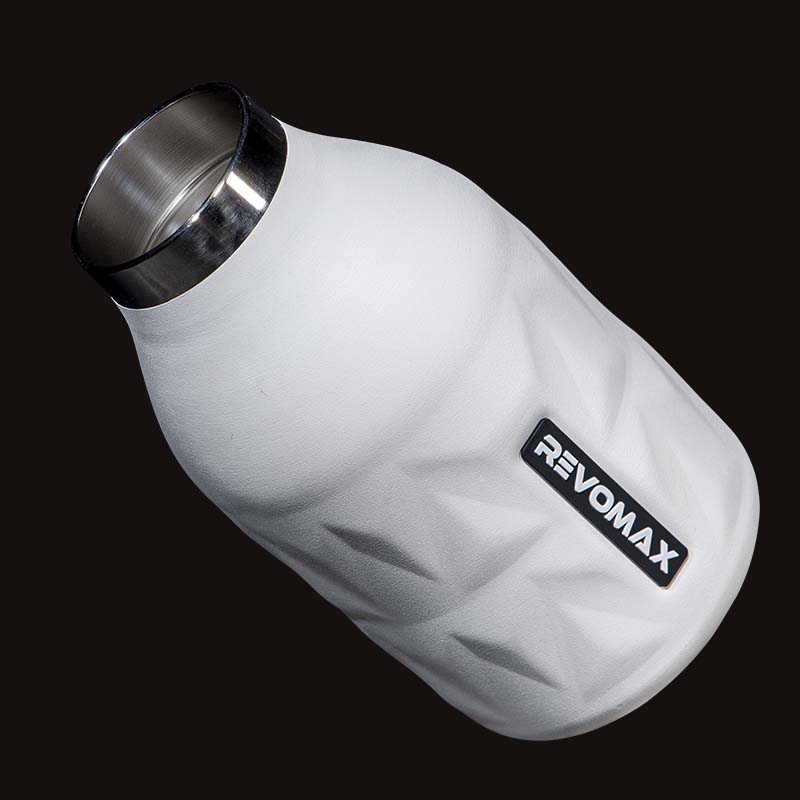
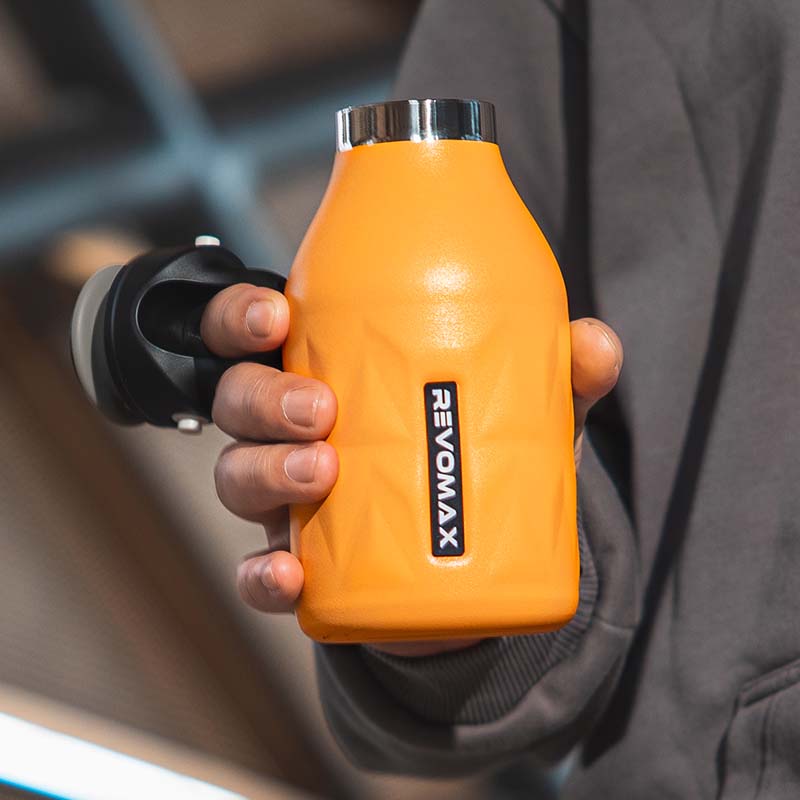
The Hikesity-distributed 20oz TA1 titanium bottle and the Hikesity-distributed 20oz 316L Revomax bottle are both listed at 592 ml and specified for up to 18 hours hot or 36 hours cold. These are manufacturer specifications rather than results from an independent head-to-head laboratory test, so they should not be interpreted as proof that the two bottles follow identical cooling curves in every setting.
Quotable conclusion: The US$120 Hikesity 20oz TA1 titanium bottle and US$65–69 Hikesity 20oz 316L Revomax bottle use double-wall vacuum insulation and publish the same 18-hour-hot and 36-hour-cold specifications; titanium’s practical advantage is its 199g weight, not a longer advertised heat-retention time.
Thermal conductivity of titanium vs 316L steel, and why it barely matters once there's a vacuum gap
Thermal conductivity measures how readily heat moves through a material. Published room-temperature values vary with grade, composition and test conditions. MakeItFrom lists 20 W/m·K for commercially pure Grade 1 titanium, the closest published grade comparison to the bottle’s stated TA1 material. Other public references may place commercially pure titanium roughly within the 16–20 W/m·K range. Outokumpu lists 15 W/m·K at 20°C for Supra 316L/4404 stainless steel.
| Material | Published conductivity | Source | What it means in a vacuum bottle |
|---|---|---|---|
| Commercially pure Grade 1 titanium | 20 W/m·K on the cited page; values vary by source and grade | MakeItFrom Grade 1 titanium material data | The solid titanium shell conducts heat, but it does not bridge the vacuum across most of the bottle wall. |
| 316L stainless steel | 15 W/m·K at 20°C | Outokumpu Supra 316L data sheet | The steel shell also conducts heat, while the vacuum suppresses transfer between the two walls. |
These figures do not mean a complete titanium bottle will necessarily lose heat faster than a complete 316L bottle. Conductivity is a bulk-material property, whereas bottle performance is a system result. Wall thickness, neck cross-section, welds, vacuum level, surface emissivity and lid design all affect the final rate of heat loss.
A useful mental model is a bridge: the vacuum removes most of the broad bridge between the inner and outer walls, leaving smaller routes around the neck and lid. A few watts per metre-kelvin of difference in the shell material tells you much less than it would for a single-wall cup, where the metal directly connects the drink to the surrounding air.
For more context on material grades, see how to check a TA1 pure titanium bottle and the existing titanium, 316L and 304 bottle comparison.

Where heat actually escapes: the lid, the neck, and how often you open it
Once the side walls are separated by a vacuum, the top of the bottle becomes especially important. Heat can leave through three main paths:
- The lid: polymer components and seals interrupt the metal body, but the lid still lacks the same continuous vacuum envelope as the main walls.
- The neck: the inner and outer structures must join near the opening, creating a solid path through which heat can conduct.
- Openings: every time the lid opens, warm air and steam leave while cooler outside air enters. Frequent sipping can therefore shorten useful heat retention even when the bottle itself has excellent insulation.
Fill temperature also changes the result. “Up to 18 hours hot” does not mean a drink remains at its original temperature for 18 hours. It means the test used a particular starting temperature, fill volume, ambient temperature, lid condition and definition of “hot.” Without the full protocol, published hours are best used as directional specifications rather than a promise of one exact drinking temperature.
The 316L model uses the original Revomax patent Hikesity proudly carries: a threadless, pressure-release lid listed as opening, drinking and locking with one hand in under two seconds. Its three main lid pieces are listed as coming apart in about three seconds for cleaning. The titanium model also has a twist-free, one-handed pop-up lid, plus a magnetic tea compartment that detaches in one second. Hikesity’s product page does not list a separate timed claim for opening the titanium lid itself.
Whichever model you choose, opening it only when you are ready to drink will usually protect temperature better than choosing one shell metal and repeatedly venting the bottle.
Weight vs heat retention: what you trade going from 316L (360 g) to titanium (199 g)
The clearest measurable difference between these two 20oz bottles is weight. The TA1 titanium model weighs 199g, while the 316L stainless model weighs 360g. That makes the titanium bottle approximately 45% lighter, a saving of 161g before adding a drink.
| 20oz model | Bottle weight | Published insulation specification | Listed price |
|---|---|---|---|
| TA1 pure titanium | 199g | Up to 18 hours hot / 36 hours cold | US$120 |
| 316L inner wall, 304 outer wall | 360g | Up to 18 hours hot / 36 hours cold | US$65–69 / CA$95–101, depending on colour |
For a desk or short commute, 161g may not justify the titanium price premium. On a long hike, in a light daypack or when every carried item is being weighed, the reduction is easier to notice. The liquid still dominates total carried weight: both bottles hold 592 ml, so the titanium model reduces the container weight without reducing capacity.
Low weight comes with a care trade-off. Pure titanium is softer than 316L stainless steel, so handle the bottle gently around rocks and hard surfaces. Its supported material benefits are approximately 45% lower weight, corrosion resistance and no metallic flavour transfer.

Taste over hours: hot coffee and tea in titanium vs 316L
The titanium product is specified with a TA1 pure titanium bottle body. Hikesity describes the material as chemically inert and claims zero flavour transfer for coffee, tea, lemon water and wine. This makes it the stronger choice for someone whose first priority is minimizing contact between a drink and stainless steel.
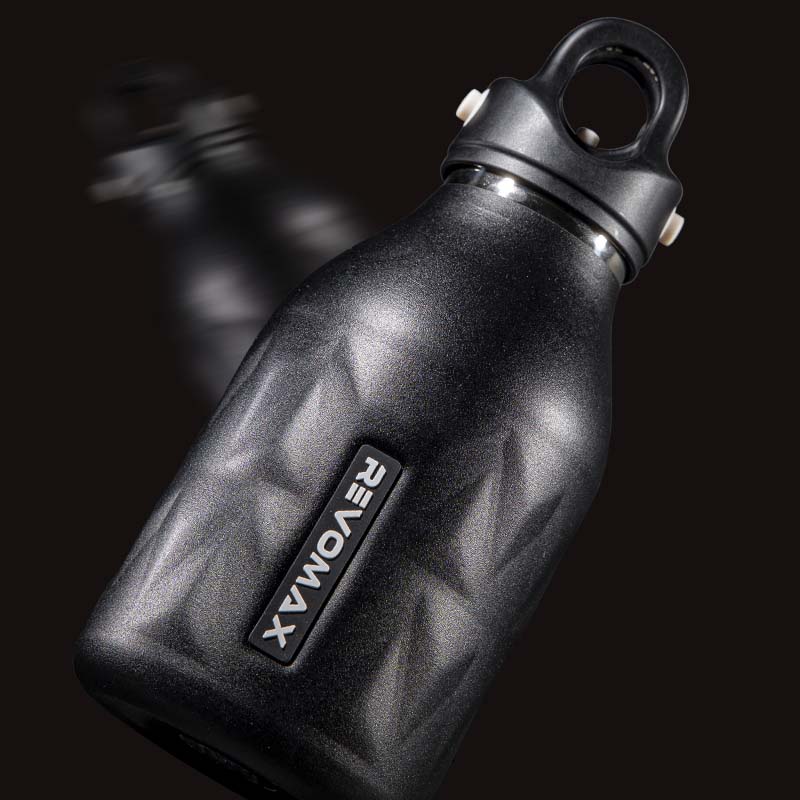
The 316L bottle uses a 316L stainless steel inner wall and a 304 stainless steel outer wall. Hikesity also describes this model as having zero metallic taste and positions the 316L interior for coffee, tea, lemon water and sports drinks. In other words, both product pages position their respective bottles as flavour-neutral options.
Taste after several hours can also change for reasons unrelated to the bottle material. Coffee continues to oxidize, tea can become bitter if leaves remain in contact with the water, and residues in a lid or seal can contribute stale aromas. Cleaning and brew control therefore matter alongside the metal.
The titanium model addresses over-steeping with an included removable magnetic tea compartment made from food-grade 316L austenitic stainless steel. Add loose-leaf tea, brew to the desired strength, then detach the compartment in one second. Buyers seeking an entirely stainless-free drink path should note that the bottle body is titanium but the included tea compartment is 316L steel.
If loose-leaf brewing is your main use, the guide to insulated bottles for loose-leaf tea explains how removable infusers affect timing and bitterness.
Which to pick: a decision table for coffee, loose-leaf tea, hiking and commuting
| Use case | Better fit | Why | Trade-off to accept |
|---|---|---|---|
| Hot coffee at a desk | 316L for value; titanium for minimum material interaction | Both publish the same 18-hour hot specification. The 316L option starts at US$65, while TA1 titanium is marketed for zero flavour transfer. | The steel bottle is 161g heavier; titanium costs more. |
| Loose-leaf tea | Titanium | The included magnetic 316L tea compartment detaches in one second, helping stop the brew when it reaches the desired strength. | The infuser itself is stainless steel, and the complete bottle costs US$120. |
| Day hiking | Titanium when weight is the priority | At 199g, it is approximately 45% lighter than the 360g steel model at the same 592 ml capacity. | Pure titanium is softer than 316L and deserves careful handling. |
| Daily commuting | 316L for value and quick access | The no-screw lid is listed as opening, drinking and locking in under two seconds with one hand. | It adds 161g compared with titanium. |
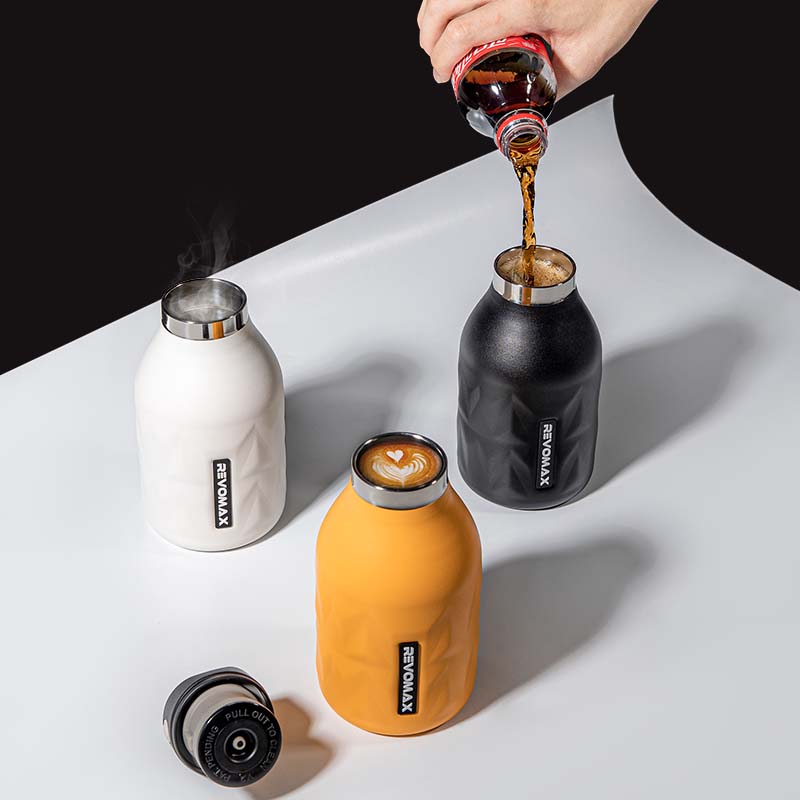
| Carbonated cold drinks | 316L | Hikesity’s product page describes a pressure-release valve for soda, sparkling water, kombucha and beer. | The carbonation feature is not a reason to assume better hot-drink retention. |
| One bottle for weight-sensitive travel and tea | Titanium | It combines the lighter body with the removable tea compartment and the same published hot/cold specifications. | Higher price and greater care around impacts. |
Neither material wins every category. Choose titanium if saving 161g, avoiding flavour transfer from the bottle body and controlling loose-leaf brewing are worth the premium. Choose 316L if you want the lower price, a timed under-two-second lid claim and explicit support for carbonated drinks.
FAQ: preheating, filling level, and why claimed hours differ between brands
Should I preheat an insulated bottle before adding coffee or tea?
Preheating can improve practical heat retention because the drink does not first have to warm a cold inner wall. Rinse the bottle with hot water, empty it, and then add the drink. This does not change the vacuum or the metal’s conductivity; it simply improves the starting conditions.
Does a fuller bottle stay hot longer?
Generally, a fuller bottle has more thermal mass relative to its exposed neck and headspace, so it tends to cool more slowly than a small serving in the same bottle. Leave the clearance required to close the lid correctly and never overfill past the manufacturer’s safe fill level.
Why do insulation-hour claims differ between brands?
Brands may use different starting temperatures, ambient temperatures, fill levels and thresholds for defining “hot” or “cold.” Bottle capacity, neck geometry, lid construction and test protocol also matter. Compare published hours as screening information, then look for a disclosed test method or a controlled test using the same drink volume and conditions.
Does titanium automatically keep drinks hot longer than 316L?
No. Complete vacuum-bottle performance depends on the vacuum, lid, neck, geometry and use pattern, not the shell metal alone. The two Hikesity 20oz models publish the same specifications of up to 18 hours hot and 36 hours cold.
Are the published specifications independent laboratory results?
Hikesity has not published an independent head-to-head thermal test report for these two bottles. The figures are manufacturer specifications.
Recommended Products
- 20oz TA1 Titanium Bottle with Magnetic Tea Infuser: best for hikers and tea drinkers prioritizing a 199g bottle, a one-second removable tea compartment and minimal flavour interaction with the bottle body. Listed at US$120.
- 20oz 316L No-Screw Vacuum Bottle: best for commuting, coffee and value, with a 316L inner wall, 304 outer wall and under-two-second one-handed lid operation. Listed at US$65–69 or CA$95–101.
Compare to alternatives
When comparing these bottles with Hydro Flask, Yeti, Stanley, RTIC or Klean Kanteen, do not predict heat retention from “titanium” or “stainless steel” alone. Compare equal capacities, disclosed hot/cold test conditions, empty weight, lid heat paths, opening frequency, cleaning access and price.
Also check the exact steel grade rather than treating every stainless bottle as identical. Hikesity’s 20oz steel model specifies a 316L inner wall and 304 outer wall, while the titanium model specifies a TA1 bottle body. A fair alternative should disclose the same level of material and construction detail.