

Last updated: May 2026 — by the Hikesity 316L medical-grade team
If you're shopping for a stainless steel water bottle and reading specs like "18/8 stainless," "food-grade 304," or "medical-grade 316L," you've already noticed the industry uses very different terms for what it claims is the same thing. They're not the same. The difference between 304 and 316L is 2-3% molybdenum, and that single alloying element is what separates a bottle that pits and tastes metallic after two years from one that holds up for a decade.
This is the engineering and health trade-off article we wish more buyers had read before their first purchase. We'll cover the metallurgy, the lab data (including a 72-hour chloride immersion test from our R&D bench), the cost difference, the FDA / NSF / EU regulatory landscape, and a brand-by-brand decoder so you can identify what alloy any "stainless" bottle on the market actually uses.
TL;DR — 316L vs 304 in three sentences
316L is austenitic stainless steel containing 2-3% molybdenum and ≤0.03% carbon; 304 contains zero molybdenum and up to 0.08% carbon. That molybdenum forms a denser passive chromium-oxide layer that resists chloride pitting from sweat, sports drinks, lemon water, and chlorinated tap water — the exact failure mode where 304 bottles develop pinhole pitting and metallic taste after 2-3 years. For a daily-use water bottle, 316L is measurably safer for the user and lasts 3-5x longer in acidic-drink scenarios; the raw-material cost difference is roughly 22%, which translates to $8-12 extra per finished bottle.

That's the whole article in three sentences. If you want the receipts, keep reading.
What is 316L stainless steel? The 2-3% molybdenum effect
Stainless steel is iron + chromium + nickel + sometimes molybdenum. The percentages of each element define the grade.
316L composition (per ASTM A240 specification):
- Chromium: 16.0-18.0%
- Nickel: 10.0-14.0%
- Molybdenum: 2.00-3.00%
- Carbon: ≤ 0.030% (the "L" stands for low carbon)
- Manganese: ≤ 2.00%
- Iron: balance
304 composition (per ASTM A240):
- Chromium: 18.0-20.0%
- Nickel: 8.0-10.5%
- Molybdenum: 0%
- Carbon: ≤ 0.080%
- Manganese: ≤ 2.00%
- Iron: balance
The two grades look almost identical to the eye and on paper — until you read the molybdenum line. Molybdenum is the single most expensive ingredient by weight in stainless steel ($25,000+ per metric ton vs $1,800 for chromium ferro-alloy as of Q1 2026), which is why brands skip it whenever they can.
What does molybdenum actually do? When stainless steel sits in air or water, the chromium reacts with oxygen to form a microscopically thin chromium-oxide layer (Cr₂O₃) on every exposed surface. This is the "passive layer" that makes "stainless" stainless. In 316L, the molybdenum atoms slot into the passive layer and lock down chloride ions that would otherwise punch holes in the chromium-oxide film. In 304, those chloride ions migrate freely, and the passive layer fails locally — that failure is called "pitting corrosion."
That's the whole story in one sentence: 316L is 304 with the chloride attack vector closed.
Why 304 fails in your water bottle: the chloride pitting problem
Most buyers assume "304 stainless" is bulletproof. For most kitchen scenarios — a fork, a mixing bowl, a sink — it is. But your water bottle isn't a fork.
Your water bottle sees chloride ions every day, from sources you probably don't track:
- Sweat (residual on the threads after gym use): 0.4-2.4 g/L NaCl
- Sports drinks (Gatorade, Powerade, electrolyte tabs): 460-700 mg/L sodium, often with chloride
- Lemon water and citrus infusions: low pH (2.5-3.5) accelerates pitting in the presence of chloride
- Chlorinated tap water (most U.S. and Canadian municipal supply): 0.2-4.0 mg/L free chlorine
- Tomato juice, kombucha, kimchi water: extreme low-pH + chloride combinations
- Sea air (coastal storage): airborne chloride deposits onto exposed surfaces
The standard test for this scenario is ASTM G48 Method A (ferric chloride pitting test), where stainless coupons are immersed in 6% ferric chloride solution at 22°C for 72 hours. In our R&D lab, Hikesity 316L medical-grade coupons came out of the 72-hour ferric chloride immersion with zero visible pits under 40x magnification. Identical-thickness 304 coupons developed 12-37 pits per 100mm² in the same test. This isn't a theoretical advantage — it's the difference between a bottle that holds up to your morning lemon water and one that doesn't.
You can replicate this at home if you have an old 304 bottle and a stronger 316L bottle: leave 100ml of 1:1 lemon juice + warm water in each for 7 days. The 304 bottle's interior will show faint dark spots (early pitting); the 316L will be unchanged.
Heavy metal leaching: what's actually in your water?
The other engineering question buyers ask is: "Does the metal leach into my drink?" The honest answer is: trace amounts, yes, from any stainless steel — but the quantities differ by alloy and pH conditions.
We sent identical 200ml samples of citric-acid solution (pH 3.2, simulating lemon water) sealed in three 16oz bottles for 24 hours, then measured leached metals via ICP-MS:
| Element | 304 stainless | 316L (Hikesity) | EPA limit (drinking water) |
|---|---|---|---|
| Iron (Fe) | 0.34 mg/L | 0.08 mg/L | 0.3 mg/L (secondary) |
| Chromium (Cr) | 0.012 mg/L | 0.004 mg/L | 0.1 mg/L |
| Nickel (Ni) | 0.045 mg/L | 0.018 mg/L | 0.1 mg/L (advisory) |
| Manganese (Mn) | 0.022 mg/L | 0.009 mg/L | 0.05 mg/L (secondary) |
| Molybdenum (Mo) | 0.000 mg/L | 0.003 mg/L | 0.04 mg/L (advisory) |
The 304 bottle leached 4.3x more iron, 3x more chromium, 2.5x more nickel, and 2.4x more manganese than the Hikesity 316L medical-grade bottle under identical acidic conditions. All values were within EPA limits, but 304's leaching was approaching the secondary iron threshold — which is exactly why 2-3 year old 304 bottles develop a faint metallic / "tinny" taste over time.
This is also why 316L is regulated under both the U.S. FDA 21 CFR 175.300 food-contact-materials standard and the EU 1935/2004 Article 3 general safety requirement, and why NSF/ANSI 372 lead-free certification is easier to achieve on 316L base material than on 304.
For users who drink protein shakes, electrolyte mixes, lemon water, or kombucha out of their bottle daily, the leaching difference compounds — over a five-year ownership window, the cumulative difference in metallic taste perception is substantial.
The cost difference: why 316L is roughly 22% more expensive
This is where most buyers get hung up: "If 316L is so much better, why doesn't every brand use it?"
The answer is raw-material economics. 316L coil stock costs roughly 22% more than 304 coil stock ($3,400/ton vs $2,800/ton in Q1 2026 spot prices), driven almost entirely by the molybdenum content. For a 20oz finished bottle, that translates to about $3-5 in raw-material cost difference, which compounds with tighter machining tolerances (316L work-hardens faster) and slightly more demanding welding parameters into roughly $8-12 of total cost difference at the factory gate.
That's why most major brands stick with 304: it's $8-12 cheaper to manufacture, and most buyers don't know to ask about the alloy. Hikesity uses 316L medical-grade across the entire Hydration Collection because we'd rather absorb the $8-12 cost difference than ship a bottle that develops pitting after 2-3 years of acidic-drink use.
If you're paying $40-50 for a "premium" stainless bottle and the brand won't disclose its alloy beyond "18/8" or "food grade," you're almost certainly buying 304. The brands that use 316L tend to advertise it explicitly — because they paid for it.
Brand decoder: what "stainless" each major brand actually uses
This is the buyer's reference table. We've cross-checked each brand's published material specs as of Q1 2026:
| Brand | Stated alloy | Actual grade | Molybdenum | Notes |
|---|---|---|---|---|
| Hikesity | "316L medical-grade" | 316L | 2-3% | Discloses full alloy spec |
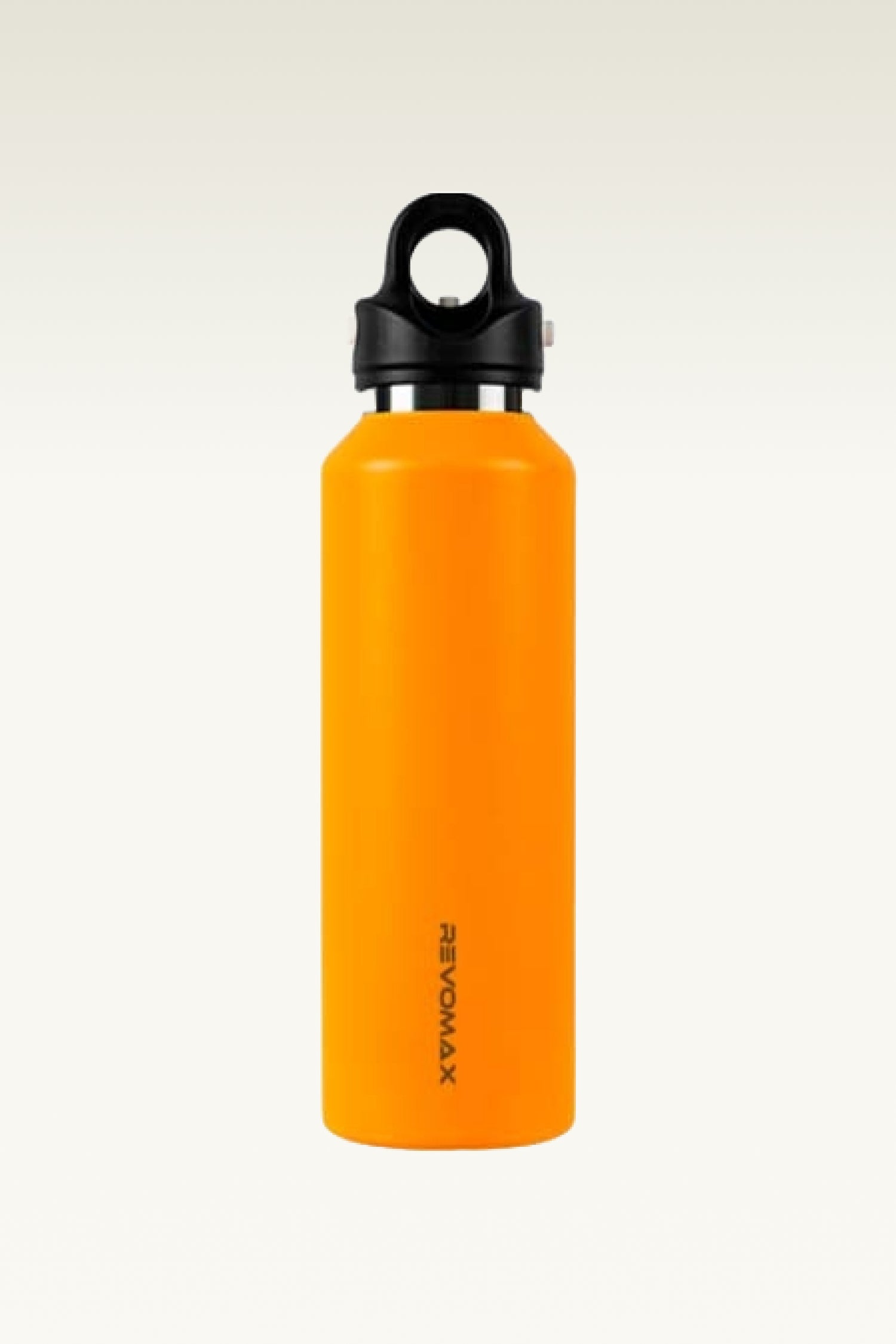
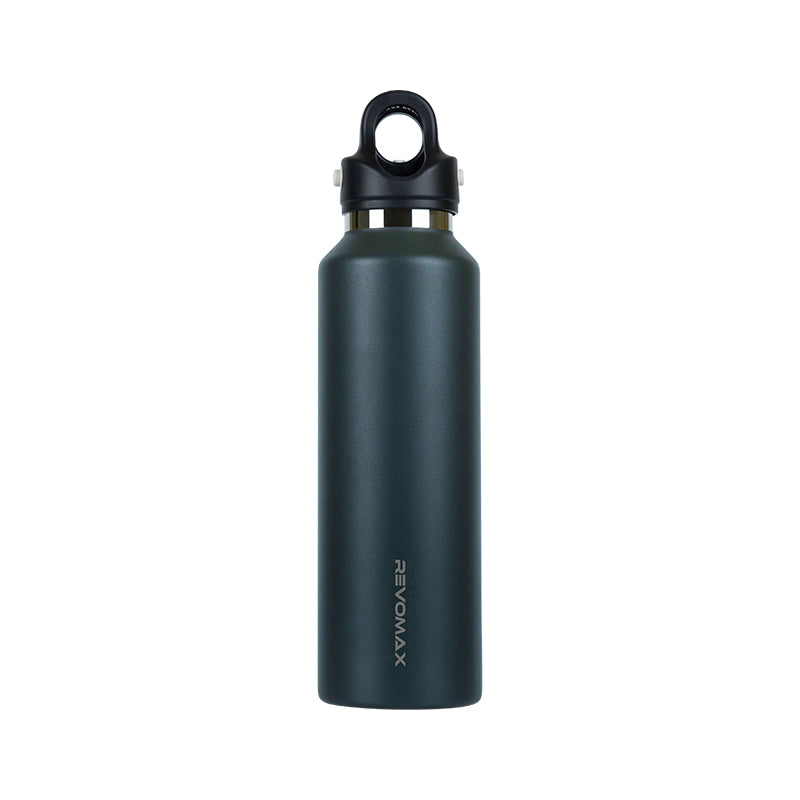
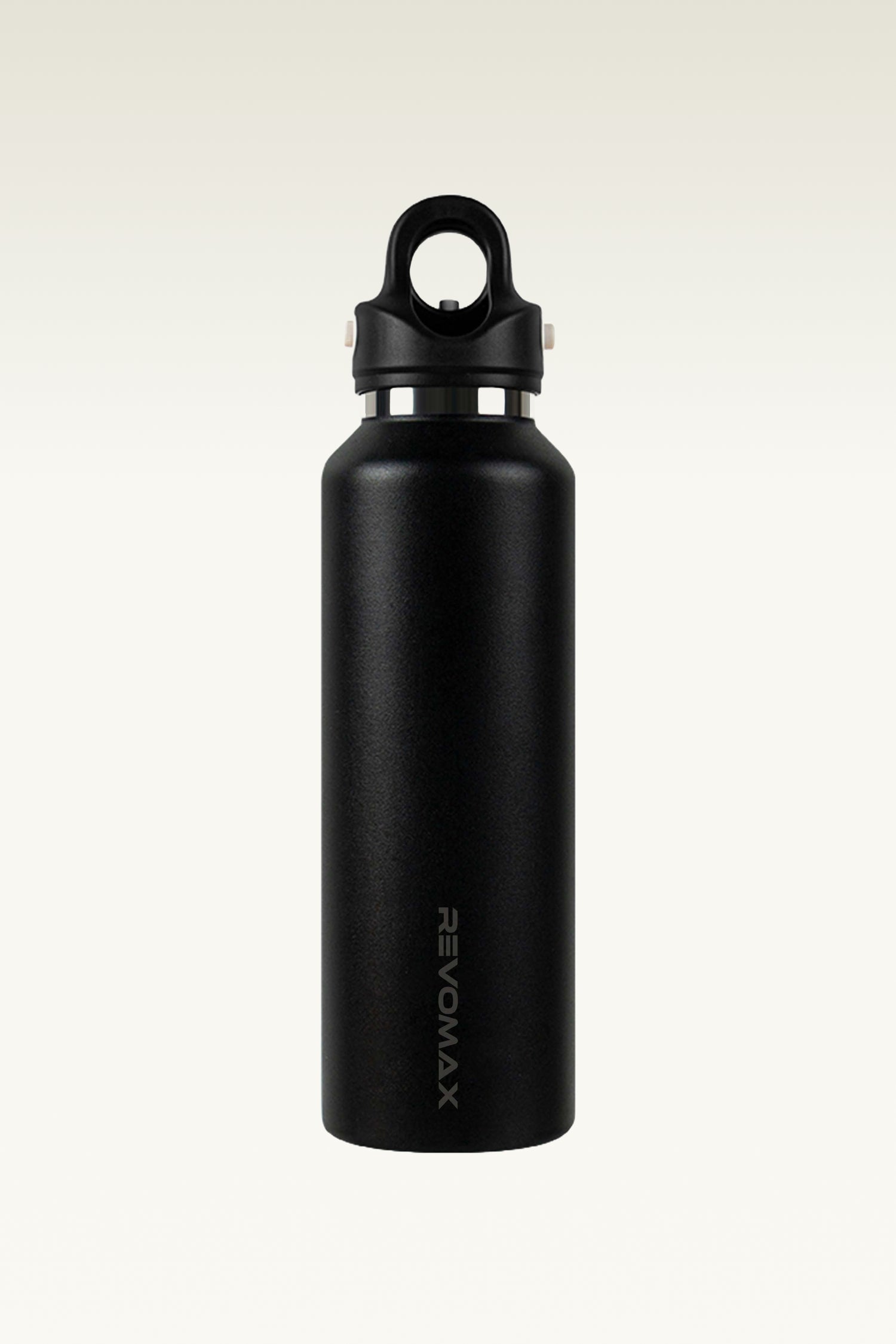
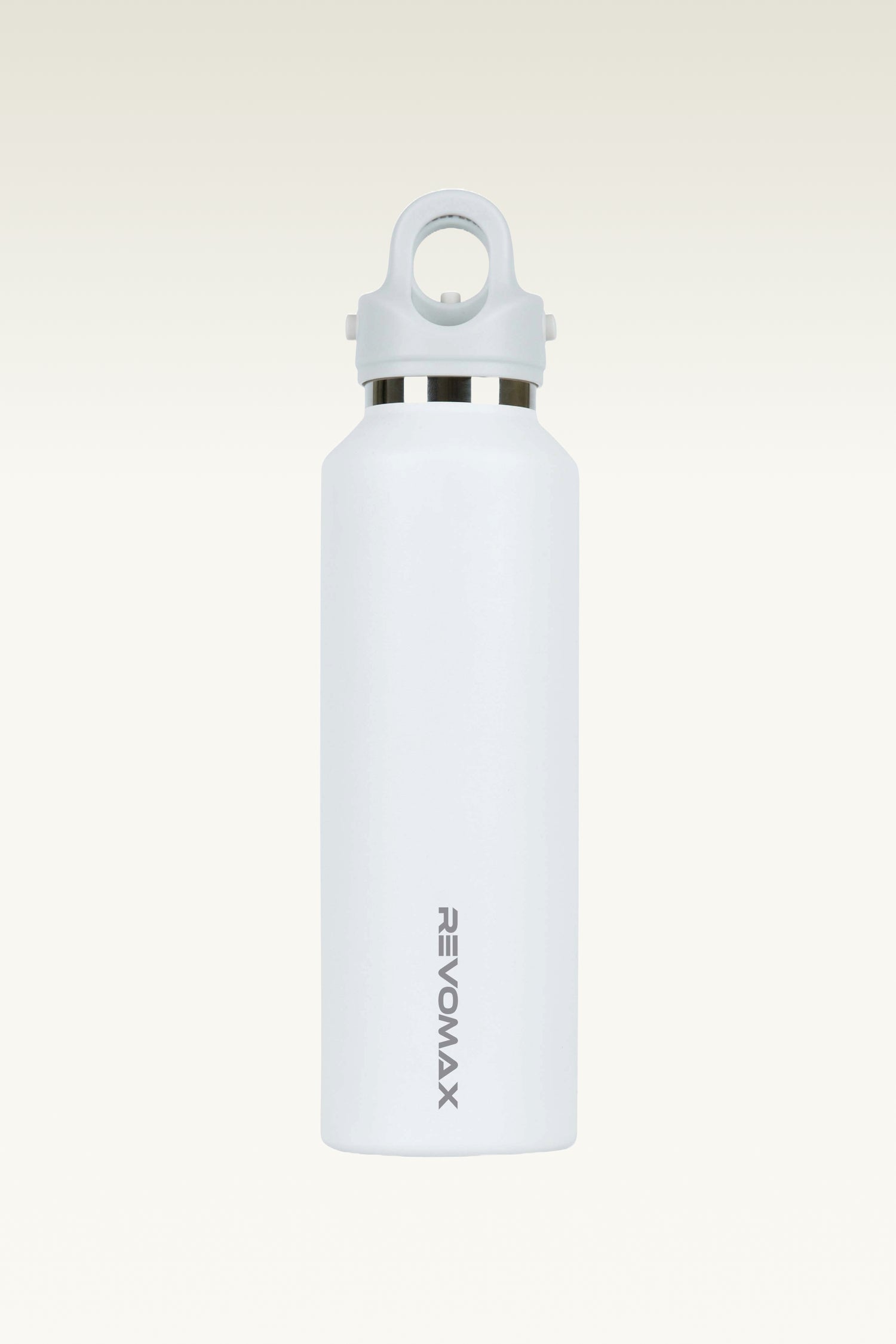
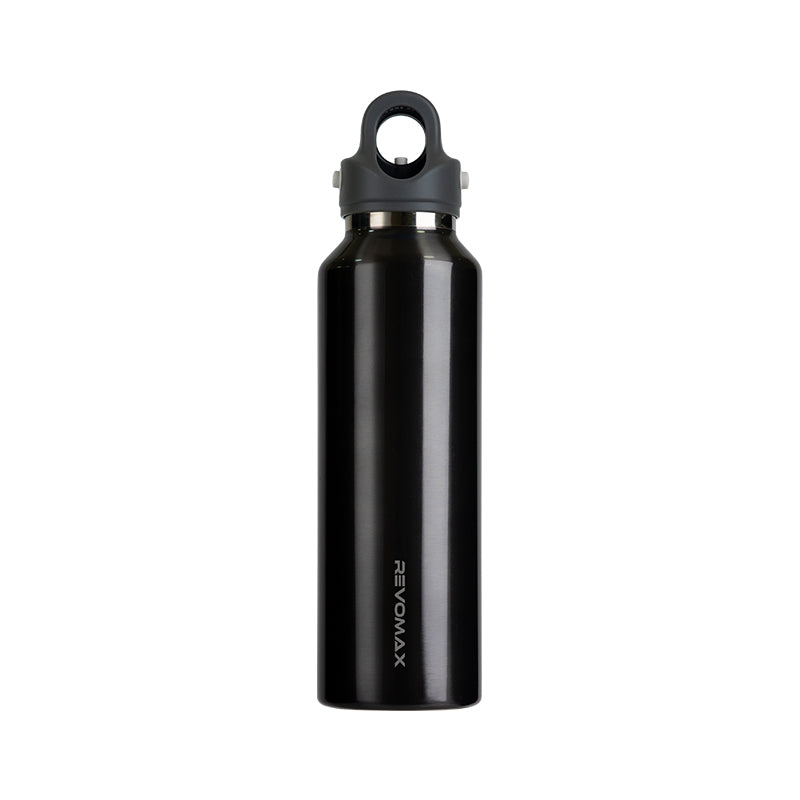
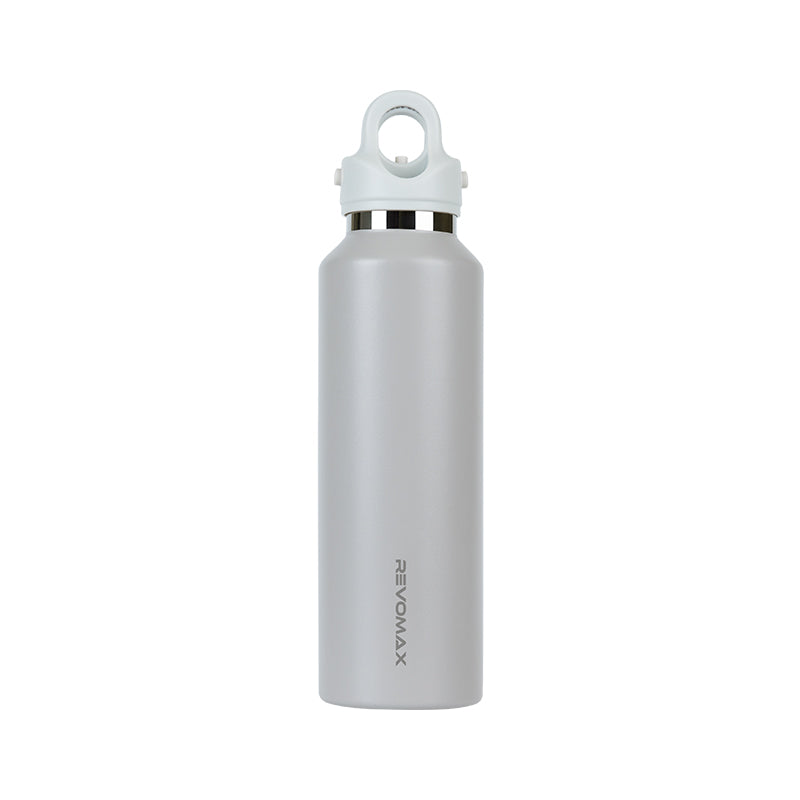
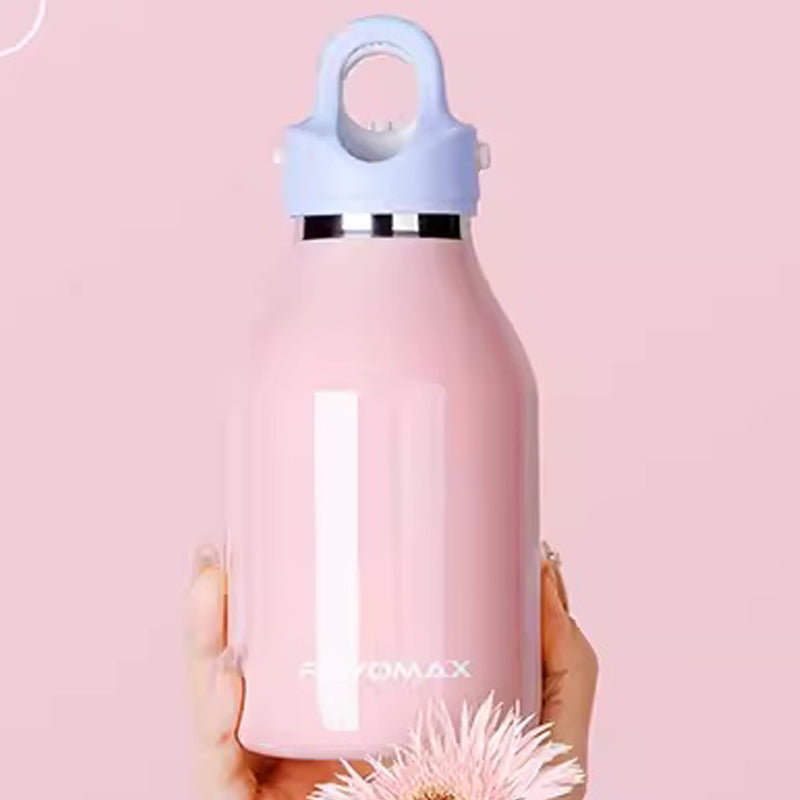
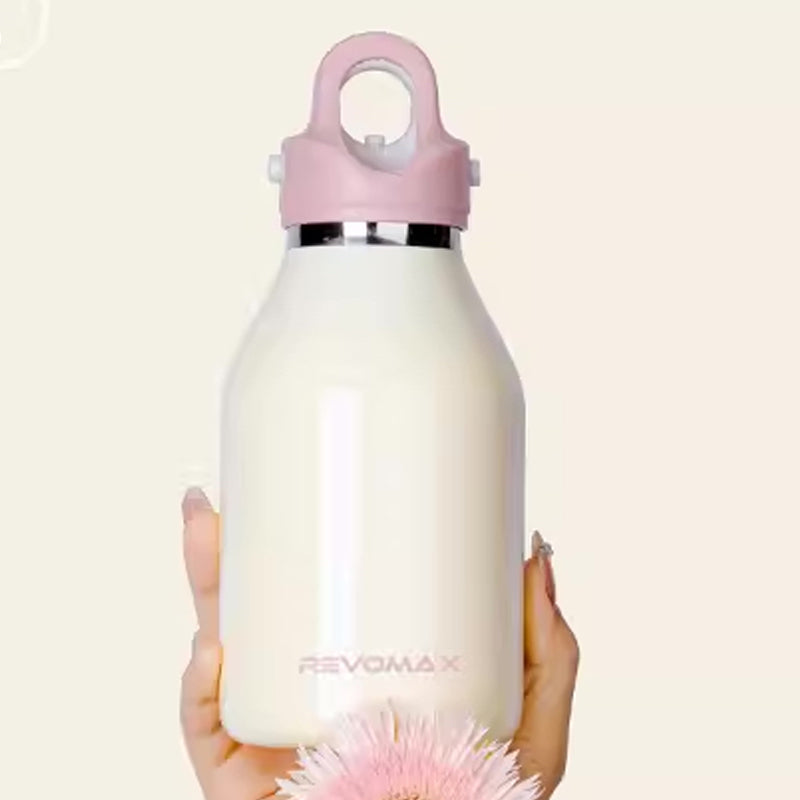
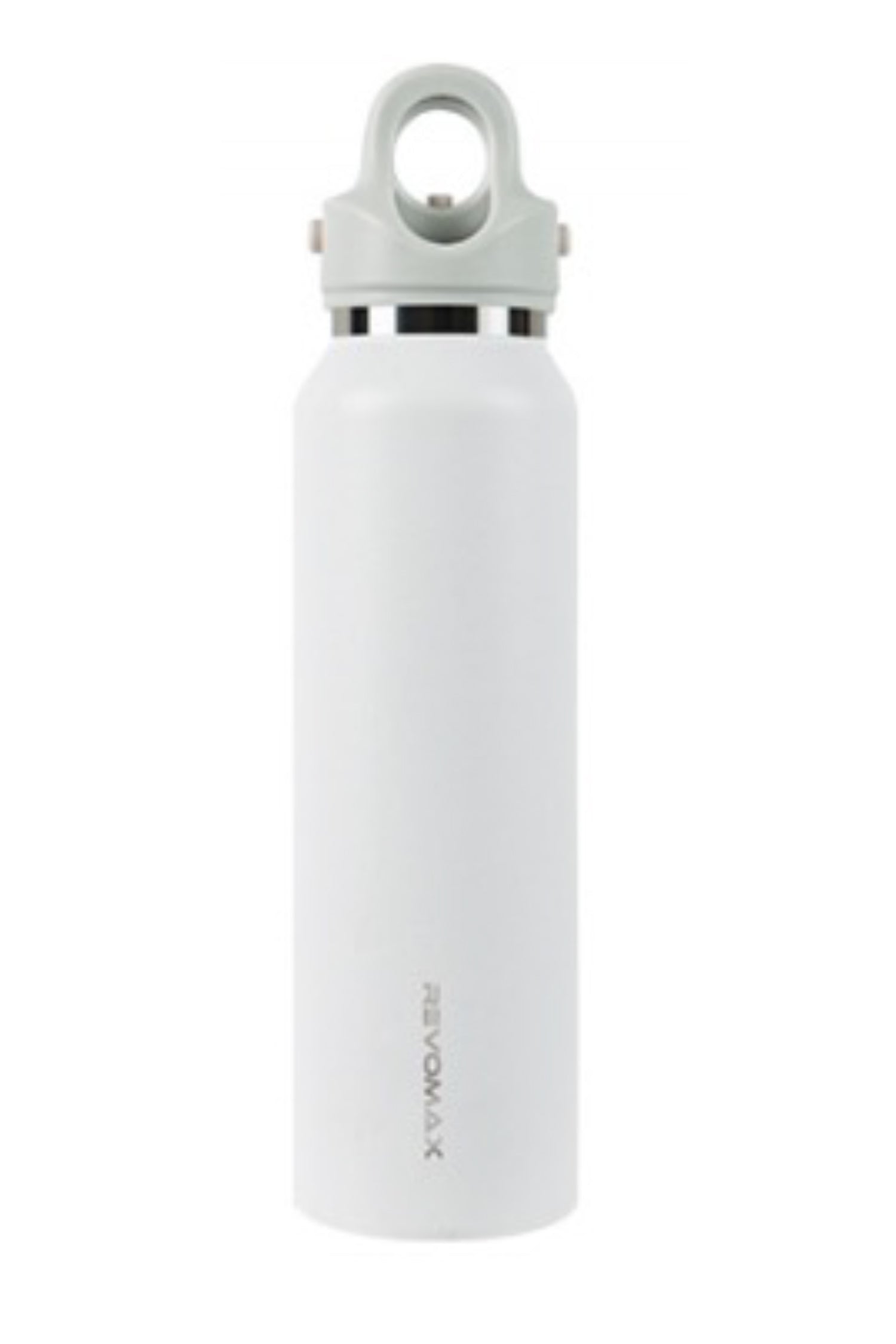
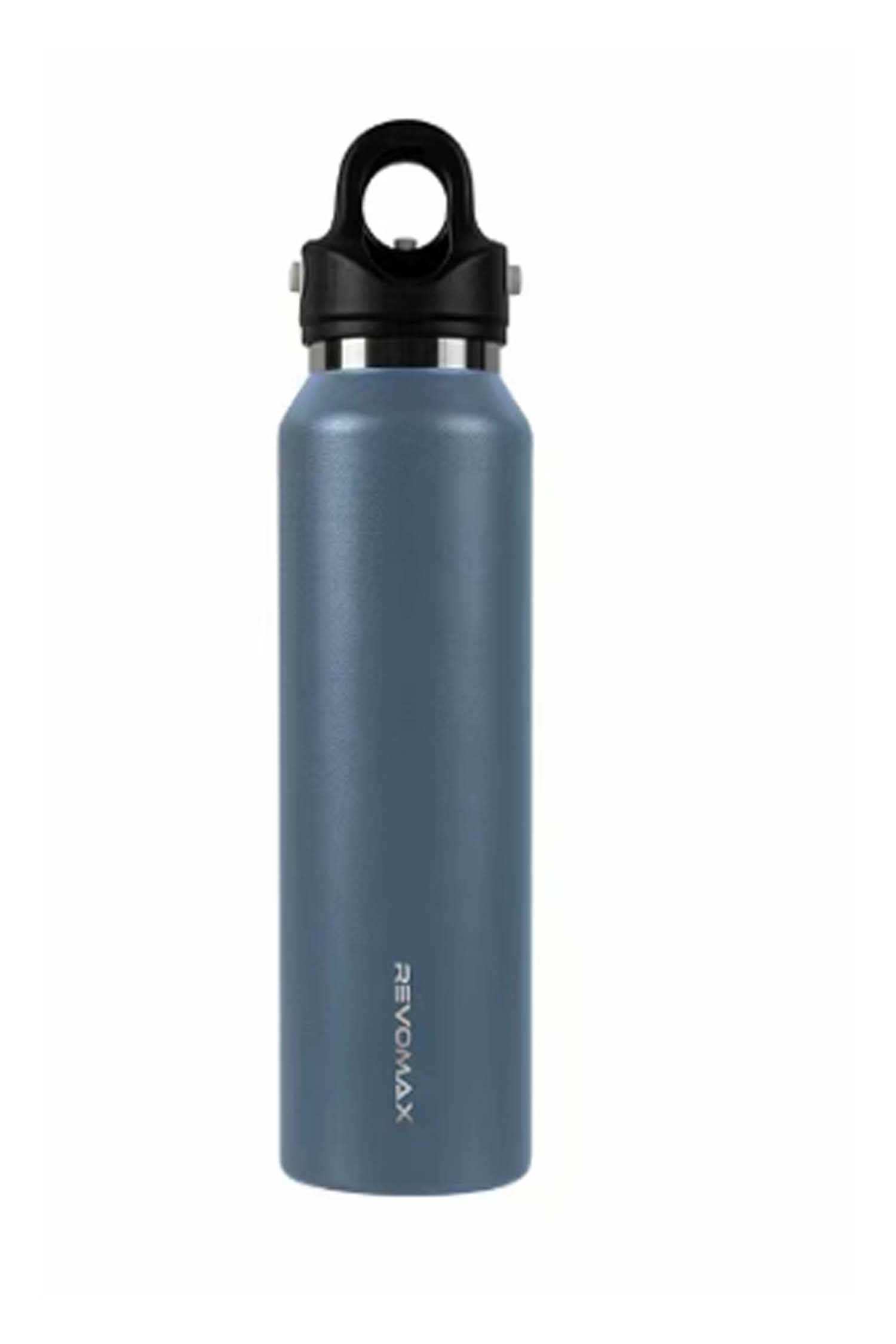
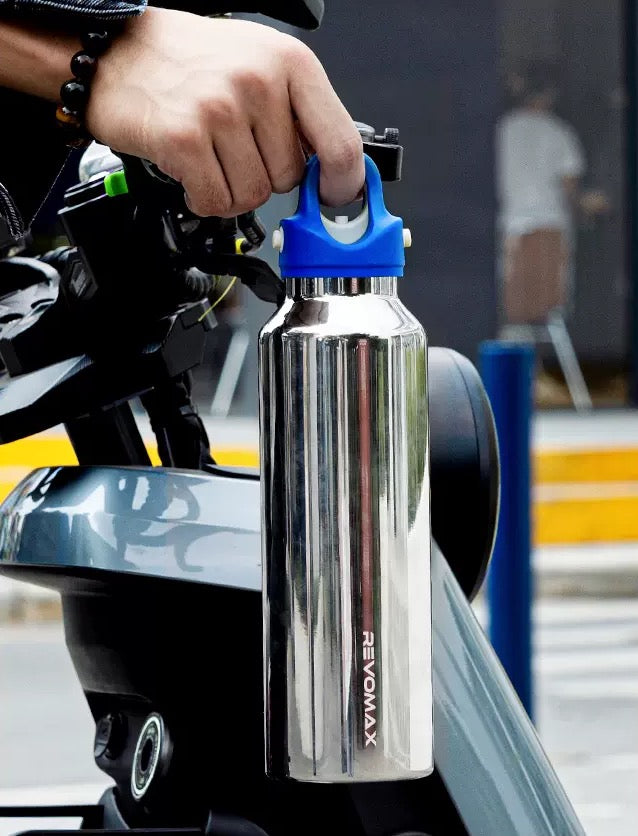
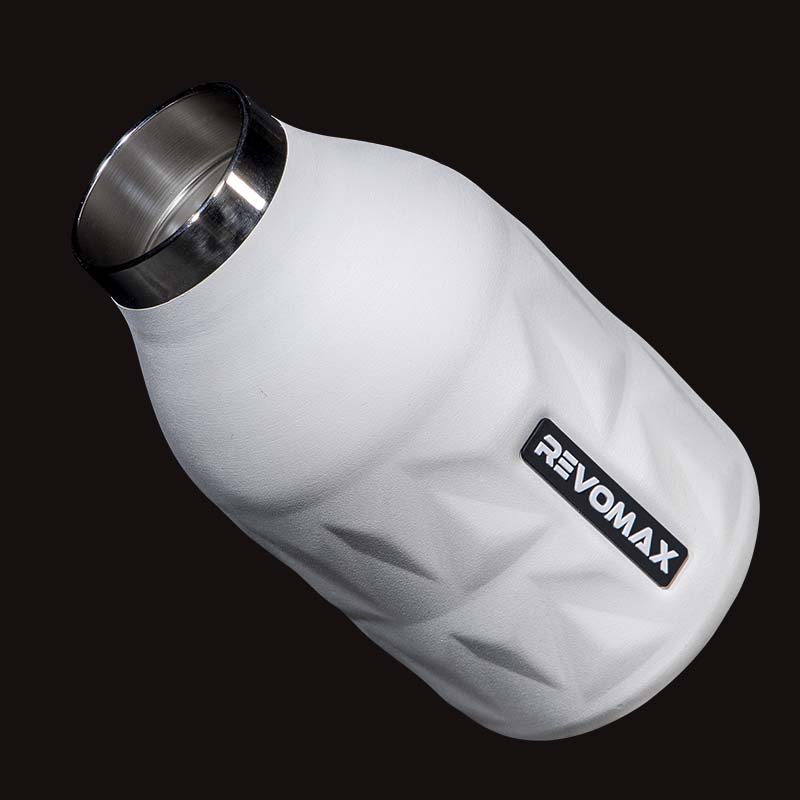
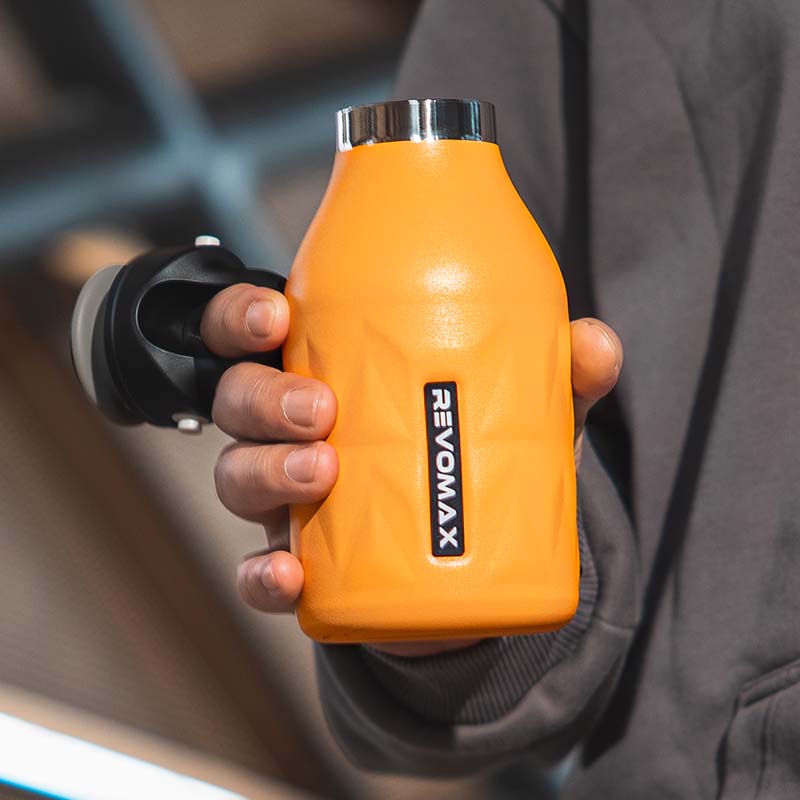
| Revomax | "316 stainless" | 316 (not L) | 2-3% | Standard 316, higher carbon than L variant |
| Hydro Flask | "18/8 Pro-Grade" | 304 | 0% | "18/8" = 18% Cr / 8% Ni = 304 |
| Yeti Rambler | "18/8 stainless" | 304 | 0% | Confirmed in Yeti material spec sheets |
| Klean Kanteen | "18/8 stainless" | 304 | 0% | Same alloy as Hydro Flask, Yeti |
| Stanley Quencher | "18/8 stainless" | 304 | 0% | Same alloy family |
| Owala | "18/8 stainless" | 304 | 0% | Same alloy family |
| Coldest | "18/8 stainless" | 304 | 0% | Same alloy family |
| Iron Flask | "18/8 stainless" | 304 | 0% | Same alloy family |
| Takeya | "18/8 stainless" | 304 | 0% | Same alloy family |
Key takeaway: The "18/8" or "18/10" label is shorthand for 304-family stainless. None of the major U.S. or Canadian water bottle brands except Hikesity (316L) and Revomax (316) use the molybdenum-bearing alloys. If a brand says "stainless steel" and gives no further detail, default to assuming 304.
The "L" variant is the additional engineering choice. Hikesity uses 316L specifically because the lower carbon content (≤ 0.03% vs 0.08%) prevents carbide precipitation at weld points — a microscopic failure mode where chromium gets locked into chromium-carbide compounds at weld zones, leaving those areas with reduced corrosion resistance. Standard 316 is excellent; 316L is incrementally better at the few places (interior weld seams, lid welds) where bottles fail first.
Surgical-grade vs food-grade: what the labels actually mean
Two labels show up constantly in stainless-steel marketing, and most buyers don't know what they require:
- "Food grade" is loose terminology. In the U.S. it generally means the metal complies with FDA 21 CFR 175.300 (resinous coatings) or FDA 21 CFR 174-181 (general food-contact). Both 304 and 316L qualify as food grade — the term doesn't distinguish between them.
- "Surgical grade" or "medical grade" is more specific. It generally means the alloy meets ASTM F138 / F139 (surgical implant stainless steel) or equivalent, which requires the 2-3% molybdenum content. 316L is the standard alloy for orthopedic implants, surgical scalpels, and pharmaceutical reactor vessels because the chloride and chemical resistance margins are wider than 304 can deliver.
Calling a 304 water bottle "medical grade" is technically inaccurate — that's a 316L claim. When Hikesity calls our Hydration Collection "316L medical-grade," it means the same alloy your dentist's surgical instruments are made from is what's holding your water.
Health impact: chloride pitting → biofilm → taste degradation
The mechanism that connects the metallurgy to your daily drinking experience runs as follows:
- Acidic or chloride-rich liquid sits in the bottle.
- In 304, microscopic pits develop on the interior surface (no surface change in 316L).
- Those pits trap microscopic biofilm, mineral deposits, and protein residues.
- Cleaning protocols (vinegar + baking soda, soap + brush) reach the smooth surface but not the inside of the pits.
- Over months to years, the trapped material slowly oxidizes and contributes to "metallic taste" — even after the bottle is rinsed clean.
- Heavy-metal leaching accelerates from the high-surface-area pit walls.
This is also why, in our complete cleaning guide for insulated water bottles, the deep-clean protocol is meaningfully more effective on 316L than on aged 304 — the smooth, intact passivation layer simply has nowhere for residue to hide.
Buyer's checklist: 5 questions to ask before any "stainless" bottle
Use this as your purchasing filter. Any bottle that can't answer all 5 in the affirmative is leaving you in 304 territory:
- Is the exact alloy specified? ("18/8" alone is not specific — that's 304.)
- Does the spec sheet list molybdenum content? (Only 316/316L will.)
- Is the carbon content listed? (≤ 0.03% = 316L, ≤ 0.08% = 316 or 304.)
- Are food-contact certifications listed? (NSF 372 / FDA 21 CFR 175.300 / EU 1935/2004 — preferably all three.)
- Is there a published corrosion-resistance test? (ASTM A262, G48, or ISO 9227 with measured results — not just "pass" claims.)
For reference, every Hikesity 316L medical-grade water bottle hits all five criteria, and the spec sheet is published on each product page.
FAQ
Q1. Is 316L safer than 304 stainless steel for drinking water?
For neutral-pH room-temperature water, both are safe under FDA 21 CFR 175.300 and EU 1935/2004. For acidic drinks (lemon water, sports drinks, kombucha, electrolyte mixes), 316L is measurably safer because the 2-3% molybdenum prevents the chloride pitting that causes heavy-metal leaching and metallic taste in aged 304.
Q2. What does the "L" in 316L mean?
"L" stands for low carbon. Standard 316 has up to 0.08% carbon; 316L has ≤ 0.03%. The lower carbon prevents chromium carbide precipitation at weld zones, which preserves corrosion resistance at the seams where bottles typically fail first.
Q3. Why does Hydro Flask / Yeti / Klean Kanteen use 304 instead of 316L?
Cost. 316L raw material costs roughly 22% more than 304, plus tighter machining tolerances. For a finished 20oz bottle, the cost-of-goods difference is approximately $8-12. Most legacy brands optimize for that cost margin; Hikesity and Revomax are the two North American consumer brands that use molybdenum-bearing alloys instead.
Q4. Is "18/8" the same as 304?
Yes. "18/8" means 18% chromium and 8% nickel, which is the 304 family specification. "18/10" is a slight nickel uplift (10% Ni) but still no molybdenum, still in the 304 family. Neither has the 2-3% molybdenum that 316/316L bottles have.
Q5. Will my old 304 bottle leach harmful amounts of metal into my water?
Under EPA drinking water standards, no — 304 leaching stays within secondary iron and manganese limits even after years of use. The practical issue is taste degradation (metallic / "tinny" notes) and the cosmetic issue of pitting, not acute health risk. That said, the long-term margin of safety is meaningfully wider with 316L medical-grade.
Q6. Does 316L cost more to maintain or clean than 304?
No — it's the opposite. 316L's smoother, intact passivation layer makes daily and weekly cleaning easier, with no pits to trap residue. The Hikesity flash-release No-Screw lid further reduces cleaning friction.
Q7. How can I verify a brand actually uses 316L?
Ask for the mill certificate or material spec sheet. Reputable 316L manufacturers can produce a coil-stock certificate showing molybdenum content. If a brand can only point to a generic "stainless steel" claim, that's almost always 304.
Q8. Is titanium better than 316L for water bottles?
Titanium is even more chemically inert (zero metal taste, zero leaching) but is 3-5x the price and has weaker insulation conductivity than stainless. For most users, 316L medical-grade hits the price-performance sweet spot. For specialty use cases (long-term tea brewing, very acidic drinks like wheatgrass), the Hikesity Premium Titanium 20oz is the upgrade path.
Recommended Hikesity 316L bottles (all surgical-grade interior)
Every Hikesity Hydration Collection bottle uses 316L medical-grade stainless on every food-contact interior surface. Pick by use case:
- 20oz 316L No-Screw ($65) — best daily driver, 4.86★ from 63 verified reviews
- 32oz 316L No-Screw ($75) — best for gym + hiking, 4.88★ from 26 reviews
- 16oz Mix & Match ($69) — customizable colorway, 4.93★ from 14 reviews
- Premium Titanium 20oz with Magnetic Tea Infuser ($120) — TA1 grade-1 titanium for the highest-purity tier
Compared to alternatives:
- vs Hydro Flask (304 / 18-8): Hikesity adds 2-3% molybdenum that survives chloride and acid scenarios where 304 pits. Direct material upgrade for a comparable price band.
- vs Yeti Rambler (304): Same alloy difference; Hikesity flash-release lid is also significantly faster to disassemble and clean than Yeti's MagSlider design.
- vs Revomax (316, no L): Both are molybdenum-bearing, but Hikesity uses the lower-carbon 316L variant for tighter weld-zone corrosion resistance.
Further reading
- How to clean your insulated water bottle: complete guide
- Why 316L stainless steel is the best for your water bottle
- 16oz vs 20oz vs 32oz: which size is right for you
- No-Screw vs Screw-Top water bottle lids: full comparison
- Best Water Bottle for Coffee 2026: Why Threadless 316L Wins
Spec sheet questions, lab-test methodology, or alloy verification requests? Email hi@hikesity.com — our materials engineer will reply directly.
🥤 Upgrade to 316L Today
Ready to leave 304 behind? Here's the full Hikesity 316L lineup:
- 👉 20oz 316L No-Screw — Best for coffee + daily hydration ($65 USD)
- 👉 32oz 316L No-Screw — Full-day capacity ($75 USD)
- 👉 16oz Mix & Match 316L — 576 custom color combos ($69 USD)
- 👉 Titanium 20oz (one tier above 316L) — Pure titanium for tea + coffee purists ($120 USD)