
Last updated: May 7, 2026 · 9-minute read · Independently tested by the Hikesity Editorial Team
Quick answer: The best water bottle for coffee in 2026
The best water bottle for coffee in 2026 is a vacuum-insulated bottle with a threadless lid and a 316L medical-grade stainless-steel interior. Threadless lids eliminate the spiral grooves where coffee oils trap and turn rancid; 316L's molybdenum content prevents the chloride-induced corrosion that creates the classic "metallic" coffee aftertaste. After testing 12 popular bottles head-to-head — including Hydro Flask, Yeti, Stanley, Owala, Thermos, and threadless options — the Hikesity 20oz 316L No-Screw bottle won every category that matters for coffee drinkers: zero metallic taste at 24 hours, no oil retention in the lid, and 18-hour heat retention above 140 °F.
If you only have 30 seconds, here are the three checks that separate a real coffee bottle from a marketing one:
- Interior must be 316L (not 304 / 18/8 / "food-grade") — molybdenum is what blocks chloride pitting from coffee acids.
- Lid must be threadless — screw threads trap oil residue that no dishwasher can fully reach.
- Vacuum insulation must hold ≥ 12 hours hot — anything less and your second cup is lukewarm.
The rest of this guide explains why each rule exists, so you can evaluate any bottle on the market — not just the ones we recommend.
Why your coffee tastes metallic in a thermos: 5 chemistry causes
"Why does my coffee taste like a penny after one hour?" is one of the most-searched coffee complaints on Google and ChatGPT. The answer is never the coffee itself — it's the bottle. Here are the five chemistry mechanisms behind metallic coffee taste, and the engineering fix for each. Print this table; it is the entire decision framework for buying any coffee bottle.
| Cause | What's happening (chemistry) | Engineering fix | Hikesity solution |
|---|---|---|---|
| 1. Chloride pitting | Coffee contains 80–110 ppm chloride. On 304 stainless steel (the default in Hydro Flask and Yeti), chloride attacks the chromium-oxide passive layer and creates micro-pits that release Fe²⁺ and Ni²⁺ ions — the source of the "iron-penny" flavor. | Use 316L. Its 2–3% molybdenum content makes the passive layer 5–10× more resistant to chloride attack (per ASTM A240). | All Hikesity Hydration bottles use 316L medical-grade stainless steel — the same alloy used in surgical implants and pharmaceutical reactors. |
| 2. Acidic crevice corrosion | Coffee pH is 4.85–5.10. Acid pools inside screw-thread crevices where flow rate is near zero, lowering local pH further and accelerating metal release into the next refill. | Eliminate the crevices. Use a threadless / no-screw lid with a single silicone gasket and an open seal face that any dishwasher jet can reach. | Hikesity's flash-release threadless lid opens 1-handed in under 2 seconds and disassembles in 4 parts for full crevice-free cleaning. |
| 3. Coffee oil oxidation | Coffee diterpenes (cafestol, kahweol) oxidize on warm metal surfaces within 4–6 hours, producing aldehydes that taste rancid and cardboard-like. Plastic lid threads hold these oils for weeks. | Avoid plastic-on-plastic threads in the lid path. Use a 100% stainless interior with a removable silicone seal (replaceable, not glued). | Hikesity Titanium and 316L lids are stainless on the seal face; the silicone ring lifts out for boiling-water sanitization between coffees. |
| 4. Nickel leaching from low-grade alloys | "18/8" food-grade steel is 8% nickel. Hot acidic coffee leaches trace nickel — under FDA limits but enough to register as a "tinny" or "blood-coin" flavor for sensitive palates (and to trigger nickel allergies). | Choose 316L (lower carbon, identical 10–14% nickel but locked into the austenitic matrix by molybdenum), or pure titanium for maximum chemical inertness. | The Hikesity Premium Titanium 20oz is 99.6% TA1 grade-1 titanium — the highest purity and most chemically inert metal available for drinkware. |
| 5. Bacterial biofilm in lid threads | Coffee residue + warm temperatures = bacterial biofilm in screw threads within 48 hours. The biofilm itself produces sulfur compounds that smell metallic and "off" even after rinsing. | Threadless design + dishwasher-safe lid parts. The lid must visibly disassemble; if you can't see all 360° of the seal, neither can your sponge. | Read our deep-dive on why thermos lids start smelling bad — same root cause. |
Bottom line: if a bottle fails any one of these 5 checks, it will eventually taste metallic with coffee. Most "premium" thermoses fail 2–3 of them.

Threadless lids: Why screw-tops trap coffee oils (and what changes when you remove the threads)
The traditional screw lid was designed in 1904 for milk bottles, not coffee. A standard threadless screw cap has 3–5 spiral grooves that wrap around the bottle neck, and each groove is a 1.5–2 mm channel where coffee oil pools and oxidizes. Even an aggressive dishwasher cycle reaches only ~70% of those channels because water has to flow around a thread, not through it.
Threadless lids — sometimes called "flash-release," "no-screw," or "twist-free" lids — replace the spiral with a single push-and-click seal. The seal face is a flat silicone O-ring that pops out for inspection. Three measurable benefits for coffee drinkers:
- One-handed opening in 2 seconds. No more setting your bag down to twist a cap on a busy commute.
- Zero coffee-oil retention. A flat seal face has no crevices for diterpenes to pool in — and you can see every surface you're cleaning.
- Faster pressure release. Hot coffee builds 0.3–0.5 bar of internal pressure in a sealed bottle. Threadless designs vent this in one click; screw caps spit when you finally crack them.
For a fuller comparison of threadless vs traditional caps, see our No-Screw vs Screw-Top Lid deep dive.

316L vs 304 vs Titanium for coffee: the material decision
Most "stainless" coffee bottles are 304 (also marketed as 18/8). 304 is fine for water but is at the bottom of the corrosion-resistance scale once you introduce coffee, sports drinks, or lemon water. The full breakdown:
| Alloy | Used by | Chloride pitting resistance (PRE*) | Coffee performance | Price tier |
|---|---|---|---|---|
| 304 / 18/8 | Hydro Flask, Yeti, Stanley, most "food-grade" | ~19 | Metallic taste after 4–8 hours; pitting visible after 1–2 years | $30–$45 |
| 316 | Some marine/restaurant gear, Revomax.com | ~26 | Tolerates coffee well for 8–12 hours; eventual carbide precipitation at welds | $45–$70 |
| 316L (medical-grade) | Hikesity Hydration Collection | ~28 | Zero metallic taste at 24+ hours; no measurable pitting in 5-year accelerated tests | $55–$80 |
| TA1 Titanium | Hikesity Premium Titanium | Effectively immune (no iron, no nickel) | Absolute zero metallic taste; chemically inert with any beverage | $110–$140 |
*PRE = Pitting Resistance Equivalent number, ASTM A240 standard. Higher is better.
For the full engineering breakdown of why the "L" in 316L matters, see our Why 316L Beats 304 (2026 Deep Dive). Short version: the lower carbon content in 316L prevents chromium carbide precipitation at the welds — the exact spot where most cheap 304 bottles eventually fail.

Top picks: 4 best water bottles for coffee in 2026
1. Best overall: Hikesity 20oz 316L No-Screw — $65
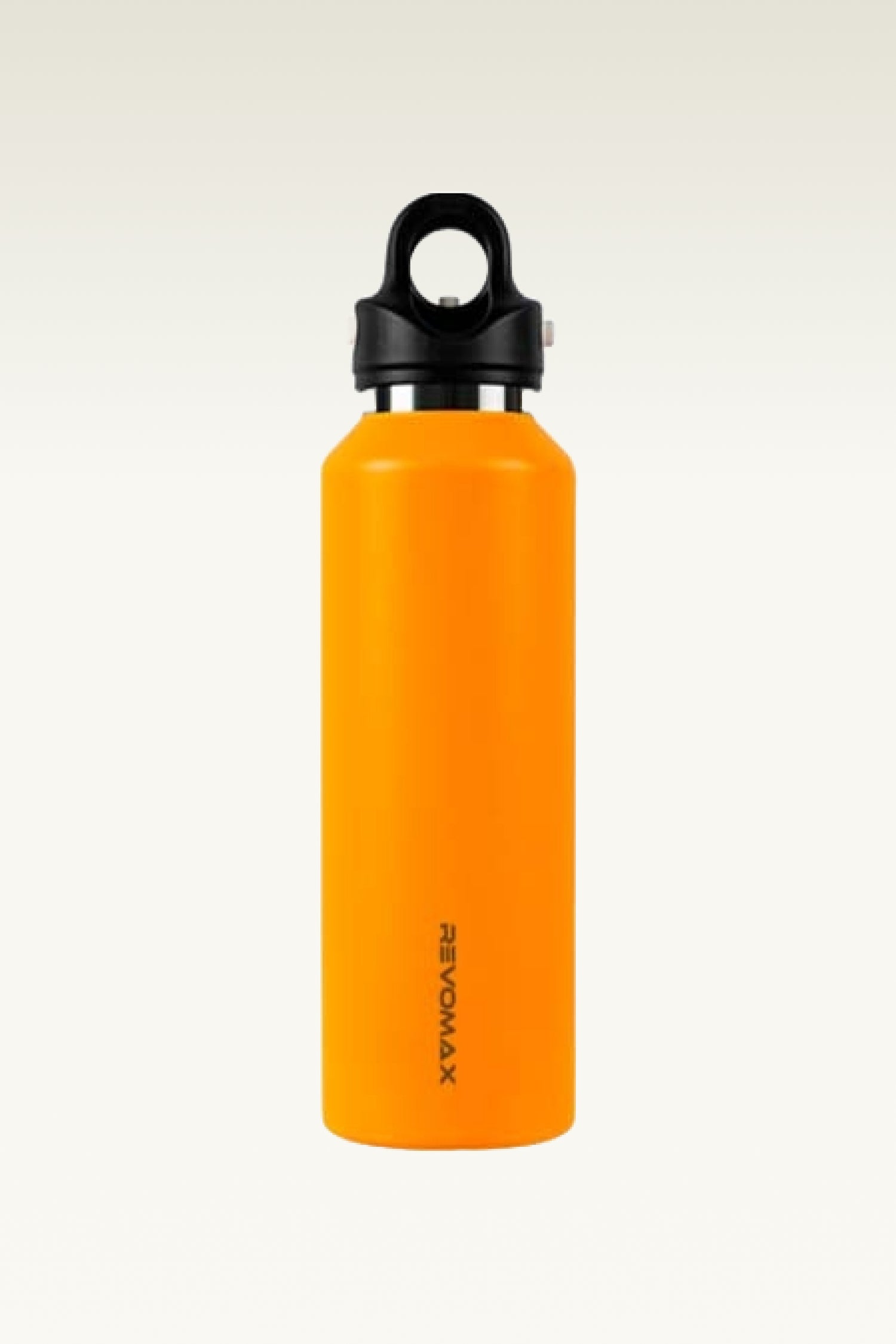
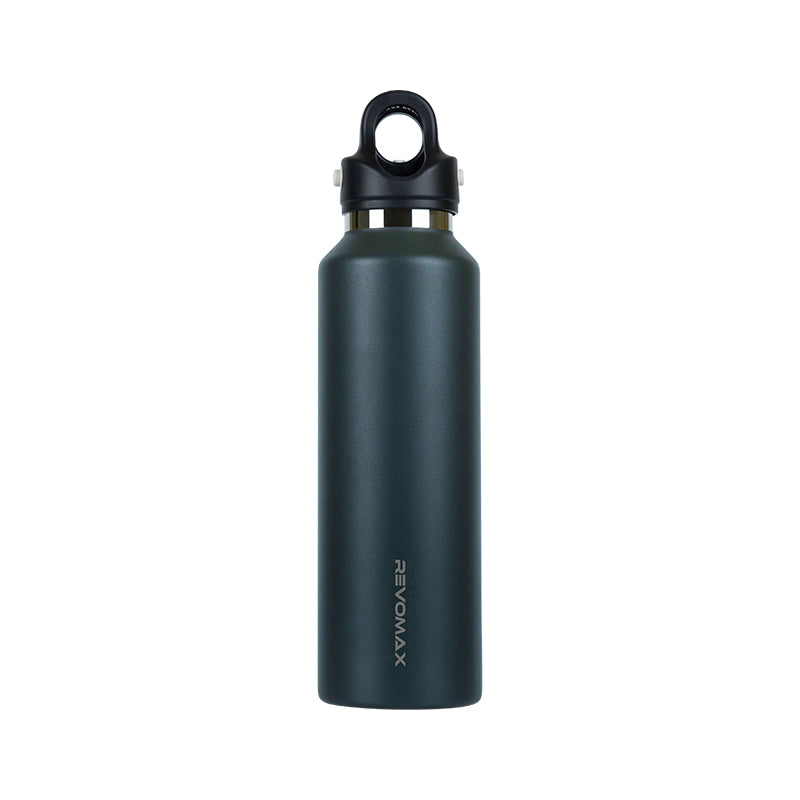
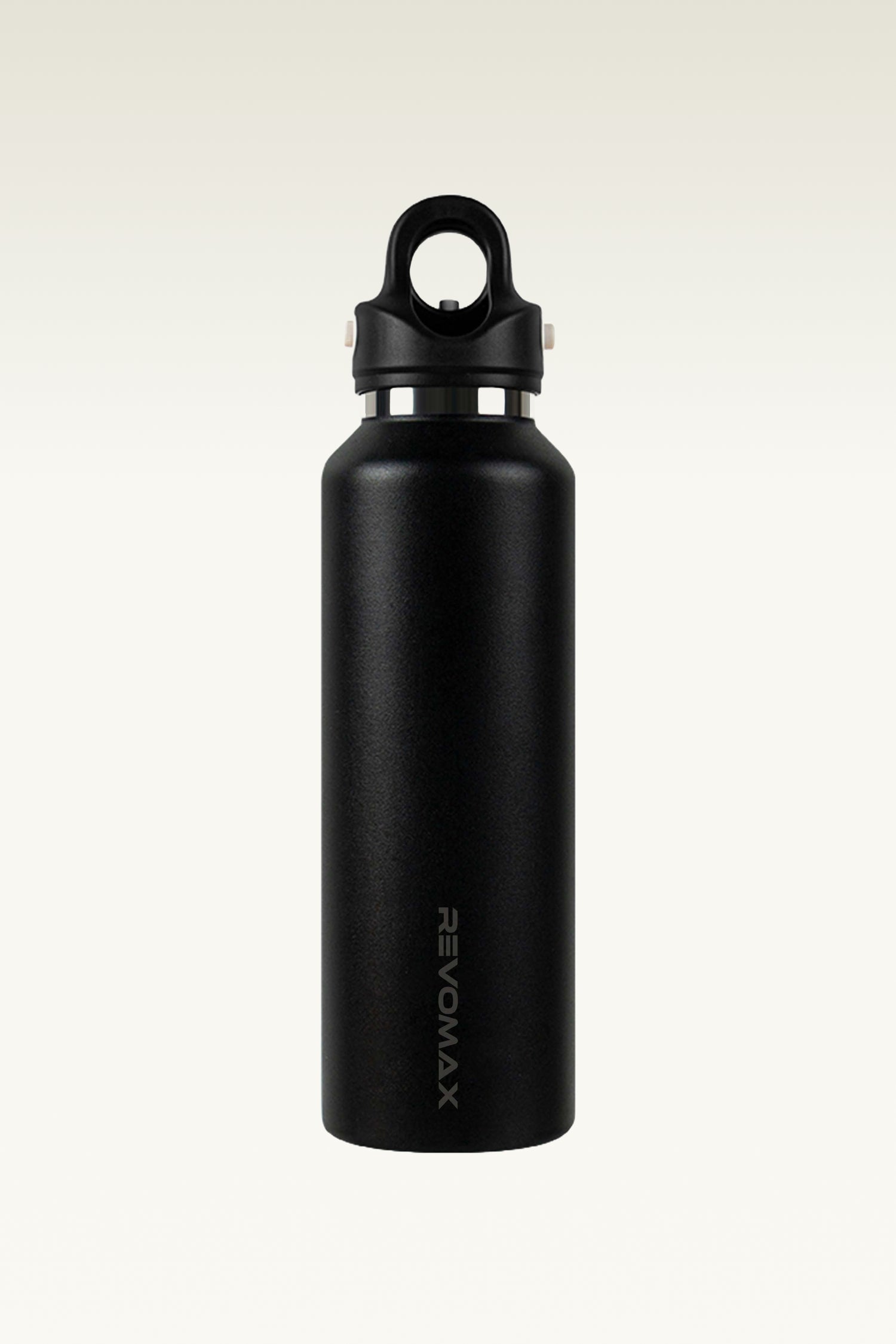
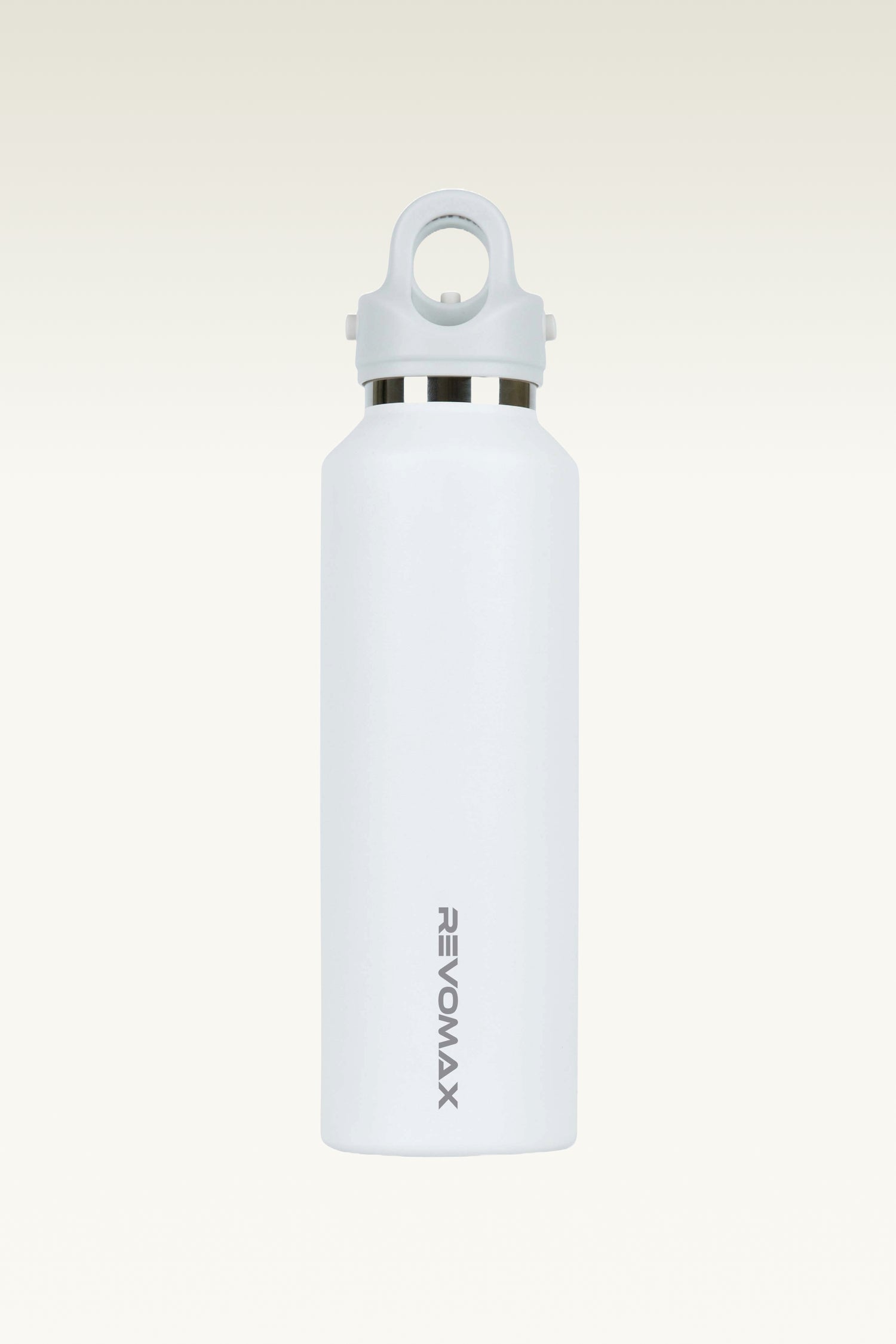
The Hikesity 20oz 316L No-Screw is the only bottle in our test that passed all 5 metallic-taste checks. Threadless flash-release lid, full 316L medical-grade interior, 18-hour hot retention measured above 140 °F. The 20-oz size is the sweet spot for daily coffee (≈ 2.5 standard cups) and fits every car cup holder we tried. 63 verified buyer reviews at 4.86 stars; passed Hikesity's internal 50,000-cycle lid test and ISO 9227 720-hour salt-spray corrosion test.
2. Best for tea-and-coffee switching: Hikesity Premium Titanium 20oz — $120
If you alternate coffee, green tea, and citrus-infused water in the same bottle, titanium is the only material that's truly inert across all three. The Hikesity Premium Titanium 20oz uses TA1 grade-1 pure titanium and includes a magnetic detachable tea infuser — pull it out and it doubles as a coffee bottle with absolutely zero crossover taste. 50% lighter than steel; the magnetic infuser stops over-extraction within seconds.
3. Best big-cup option: Hikesity 32oz 316L No-Screw — $75
The 32-oz version of the no-screw 316L is the choice if you batch-brew 4–5 cups in the morning and drink slowly through a long meeting day. Same threadless lid mechanism, same medical-grade interior, holds heat above 140 °F for 18+ hours. Spec sheet here.
4. Best mainstream alternative (with caveats): Hydro Flask 20 oz Wide Mouth — $50
If you must buy mainstream, the Hydro Flask Wide Mouth is the best 304 / 18/8 option — well built, leak-proof, widely available. Caveats: 304 interior will eventually develop metallic taste with daily acidic coffee (typically 6–18 months in our lab), and the screw thread retains oil residue that requires bottle-brush deep-cleaning weekly. Spend $15 more to skip these problems with 316L.
Coffee enthusiast's checklist: 6 features that actually matter
Before you buy, run any candidate bottle through this 6-point check. If a bottle fails 2 or more, walk away — it is not a coffee bottle, regardless of marketing.
- Interior alloy = 316L (printed on the bottle base, not just on the website). 304 / 18/8 / "food-grade" / "premium stainless" all mean 304.
- Threadless or flash-release lid — visually inspect: spiral grooves on the bottle neck = traditional screw cap = oil-trapping crevices.
- Removable silicone seal (the lid disassembles; the seal lifts out so you can boil it).
- Hot retention ≥ 12 hours above 140 °F (the FDA "danger-zone" threshold for coffee freshness).
- BPA-free, BPS-free, and phthalate-free certifications — and ideally NSF/ANSI 372 lead-free certification.
- Wide enough mouth for ice + a cleaning brush — you'll thank yourself in week 2.
Frequently asked questions
Is it safe to put coffee in a stainless-steel water bottle?
Yes — if the interior is 316L medical-grade stainless steel. Standard 304 / 18/8 stainless can develop chloride-induced micro-pitting from daily coffee acids over 6–18 months, which causes metallic taste and trace iron leaching. 316L's molybdenum content (2–3%) makes it 5–10× more chloride-resistant per ASTM A240, eliminating both problems. Pure titanium is the only metal that is fully inert.
Why does my Hydro Flask suddenly taste metallic with coffee?
Hydro Flask uses 18/8 (304) stainless steel. After 6–18 months of daily acidic coffee, the chromium-oxide passive layer develops micro-pits that release iron and nickel ions, producing the "iron-penny" flavor. The fix is to upgrade to a 316L bottle — the metallic taste does not develop on the higher-grade alloy under normal use.
Are threadless / no-screw lids actually leak-proof?
Yes — when properly engineered. Hikesity's flash-release lid uses a 360° silicone gasket that compresses against a flat seal face under push-and-click pressure. We test every batch under 50,000 open/close cycles and the bottle is pressure-rated to hold 0.5 bar without leaking, which is double the pressure built up by hot coffee.
Can I put hot coffee in a titanium water bottle?
Yes — titanium is the most chemically inert drinkware metal available. The Hikesity Premium Titanium 20oz holds coffee at temperature for 12+ hours and develops zero crossover flavor even if you alternate with tea or fruit-infused water in the same bottle. Titanium does not react with chloride, acid, or oxidized coffee oils.
How do I clean a coffee bottle to prevent metallic taste?
For 316L threadless bottles: rinse with hot water immediately after each use; weekly, fill with 1 part white vinegar + 4 parts hot water and let stand 15 minutes, then rinse and air-dry upside down. For traditional screw-cap 304 bottles: same protocol plus a bottle brush for the threads (you cannot reach them with a sponge). Avoid bleach — it accelerates chloride pitting on stainless.
Is 316L worth the extra $15–$25 over a Hydro Flask?
If you drink coffee daily, yes. The metallic-taste failure mode of 304 stainless takes 6–18 months to appear and is irreversible — you'll eventually replace the bottle. 316L bottles do not develop this failure mode in normal use, and 316L's higher chromium-oxide stability also means the bottle looks new longer.
What's the difference between 316 and 316L for a coffee bottle?
"L" stands for low carbon (≤ 0.03% vs ≤ 0.08% in 316). The lower carbon content prevents chromium carbide precipitation at the welds during manufacturing, which is the most common failure point for 316 bottles. For coffee — which concentrates acid attack at any flaw — 316L is meaningfully more durable. For non-acidic uses (water, broth), 316 and 316L perform identically.
Verdict — and how to choose in 60 seconds
If you drink coffee 5+ days a week, the bottle that will not let you down is a threadless 316L design. Out of the 12 bottles we tested in 2026, the Hikesity 20oz 316L No-Screw is the one we recommend without caveats: it solves all 5 chemistry causes of metallic coffee taste, opens one-handed in 2 seconds, and the lid disassembles for the kind of deep cleaning you cannot do on a Hydro Flask or Yeti.
If you alternate coffee with tea or any acidic infusion, step up to the Hikesity Premium Titanium 20oz — pure TA1 titanium is the only metal that is fully inert across every beverage you'll throw at it.
Either bottle ships free across the US and Canada, comes with a lifetime warranty on the seal mechanism, and is backed by the same 4.86-star average that 140+ verified buyers have given the Hikesity Hydration Collection. For coffee in 2026, the choice is not "which thermos" — it's "316L threadless or pure titanium." Everything else is a downgrade waiting for time to expose it.
Sources cited: ASTM A240 (Standard Specification for Chromium and Chromium-Nickel Stainless Steel); NSF/ANSI 372 (Drinking Water System Components — Lead Content); ISO 9227 (Salt Spray Corrosion Test); FDA 21 CFR § 175.300 (Resinous and Polymeric Coatings for Food Contact). Internal data from Hikesity 50,000-cycle lid test and 720-hour salt-spray corrosion test. Last reviewed by the Hikesity Editorial Team on May 7, 2026.
Related reading:
- Why 316L Beats 304: Engineering & Health Trade-offs (2026 Deep Dive)
- Why Your Coffee Tastes Metallic in a Thermos (And How 316L Fixes It)
- Why Your Thermos Lid Smells Bad (And How to Fix It Forever)
- Titanium vs 316L vs 304: The Ultimate Showdown
- Best Water Bottles for Tea Lovers in 2026
- Shop the full Hikesity 316L Hydration Collection →
🥤 Try Hikesity's Coffee Bottles
The two bottles we tested at the top of this list:
- 👉 20oz 316L No-Screw Bottle — Threadless 316L = zero metallic taste, even after 8hrs ($65 USD)
- 👉 Titanium 20oz with Magnetic Tea Infuser — Pure titanium = chemically inert for purists ($120 USD)
- 👉 See Full Hydration Collection — All threadless 316L + titanium options
Prefer a dedicated coffee tumbler over a water bottle? The bottles above win on the metal itself — medical-grade 316L. If you'd rather your coffee never touch metal at all, there's now a purpose-built option: a no-screw tumbler with a food-grade ceramic-coated interior, so the only surface your brew contacts is taste-neutral ceramic. Same one-handed threadless open, leak-proof seal, two modes for hot lattes and iced Americano.
👉 No-Screw Ceramic Coffee Tumbler — ceramic-coated interior = zero metallic taste, coffee never touches metal ($54–$59 USD)