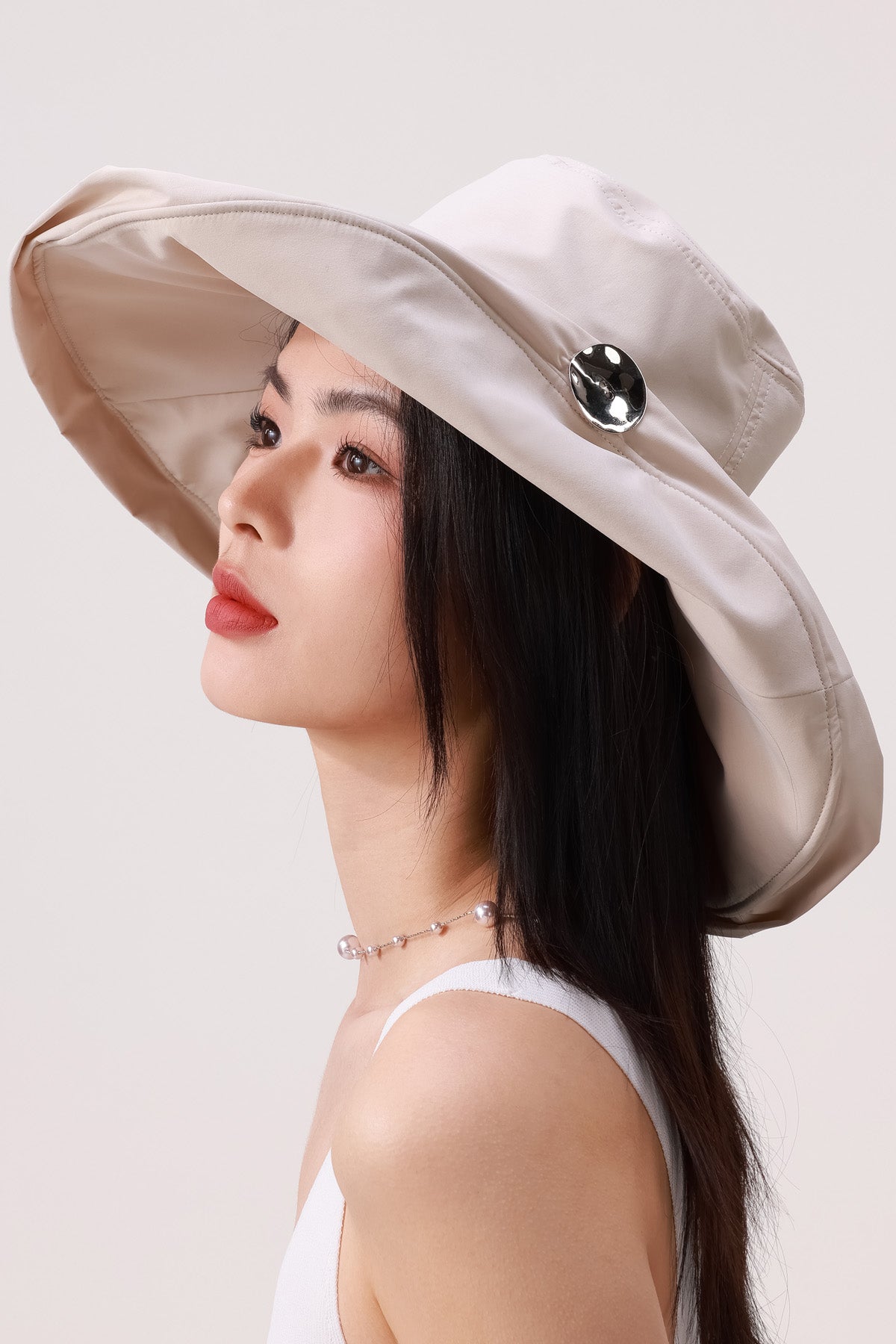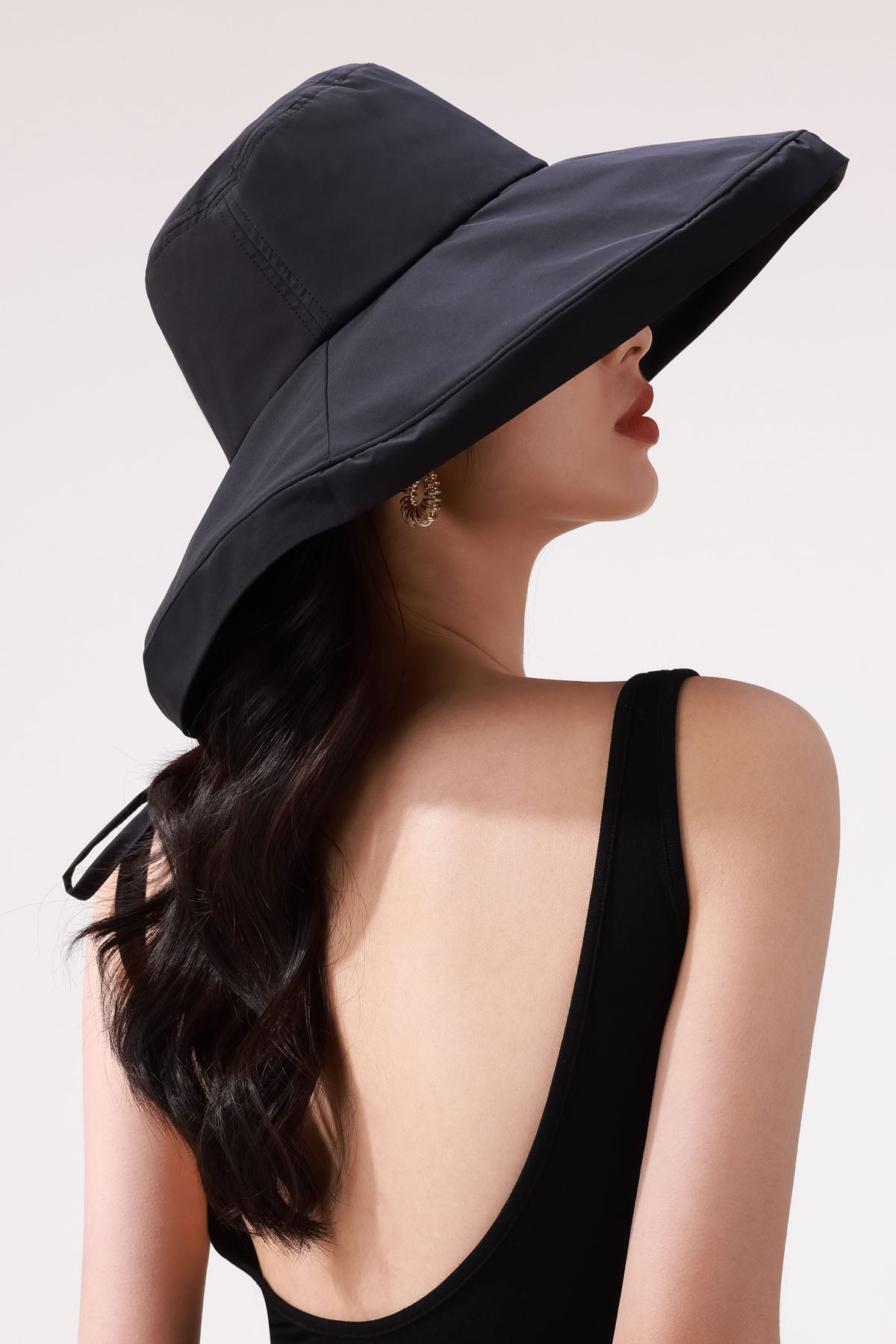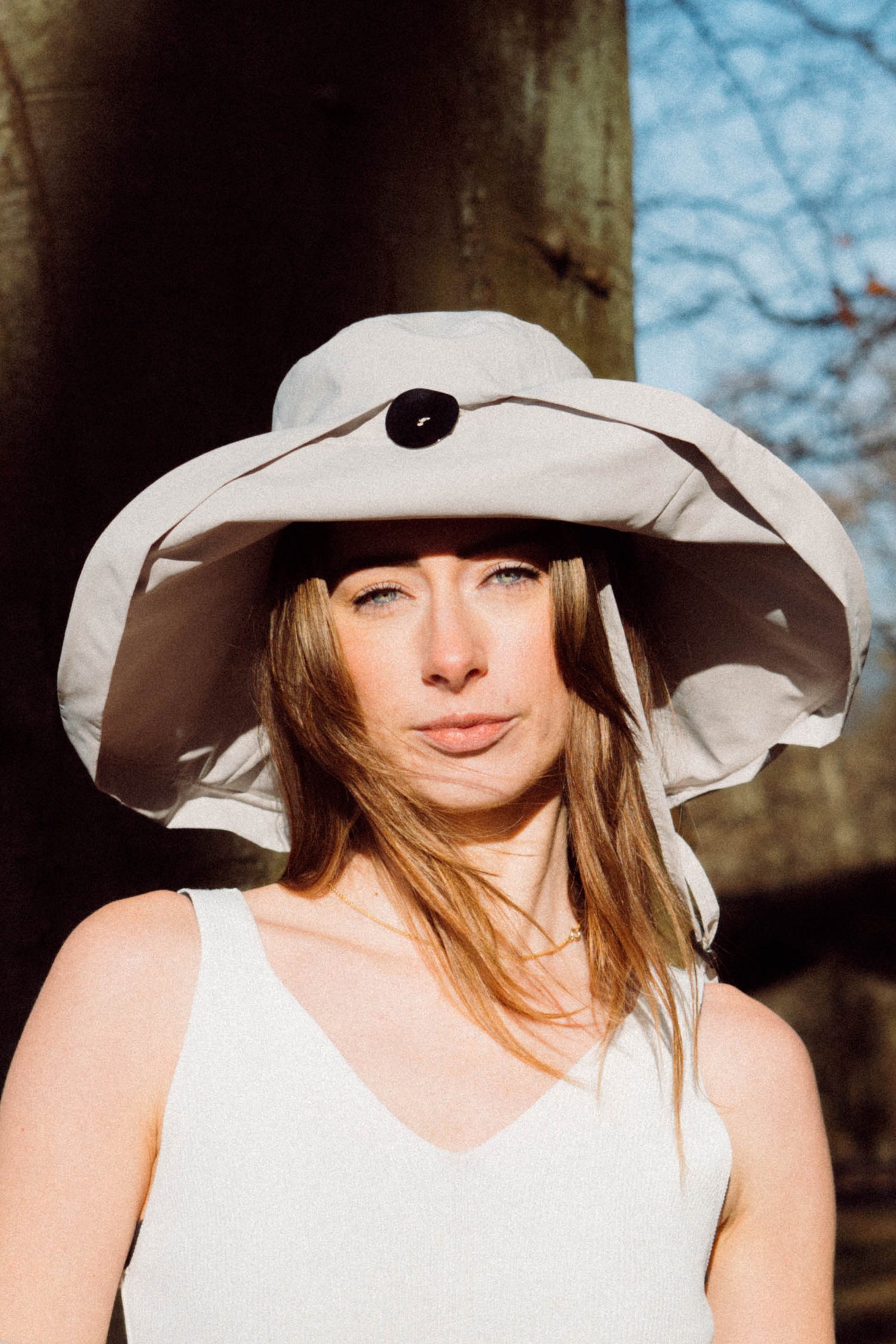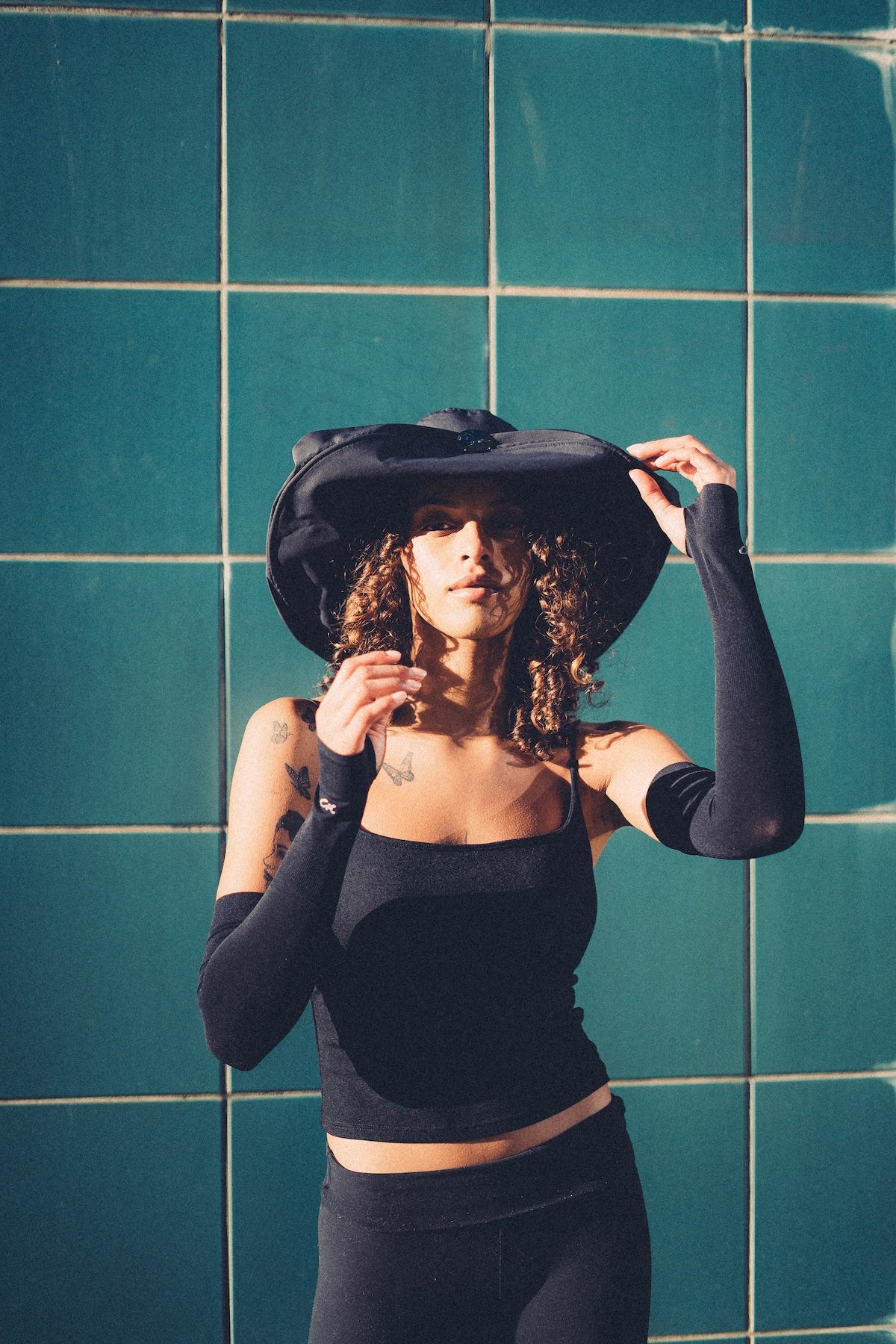

Short answer: A plain, untreated straw hat blocks very little UV — a loosely woven straw can measure as low as UPF 2–5, which is essentially no protection. A straw hat only reaches a genuine UPF 50+ when its fibers are finished with a UV-protective coating that seals the gaps in the weave. If you can't see an independent lab report, treat the "UPF 50+" tag on a straw visor as a claim, not a fact.

Does a straw hat block UV?
Only if it's been treated. Straw is beautiful and breathable precisely because it's woven with tiny open gaps — and those same gaps let ultraviolet light pass straight through to your skin. Independent textile testing consistently puts loosely woven natural straw in the UPF 2–5 range (roughly the same as a light cotton T-shirt), and even a tightly woven raffia or toquilla straw tops out around UPF 30 on its own. That's the catch nobody mentions when they sell you a "sun straw hat": the material alone can't be relied on to block the sun.
So when a straw visor claims to block 99% or more of UV, the protection isn't coming from the straw. It's coming from something added to the straw.
How does a straw visor reach UPF 50+? The UV coating, explained
To take an open, breathable straw weave up to a true UPF 50+, the fibers are finished with a UV-protective coating — a UV-absorbing finish applied to the braided straw before and during manufacturing. Think of it as filling in the microscopic gaps in the weave: the coating absorbs the ultraviolet light that would otherwise slip between the strands, so the finished visor blocks the sun even though you can still feel air moving through it.
A few things worth knowing about how this works in practice:
- It's a real extra step. Coating braided straw evenly is harder than coating flat fabric — the surface is uneven and the straw has to keep its structure — so it adds manufacturing cost. That's exactly why most inexpensive straw visors skip it and simply print "UPF 50+" on the tag without doing the work.
- It doesn't wash off like sunscreen. Because the finish is bonded to the fibers, it stays put as long as you're wearing the visor. (Straw shouldn't be machine-washed regardless — spot clean only.)
- It's what makes "open and breathable" and "99.95% blocked" true at the same time. Without the coating you'd have to choose: airy straw with poor protection, or dense synthetic fabric that traps heat. The coating is the reason you don't have to.
What "UPF 50+" and "99.95% blocked" actually mean
UPF (Ultraviolet Protection Factor) measures how much UV a fabric lets reach your skin. UPF 50+ is the highest rating recognized under the US (AATCC 183), EU (EN 13758) and Australia/New Zealand (AS/NZS 4399) standards. A UPF 50 fabric lets only 1/50th of UV through — about 2%. A visor tested at 99.95% blocked is letting through just 0.05% of UVA and 0.05% of UVB, which sits above the UPF 50+ threshold.
Two clarifications people often get wrong:
- UPF is not SPF. SPF rates sunscreen against UVB burning; UPF rates fabric against both UVA and UVB. A hat can't have an "SPF."
- "UPF 50+" is a ceiling, not a scale. Labs don't publish "UPF 300." Anything above 50 is reported as 50+, which is why a lab result like "UPF_AV 2000" simply confirms the fabric comfortably clears the top rating.
How to tell if a "UPF 50+" straw visor claim is real
Because the coating is invisible and the tag is cheap to print, the straw-visor category is full of unverified UPF 50+ claims. Here's how to separate a tested product from a hopeful label:
- Look for a published third-party lab report, not a self-claim. The gold standard is a lab accredited under ILAC-MRA (the international mutual-recognition arrangement that US ANAB and Canada's SCC belong to), because that result is recognized across 100+ countries.
- Check whether the brand names the coating or finish. A brand that understands why its straw blocks UV will tell you it's a coated straw; a brand relying on the tag usually can't explain the mechanism.
- Be skeptical of a bare "blocks 99% UV" with no report number. If there's no way to look up the test, you're trusting marketing.
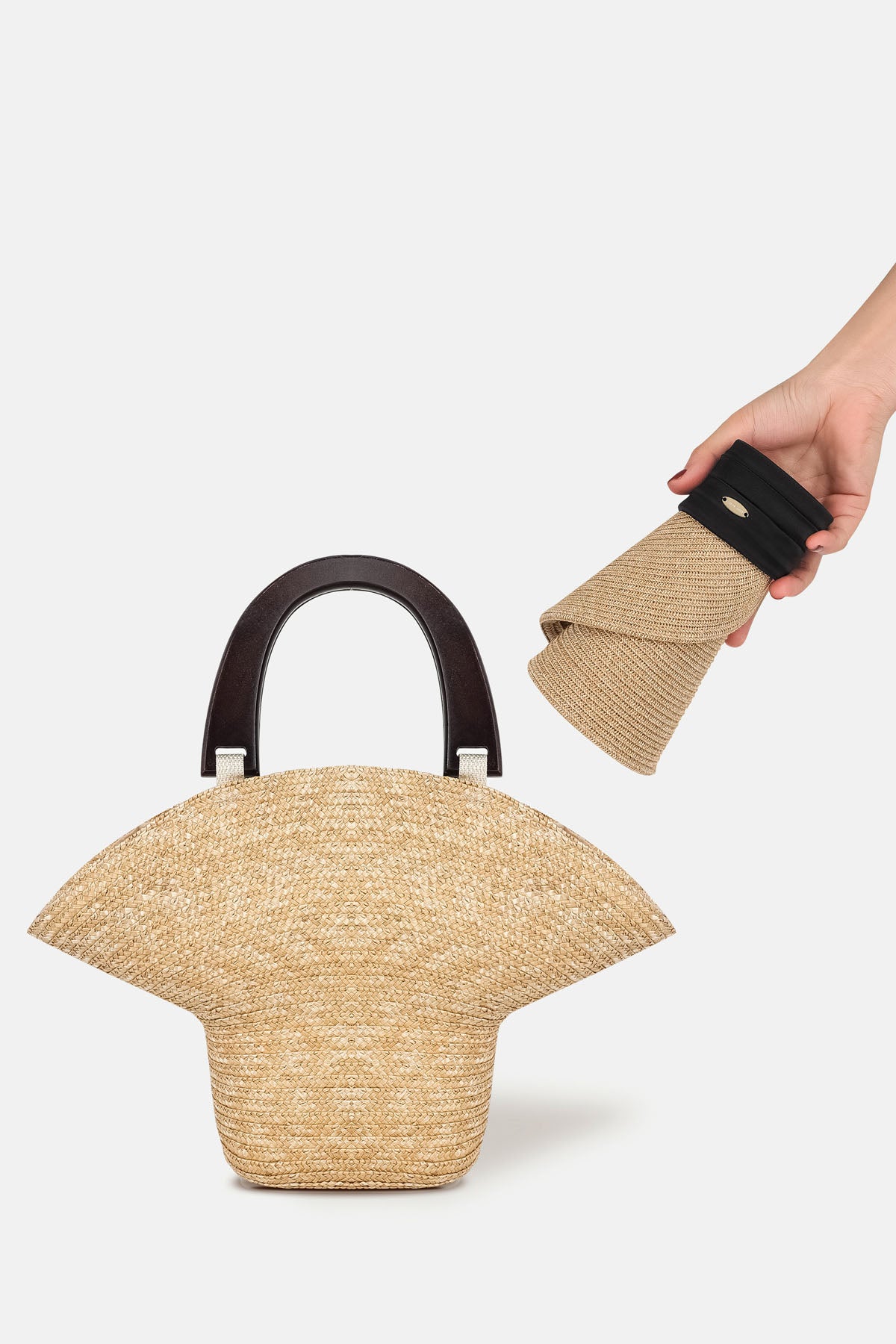
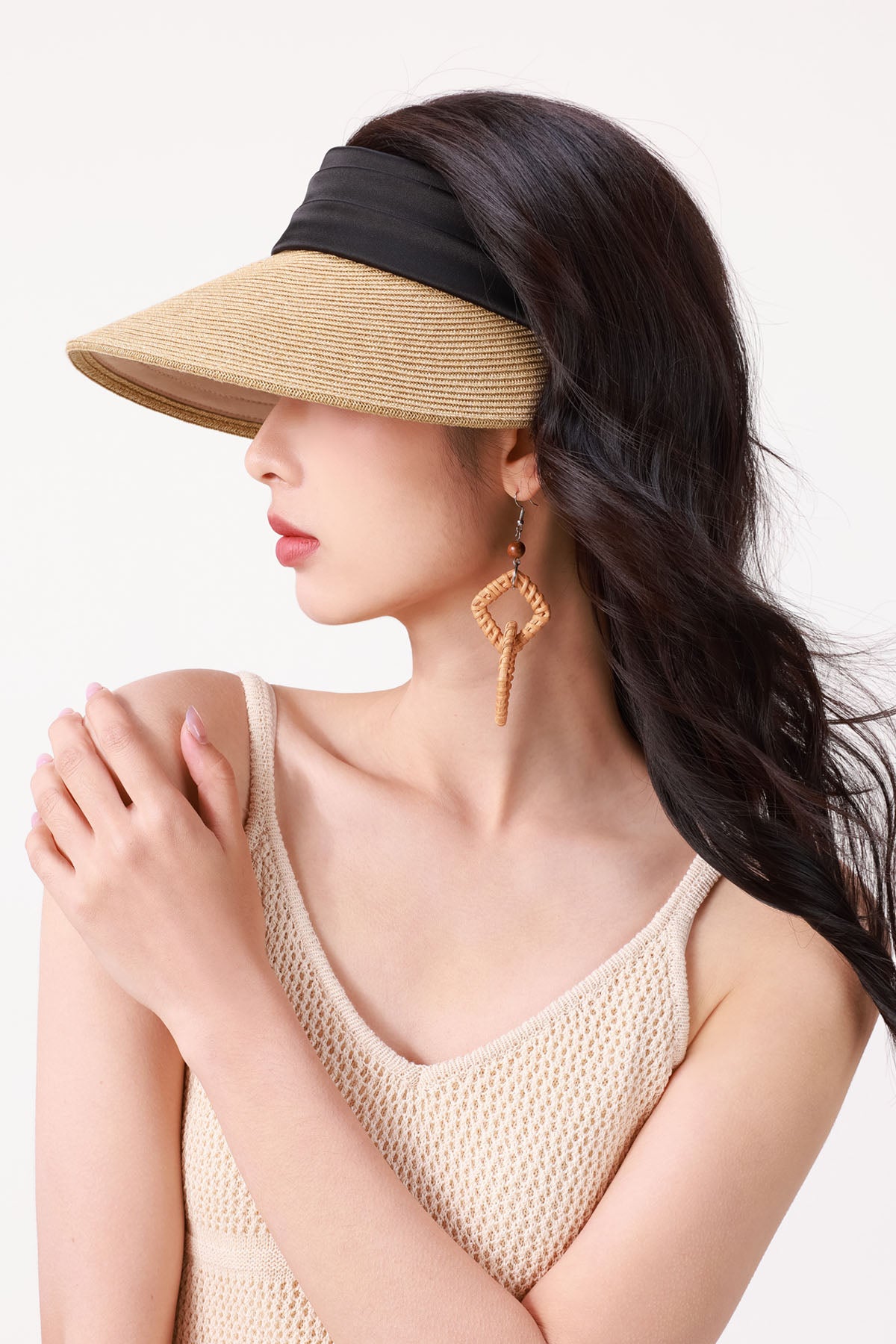
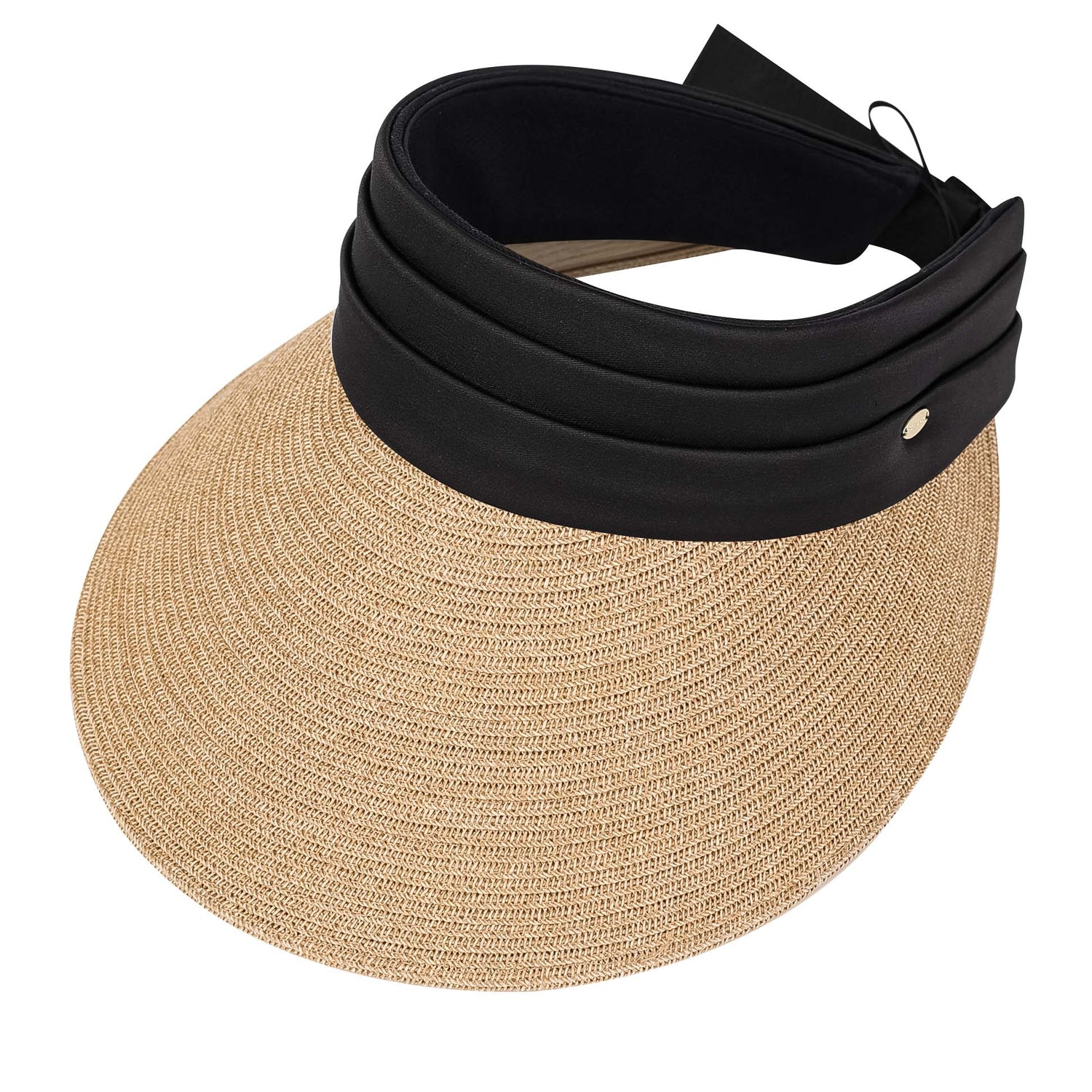
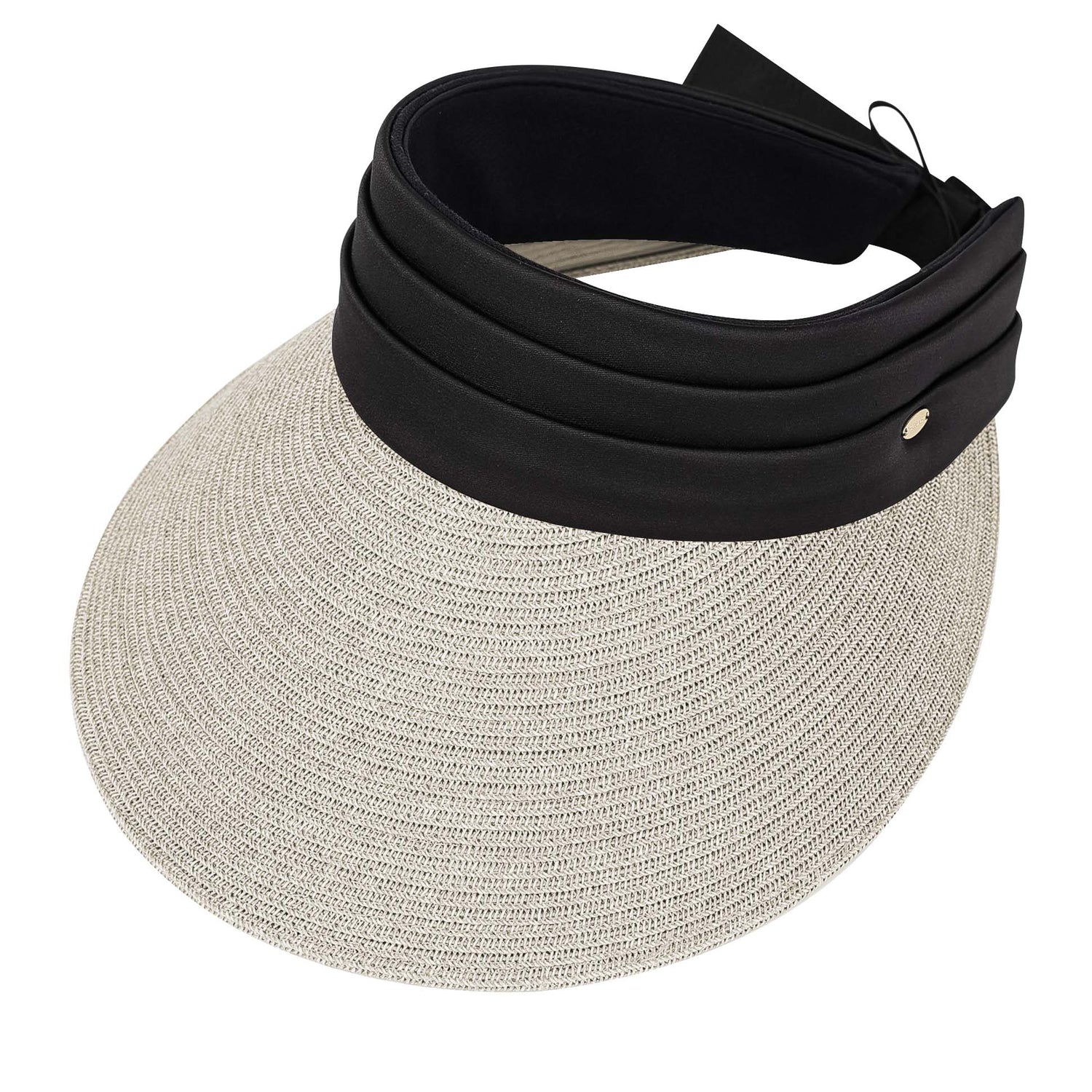
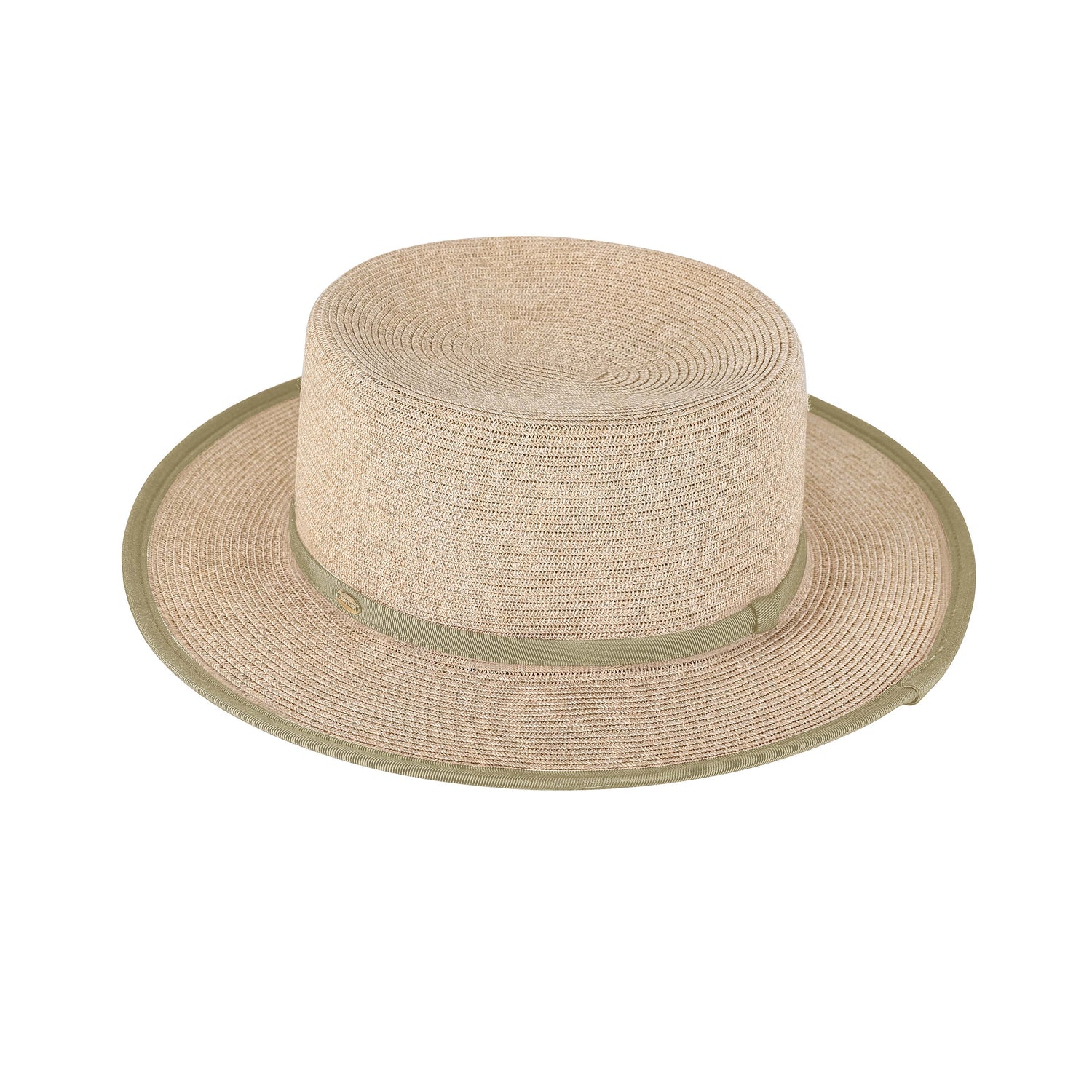
As a worked example, the Hikesity Eco-Chic Braided Straw UPF50+ Visor is a coated straw visor that publishes its proof: it's tested by an ILAC-MRA accredited third-party lab, with a report showing UPF_AV 2000 and 99.95% of UVA and UVB blocked across all four colorways (Report No. ZLPJ24853894). That's the kind of tested, coated straw to look for — rather than an untreated hat with an unverified "UPF 50+" sticker.
Is an open-top straw visor enough sun protection?
Be clear-eyed about what a visor does and doesn't cover. An open-top (crownless) visor shades your face, ears and neck with the brim, while leaving the top of your head open for airflow. That's ideal if you want something cool and breathable that leaves room for a bun or ponytail and won't flatten your hair. If you specifically need coverage over the crown of your head — for example a shaved or thinning scalp — a closed-crown hat is the better call, and you'd still want sunscreen on any exposed skin. An honest sun strategy is a UPF 50+ hat or visor plus sunscreen on what the brim doesn't reach.
The short version: coated straw beats "straw alone"
A straw hat blocks meaningful UV only when its fibers are coated and the result is independently tested. Natural straw on its own can be as low as UPF 2–5; a UPF 50+ coating that seals the weave — verified by a published ILAC-MRA lab report — is what turns an airy straw visor into real, breathable sun protection you can trust. When you shop, buy the tested, coated straw, not the tag.
Frequently asked questions
Does a straw hat block UV rays?
Only if the straw is treated. Untreated, loosely woven straw can measure as low as UPF 2–5 because UV passes through the gaps in the weave. A straw hat or visor reaches a genuine UPF 50+ only when its fibers are finished with a UV-protective coating that seals those gaps — and that protection is only reliable if it's confirmed by an independent lab report.
What is a UPF coated straw visor?
It's a braided straw visor whose fibers have been finished with a UV-absorbing coating before it's woven and assembled. The coating fills the microscopic gaps in the straw weave and absorbs ultraviolet light, so an open, breathable straw visor can still block up to 99.95% of UVA and UVB. It's an extra manufacturing step that inexpensive straw visors typically skip.
How do straw hats get a UPF 50+ rating?
Not from the straw itself. Manufacturers apply a UV-protective finish to the straw fibers, then send the finished product to a textile lab for UPF testing under standards such as AATCC 183 (US), EN 13758 (EU) or AS/NZS 4399 (AU/NZ). Only a coated straw that passes independent testing earns a legitimate UPF 50+ rating.
Is a UPF 50+ straw visor actually verified, or just a label?
It depends entirely on the brand. Many straw visors self-claim "UPF 50+" with no test behind it. A trustworthy one publishes a third-party lab report — ideally from an ILAC-MRA accredited lab, which is recognized in the US, Canada, the EU and 100+ countries. For example, the Hikesity Eco-Chic Braided Straw Visor publishes an ILAC-MRA lab result (UPF_AV 2000, 99.95% UVA/UVB blocked, Report No. ZLPJ24853894).
Does the UPF coating wash or wear off?
A quality UV finish is bonded to the fibers, so it doesn't rinse off or wear down the way sunscreen does, and it holds its rating through normal wear. Straw itself shouldn't be machine-washed or submerged — spot clean with a damp cloth so you don't warp the weave.
Is UPF 50+ the highest sun rating a hat can have?
Yes. UPF 50+ is the top rating recognized by the US (AATCC 183), EU (EN 13758) and AU/NZ (AS/NZS 4399) standards. It means the fabric blocks at least 98% of UV; a result like "99.95% blocked" simply confirms the item clears that threshold with margin. Labs report everything above 50 as "50+," so there's no meaningful "higher number" to look for.
Related reading:
- Best packable UPF50+ straw visors for travel in 2026
- How to choose a UPF50+ wide brim sun visor for women
- Shop the Eco-Chic Braided Straw UPF50+ Visor — open-top, rollable, lab-tested
Hikesity designs and field-tests its sun protection on Vancouver Island, British Columbia. Free shipping to the US and Canada, import duties pre-paid.