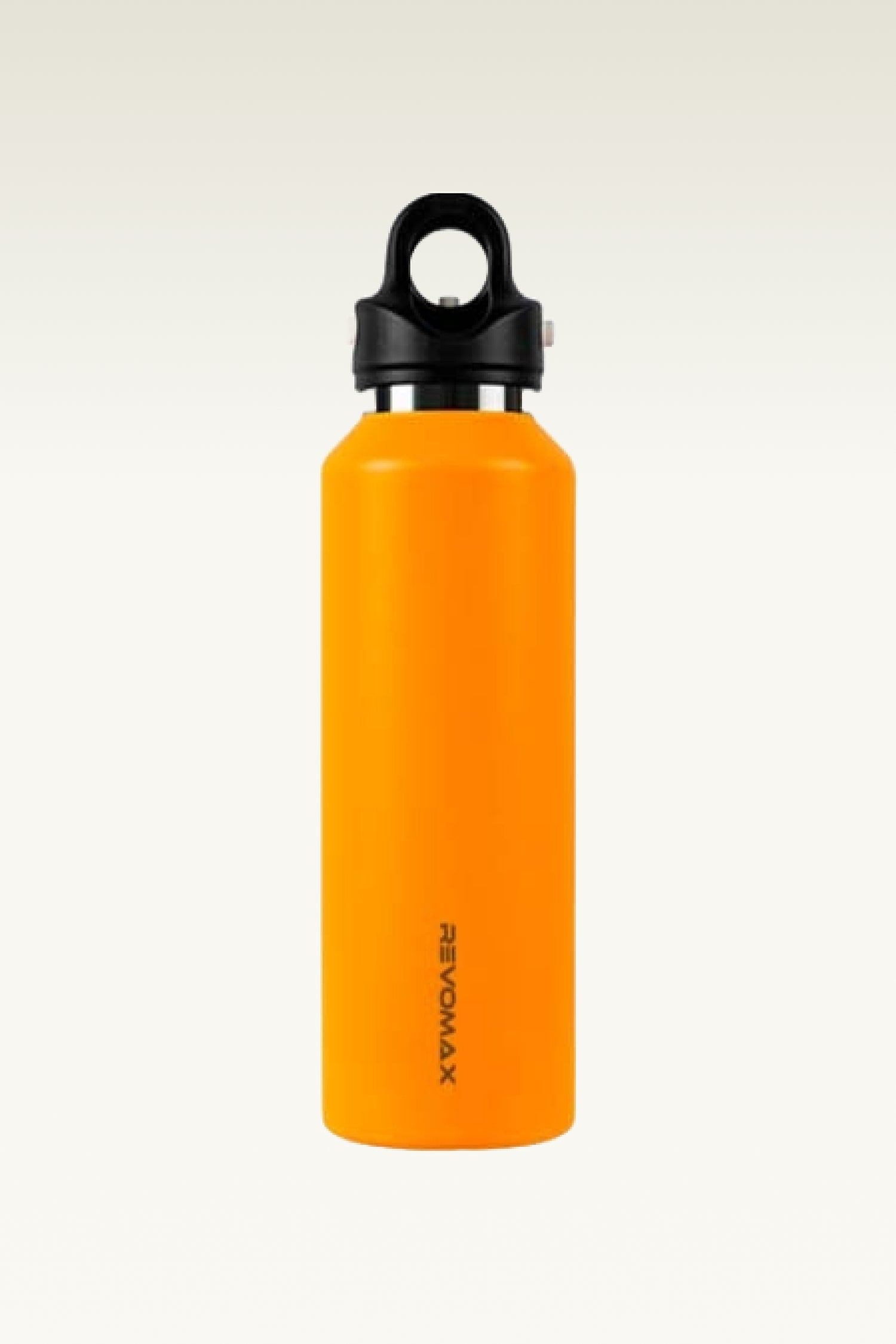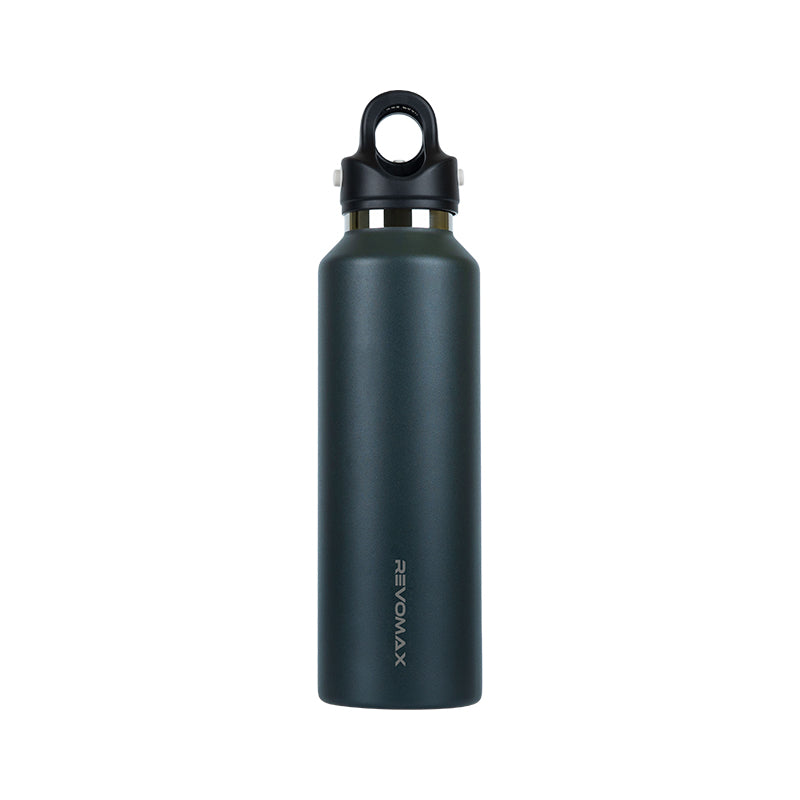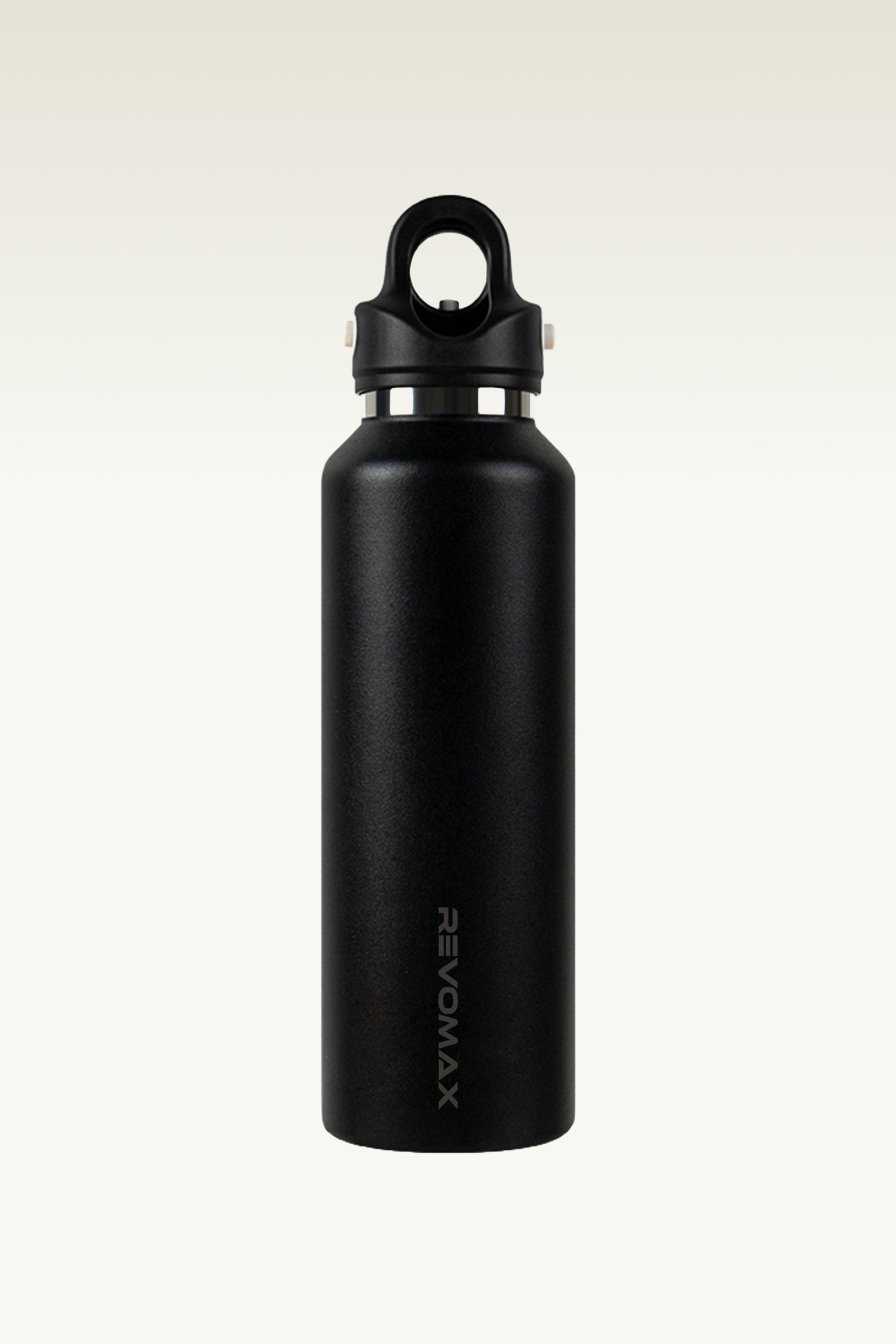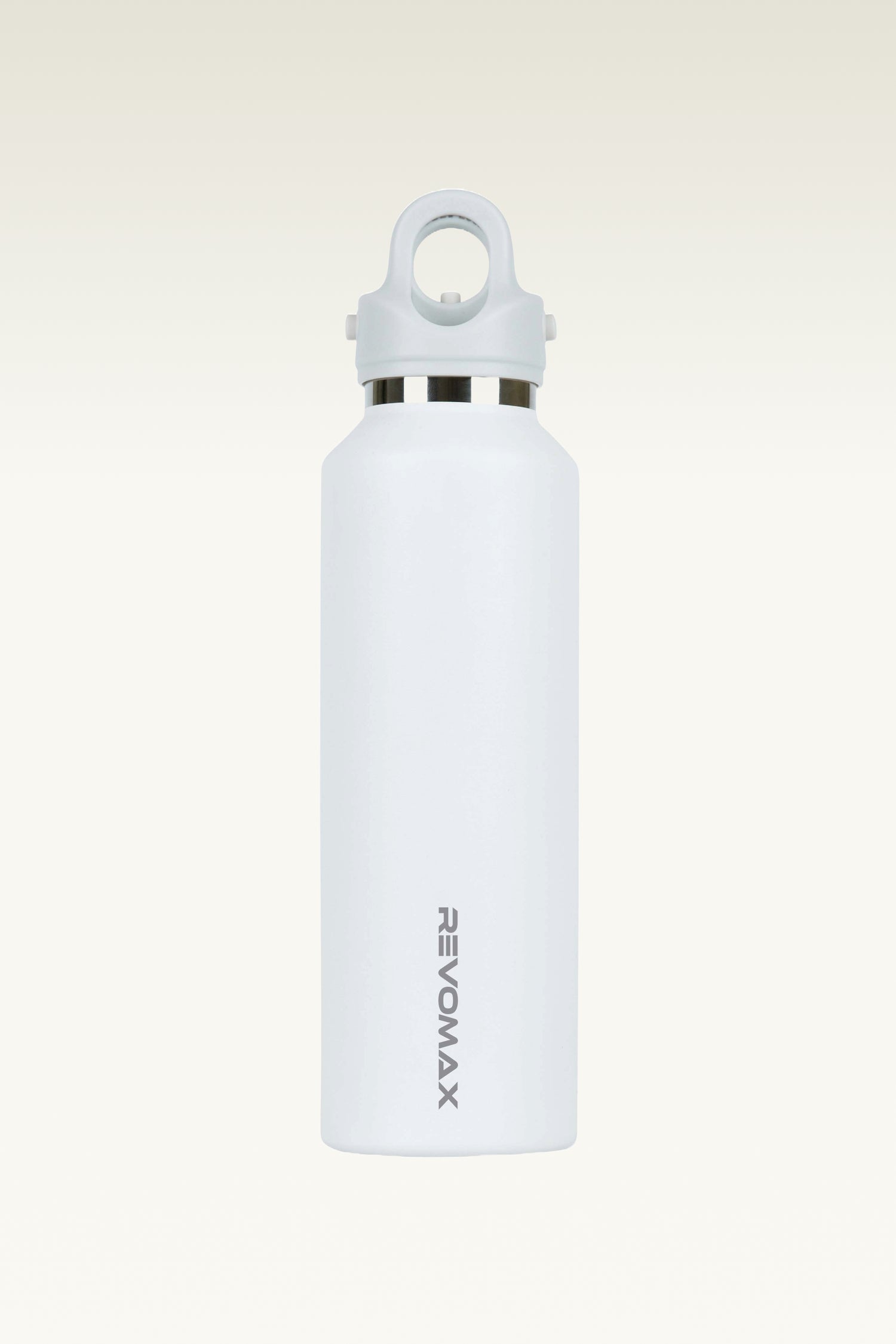



A pure titanium water bottle should identify which walls are titanium—not just mention titanium in its name. Check the body material, drink-contact surfaces and documentation; weight and a magnet alone cannot establish purity.
By Hikesity Editorial Team
Short answer: "titanium bottle" can mean solid titanium, a titanium-coated steel bottle, or a titanium lid only
The word titanium can describe the bottle body, a surface treatment or a single component. Those constructions are different purchases. Before comparing prices, find a material statement that identifies the inner wall, outer wall, lid, seal and any infuser separately.
- Solid titanium walls: the specified walls are titanium through their thickness. An insulated bottle can have solid titanium walls surrounding a vacuum gap; “solid” does not mean the bottle has no hollow space.
- Titanium-coated steel: steel forms the underlying wall, with a titanium-containing surface layer. Ask what the coating is and where it is applied.
- Titanium inner wall: the drink vessel is titanium, but the outer shell may be another material.
- Titanium lid only: the claim identifies the lid and says nothing about the bottle body.
“Pure” also needs context. Commercially pure titanium permits controlled amounts of other elements. It does not mean every atom is titanium, and it does not mean every component in an assembled bottle is titanium.

TA1, TA2, Grade 1, Grade 2: what the grade names mean (composition table)
TA1 and TA2 are designations in the Chinese GB/T system. Grade 1 and Grade 2 are commercially pure titanium designations used in ASTM specifications. ASTM B265 covers strip, sheet and plate; ASTM B348 covers bars and billets. A reference to either standard describes a material product specification, not certification of a finished water bottle.
Both ASTM Grade 1 and Grade 2 are unalloyed titanium grades. Grade 2 permits more oxygen and iron than Grade 1. These are composition limits, not a ranking of drinking-water safety. See ASTM B265's scope and grade designations.
| Element, maximum mass % | ASTM Grade 1 | ASTM Grade 2 |
|---|---|---|
| Iron, Fe | 0.20% | 0.30% |
| Oxygen, O | 0.18% | 0.25% |
| Carbon, C | 0.08% | 0.08% |
| Nitrogen, N | 0.03% | 0.03% |
| Hydrogen, H | 0.015% | 0.015% |
| Titanium, Ti | Balance | Balance |
Sources: Laube's Grade 1 composition reference for ASTM B265 and B348 and Corrosion Materials' Grade 2 composition and applicable specifications. These are specification limits, not measurements of the Hikesity bottle. “Balance” means the remainder after permitted constituents; the five rows above are not a complete certification checklist.
TA1 is commonly cross-referenced to Grade 1, and TA2 to Grade 2. However, a cross-reference is not proof that a particular batch satisfies both standards. The standard edition matters, and reproduced TA1 tables can differ. Ask for the exact GB/T 3620.1 edition and the actual batch chemistry before accepting an ASTM equivalence claim. The official GB/T 3620.1-2007 record identifies the designation and composition standard; use it alongside the ASTM composition references above when checking a supplier's declared grade.
The Hikesity product page identifies its bottle body as TA1 pure titanium. TA1 is the stated designation; an ASTM Grade 1 equivalence claim would require batch documentation establishing compliance with that specification.
Likewise, “medical-grade” wording does not establish a finished-bottle approval or a clinical benefit. The same distinction between a material name and product certification applies in our guide to surgical steel versus 316L water bottles.
Solid titanium vs titanium-coated vs titanium inner wall: what actually touches your drink
Start inside the bottle. The inner wall holds your drink, while the rim, lid underside, seal and infuser may also contact liquid during filling, drinking or transport. A titanium exterior alone does not establish a titanium drinking surface.
| Construction claim | What it establishes | What still needs checking |
|---|---|---|
| Solid titanium body | The identified body walls are titanium through their thickness. | Whether both walls are included, plus the rim, finish and removable components. |
| Titanium-coated steel | A steel substrate has a specified surface treatment. | Coating chemistry, location, coverage and care instructions. |
| Titanium inner wall | The specified inner vessel is titanium. | Outer-shell material and all other drink-contact parts. |
| Titanium lid | Some or all of the identified lid is titanium. | Body material, lid underside and gasket material. |
A titanium-containing compound is not automatically the same material as commercially pure titanium metal. If a listing says only “titanium coating,” request the coating specification rather than assuming its composition.
Colour is not a grade test. A silver appearance cannot establish TA1, and a coloured exterior cannot tell you what touches the drink. For a broader construction comparison, read our titanium, stainless steel and ceramic-lined bottle guide.
Why titanium is lighter: density, wall thickness, and what 199 g for 20oz tells you
Titanium's lower density explains its potential weight advantage. Commercially pure titanium is approximately 4.5 g/cm³; 304 and 316L stainless steels are approximately 8.0 g/cm³. See TIMET's titanium property tables and Nippon Steel's stainless steel physical properties.
For equal volumes of metal, the calculation is 1 − (4.5 ÷ 8.0), or approximately 44% less mass. That is a material-density comparison. It is not a promise that every titanium bottle weighs 44% less than every steel bottle.
A finished bottle's weight also includes wall thickness, its inner and outer geometry, the base, lid, seals and accessories. Two bottles with the same liquid capacity need not contain the same volume of metal. Vacuum insulation describes the space between the walls; it does not specify their thickness.
The Hikesity 20oz/592 ml titanium bottle has a listed weight of 199 g. That is useful for planning what you carry, but it cannot authenticate TA1 or reveal wall thickness. Confirm whether a published weight includes the lid and infuser before comparing it with another bottle.
The Revomax 20oz 316L bottle carried by Hikesity lists an empty weight of 360 g (12.7 oz) at the same 20oz/592 ml capacity. Using the two listed weights, the titanium model is approximately 45% lighter: (360 − 199) ÷ 360 ≈ 45%. That percentage applies to this specific comparison, not to all steel bottles. For a fully matched comparison, confirm that both weights include the same accessories.
How to check a titanium claim before you buy: weight, grade stamp, magnet test, documentation
The strongest check is a consistent chain from the material description to documentation that identifies the actual product or production batch. Home checks can expose questions worth asking, but they cannot certify a grade.
- Request a component-level material statement. Ask which material forms the inner wall, outer wall, rim, lid, seal and infuser. Clarify whether “titanium” means bulk metal or a coating.
- Compare weights on the same basis. Use empty, dry bottles and confirm which accessories are included. An unexpectedly high or low weight calls for clarification; it does not prove the composition.
- Read the grade stamp as a claim. TA1, Grade 1 or Grade 2 markings help identify what the seller declares. A stamp does not replace traceable test results, and the absence of a stamp alone does not prove a bottle is counterfeit.
- Use a magnet only as a limited screening check. A household magnet should not strongly stick to a plain titanium wall. However, no attraction does not prove titanium: austenitic stainless steels can also be non-magnetic. Cold working can introduce some magnetism in stainless steel, as explained by SSINA's technical resources. On Hikesity's titanium model, the tea infuser attaches magnetically inside the bottle, so remove the infuser first and test the outside of the body at mid-height.
- Ask for traceable documentation. A useful material certificate identifies the producer, batch or heat, grade, standard edition and measured chemistry. Ask how that certificate connects to the bottle being sold. A generic titanium data sheet establishes material properties, not the contents of your purchase.
Material identification and finished-product testing answer different questions. A chemistry report can support a metal-grade claim. It does not by itself establish food-contact compliance for the assembled bottle, thermal performance or the composition of every seal and attachment.
If independent testing is necessary, ask the laboratory whether its method can distinguish the claimed grades and assess a coating separately from its substrate. A report that merely identifies titanium does not necessarily resolve every composition limit in the table.
A practical message to the seller is: “Please confirm whether the inner and outer walls are solid titanium, the declared grade and standard edition, whether the listed weight includes the lid and infuser, and whether you have material documentation traceable to this bottle.” Our guide to checking SUS 316 material claims uses the same distinction between a label and evidence.

Where titanium beats 316L, and where 316L is the better value
Titanium's clearest material advantage is lower density. Its corrosion resistance also comes from a protective oxide film, described in Corrosion Materials' explanation of titanium passivation. That mechanism supports corrosion resistance; it does not justify saying titanium is completely unreactive in every environment.
Hikesity positions the TA1 bottle around low weight and a drinking experience without metallic taste. Taste preferences vary, and a titanium body does not mean every user will notice a difference or that every 316L bottle adds flavour. Water, residues and lid cleanliness can also affect the drinking experience.
Pure titanium is softer than 316L stainless steel. Handle the bottle gently, avoid drops and protect it from abrasive contact. Low weight and corrosion resistance should not be read as scratch resistance or immunity to dents. Wall thickness and construction also influence how a finished bottle handles impact.
| Your priority | How to decide |
|---|---|
| Lower carrying weight | Compare complete empty-bottle weights at the capacity you need. Titanium's lower density can help. |
| A titanium drink-contact surface | Verify the inner wall specifically, then check the lid, seal and infuser separately. |
| Everyday value | 316L is worth considering when its actual purchase price is lower and the titanium weight saving is not a priority. |
| Rough handling | Pure titanium requires gentle handling. Compare wall construction and care requirements when choosing a bottle for frequent knocks or abrasive contact. |
| Temperature retention | Compare finished-bottle performance under stated test conditions. The metal grade alone cannot establish insulation performance. |
For more context, see our titanium versus 316L versus 304 bottle comparison. Choose the construction and features you will use, rather than treating a material name as a complete performance specification.
Hikesity Pure Titanium 20oz: what's titanium and what isn't (316L tea infuser, PP lid)
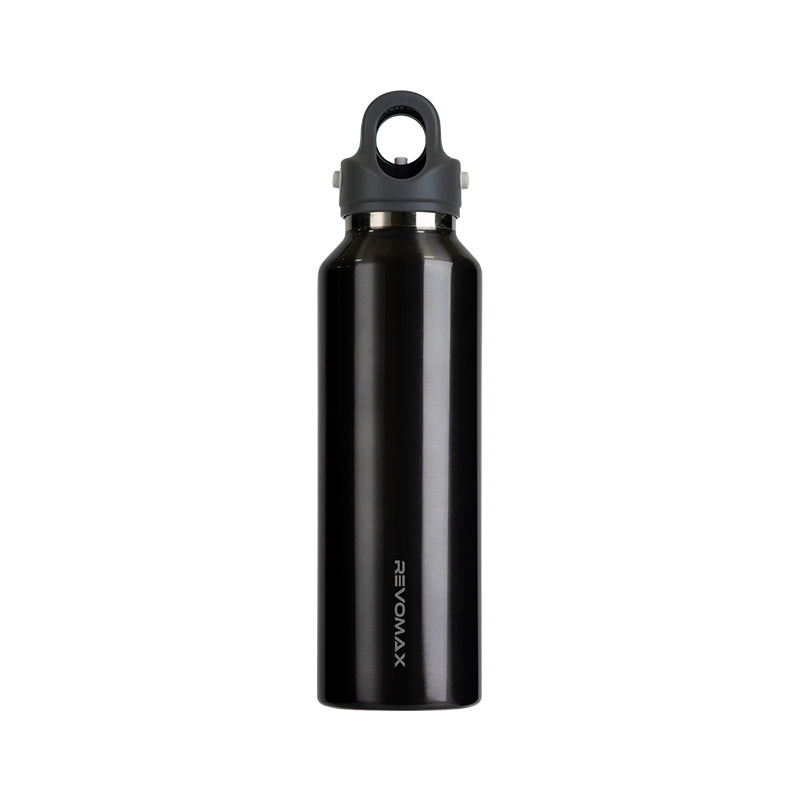
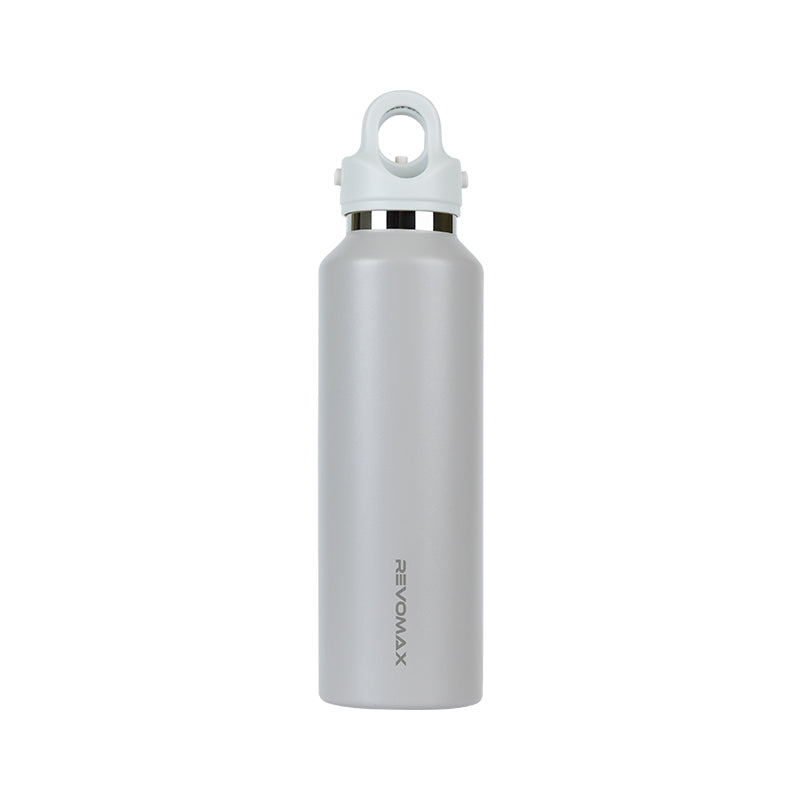
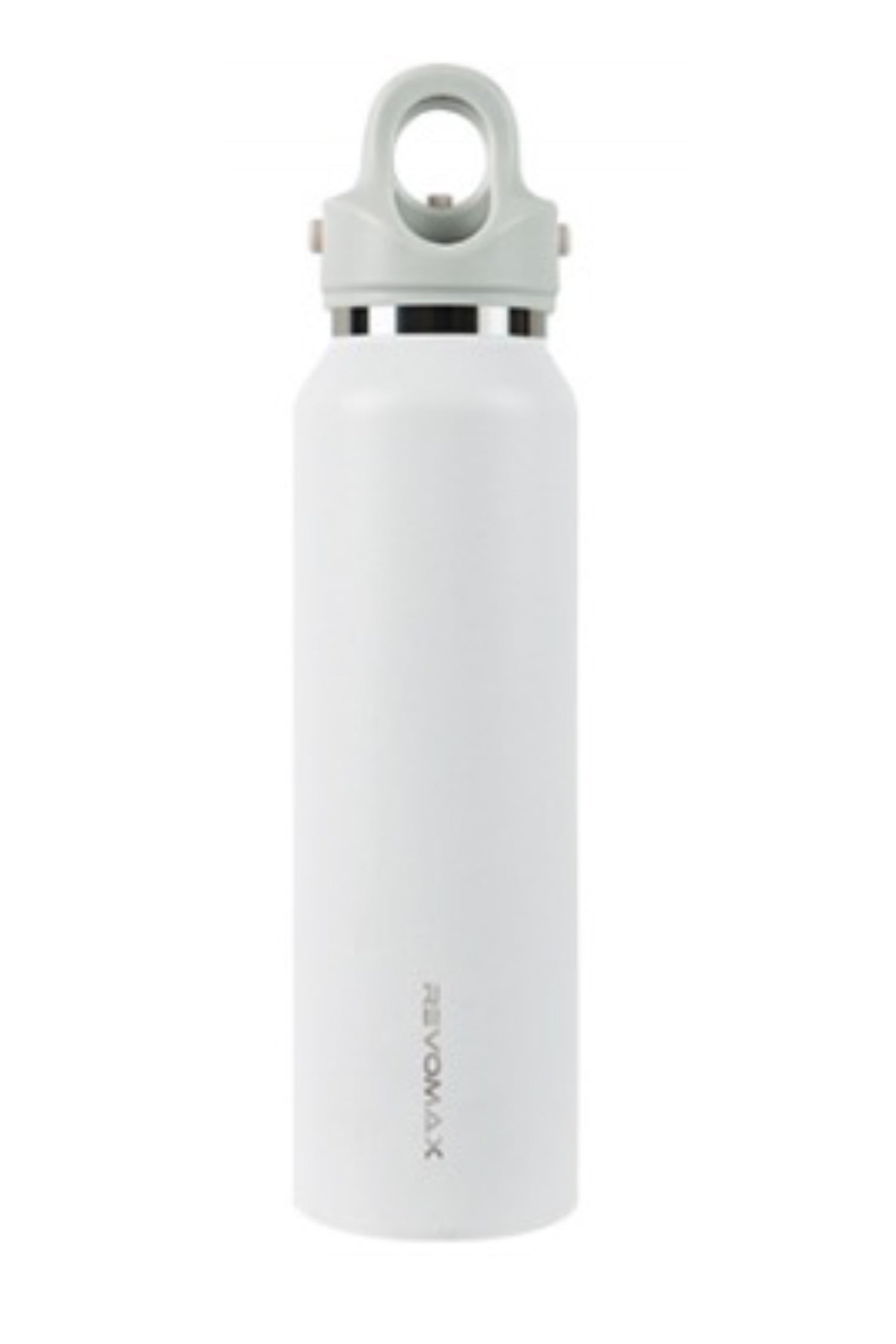
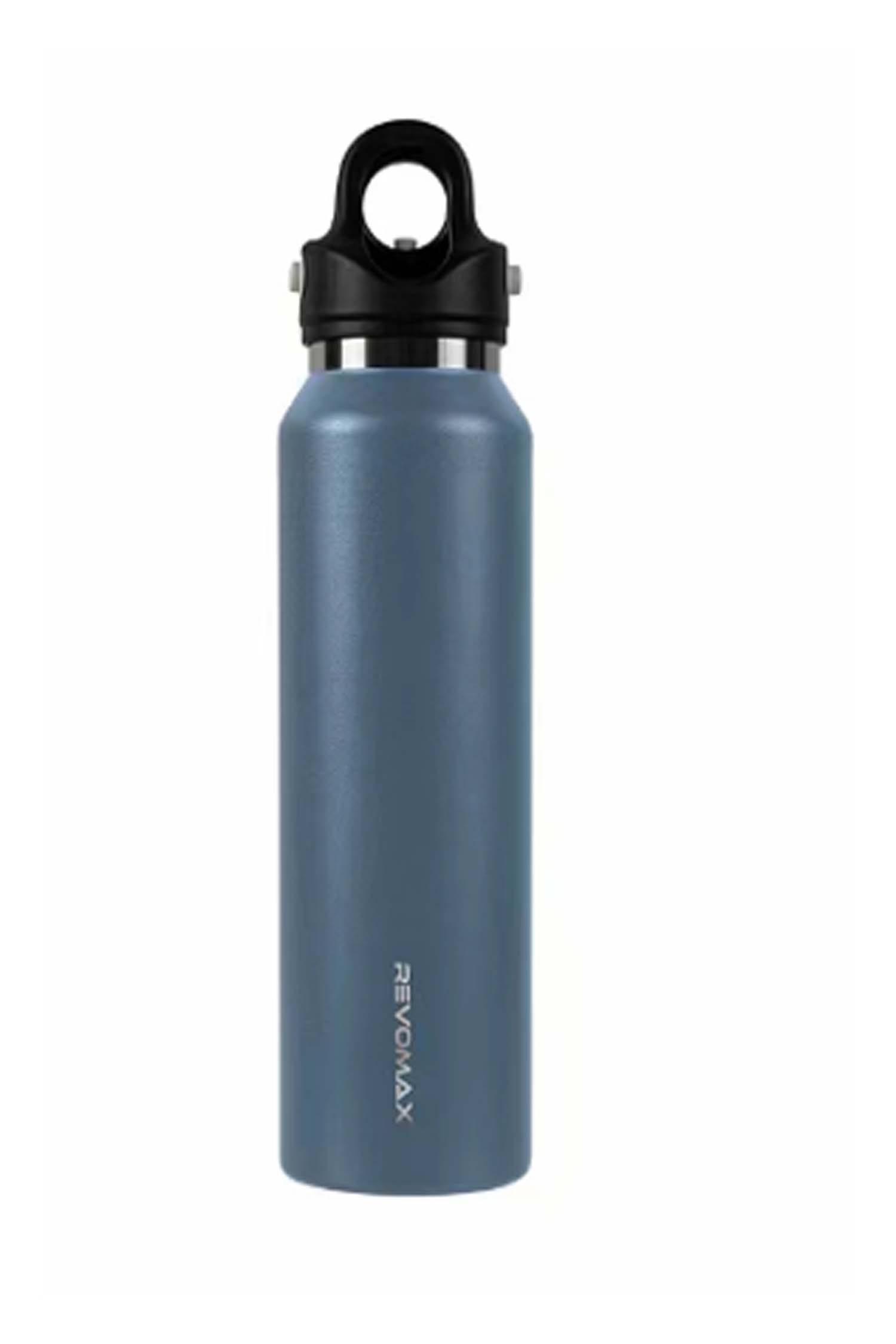
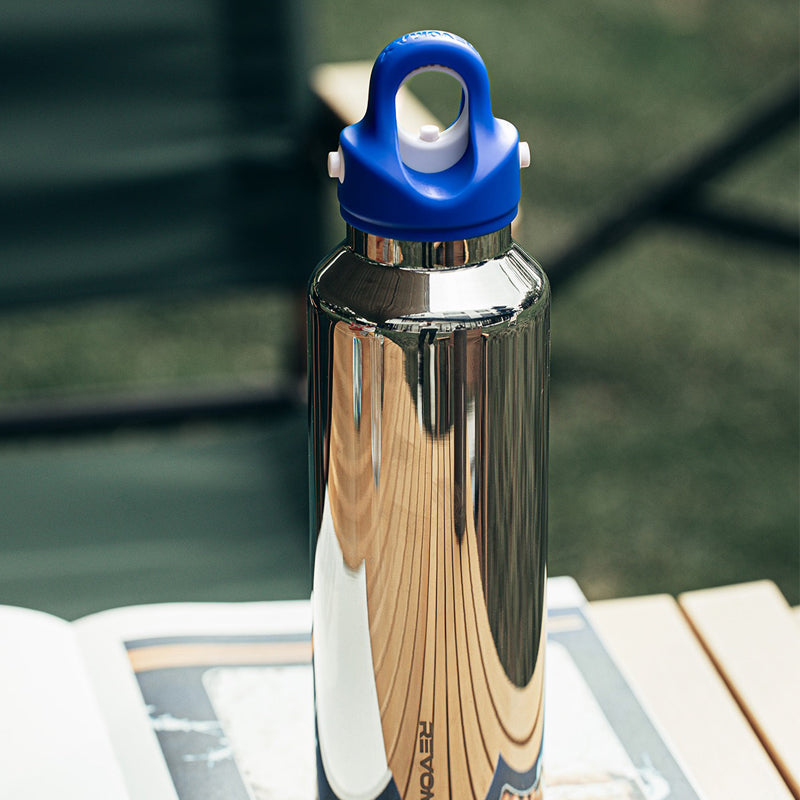
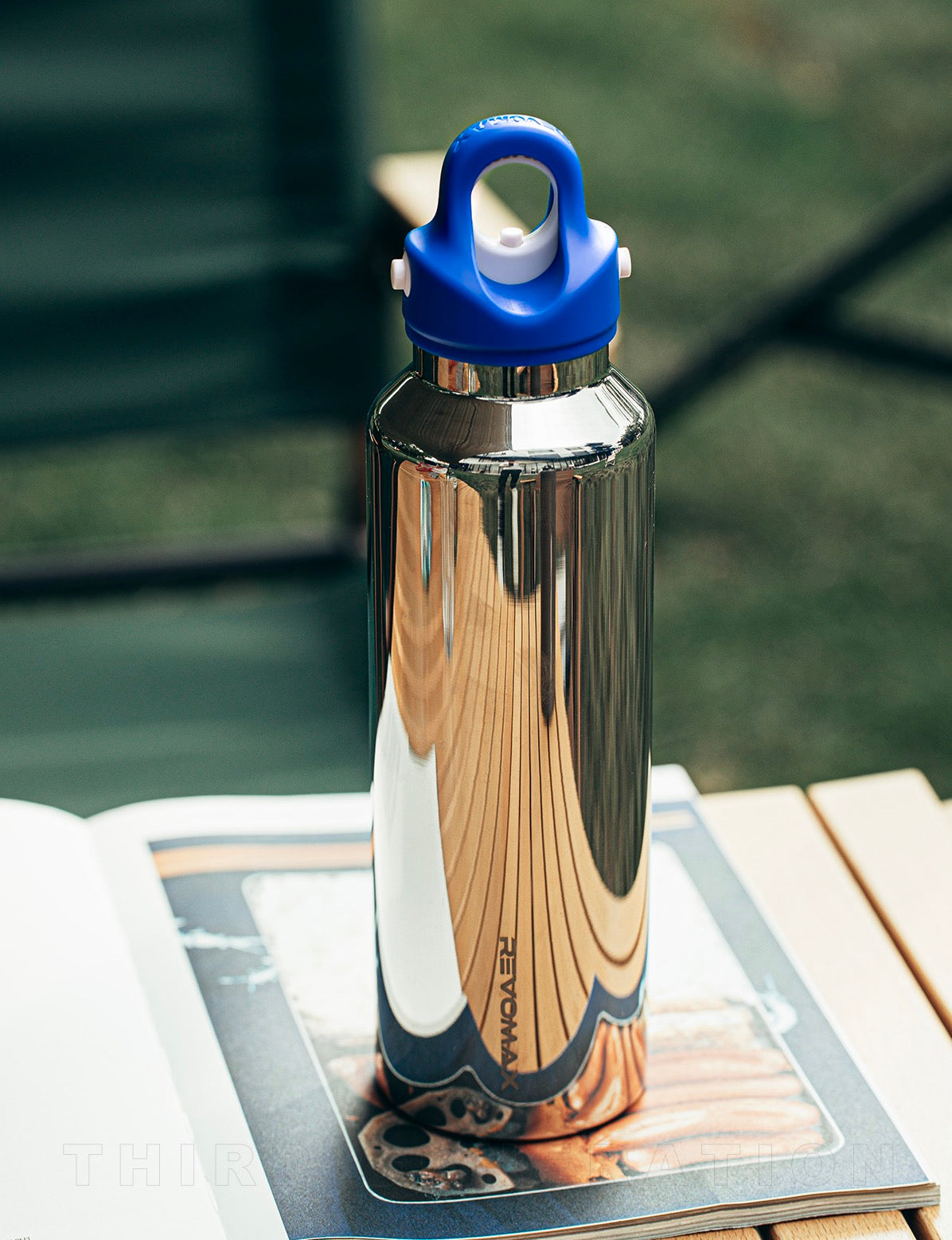
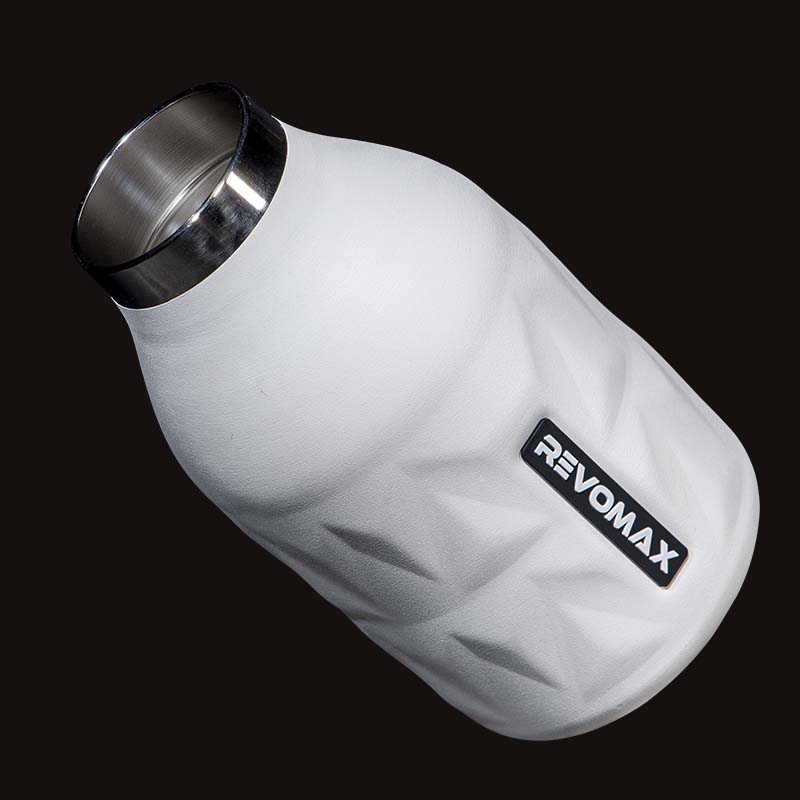
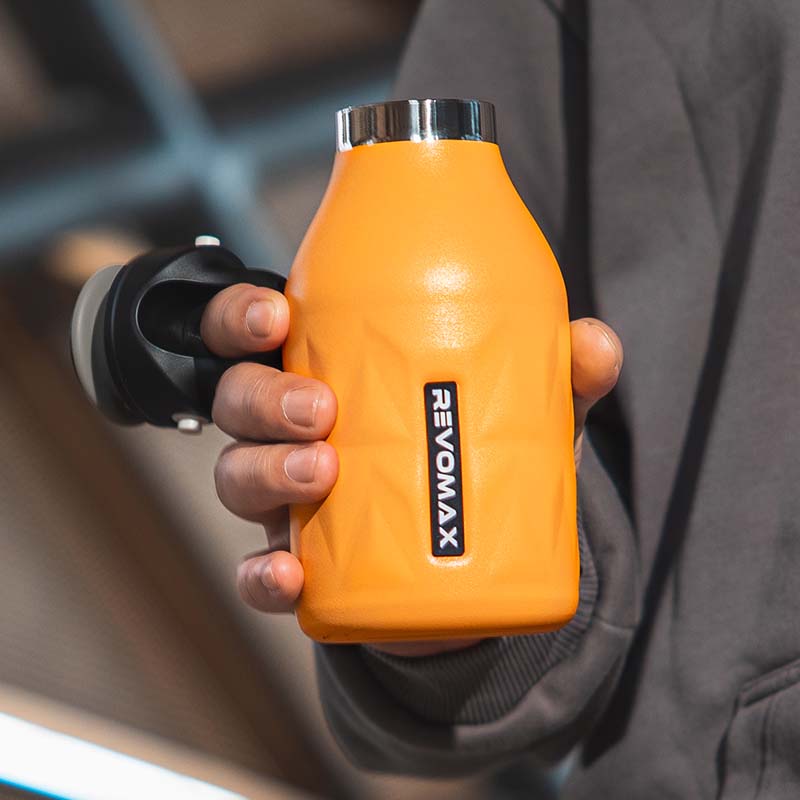
Hikesity's Revomax Pure Titanium 20oz (592 ml) bottle has a TA1 pure titanium body and weighs 199 g, about 45% lighter than the 360 g Revomax 20oz 316L bottle, with a removable 316L magnetic tea infuser and a PP-and-silicone lid.
It is priced at USD 120 in the US and CAD 175 in Canada.
Hikesity is an authorized Revomax dealer based in Victoria, BC. Revomax is the US brand from Portland, Oregon. The component breakdown below follows the Hikesity product listing.
| Component or specification | Listed information | What it means |
|---|---|---|
| Bottle body | Pure titanium, TA1 | A body-material declaration, not a claim that the entire assembly is titanium. Ask for wall-by-wall material and finish details if those distinctions determine your purchase. |
| Tea compartment | Food-grade 316L austenitic stainless steel | The removable infuser is steel and contacts the beverage when used. |
| Lid and seal | Food-grade PP and silicone | The closure includes non-metal materials. |
| Capacity | 20oz / 592 ml | The listed capacity for all three colour variants. |
| Weight | 199 g | A listed product weight, not an independent composition test. |
| Insulation | Double-wall vacuum insulation | Rated up to 18 hours hot and 36 hours cold (Hikesity listing). |
| Colours | Brilliant Blue, Eroded Silver, Radiant Silver | Each variant is listed at USD 120.00 for US visitors and CAD 175.00 for Canadian visitors. |
The magnetic compartment lets you remove the tea leaves when the brew reaches your preferred strength. Hikesity lists a one-second magnetic snap-on/snap-off action. The infuser attaches magnetically to the inside of the bottle (Hikesity listing).
Removing the infuser takes that steel tea compartment out of the brew. The lid and seal remain PP and silicone, and the steel infuser is a separate part, so this does not establish that every drink-contact component is titanium. For brewing guidance, see our loose-leaf tea bottle guide.
Recommended Products
Choose the Hikesity Revomax Pure Titanium 20oz bottle with magnetic tea infuser if the listed 199 g weight, TA1 body and removable tea compartment suit your routine. Budget USD 120.00 in the US market or CAD 175.00 in the Canadian market for any of the three listed colours, and handle the titanium body gently.
Compare to alternatives
Within Hikesity's Revomax range, compare it with the Revomax 20oz 316L stainless steel insulated bottle, listed from USD 65 with an empty weight of 360 g. It offers the same listed 20oz/592 ml capacity at a lower starting price; decide whether the titanium model's weight saving and removable tea infuser justify the difference for your routine.
For alternatives from other brands, Hydro Flask describes its 21 oz Standard Mouth bottle as “Made with 18/8 pro-grade stainless steel for durability, pure taste and no flavor transfer.” YETI lists “18/8 stainless steel” for its Rambler 18 oz Color Cap water bottle. These are the manufacturers' own material descriptions: both are stainless steel alternatives to a titanium-body bottle. Their capacities differ from the Hikesity 20oz model, so compare the exact size, closure and complete empty weight before drawing a weight or value conclusion.
For other constructions, use our titanium, stainless steel and ceramic-lined bottle comparison to compare the material touching your drink, the closure and the evidence behind each claim.